
Medicine (Discipline)
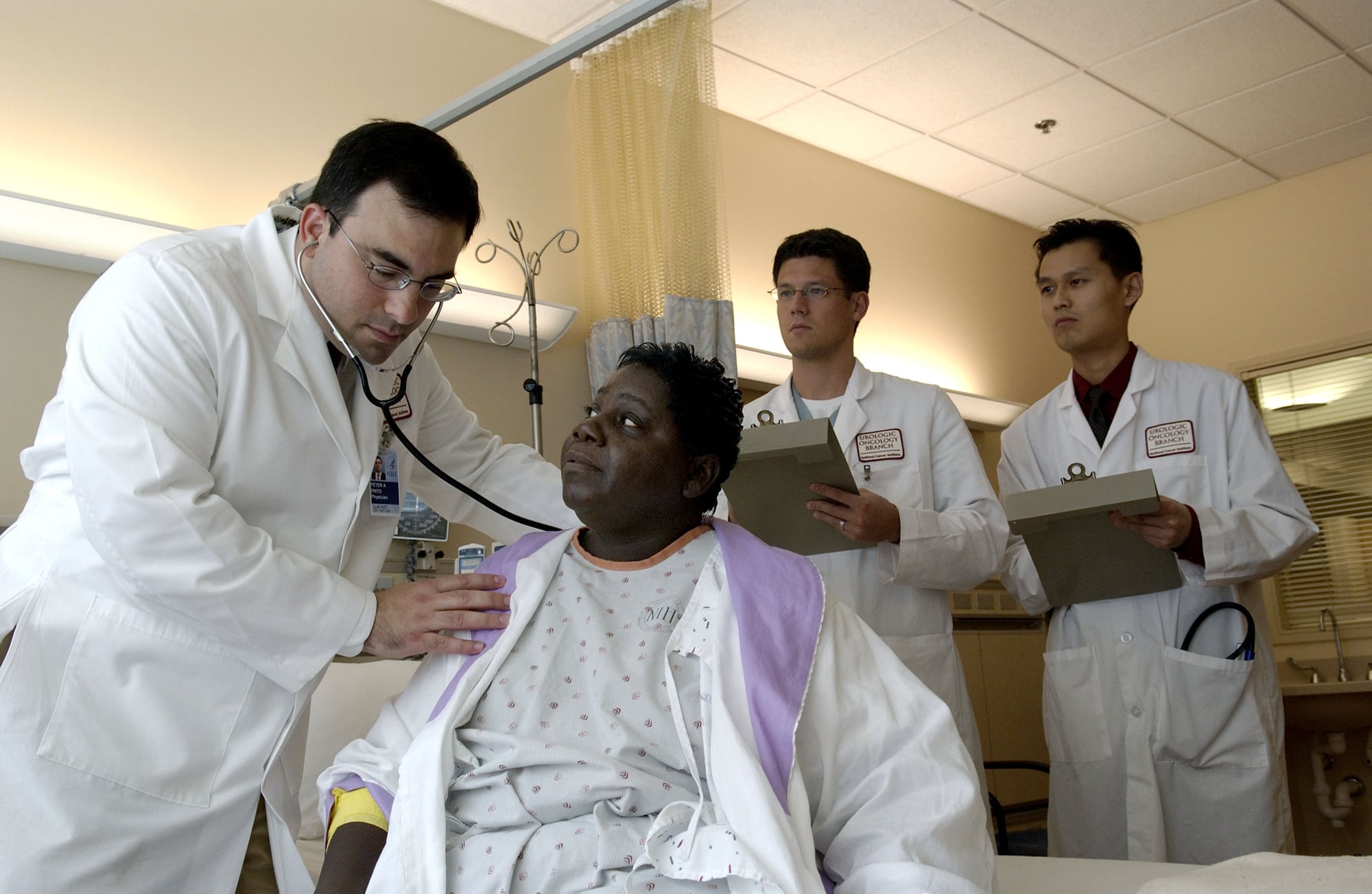
Credit: Unknown photographer · Public domain
Medicine is the science and practice of keeping people healthy and treating them when they are sick or hurt. People who practice medicine include doctors, nurses, dentists, pharmacists, and many others. The goal of medicine is to prevent illness when possible, find out what is wrong when someone gets sick, and help the body heal.
Medicine is one of the oldest fields of study in the world. Ancient Egyptians wrote about how to set broken bones more than 3,500 years ago. In ancient Greece, a doctor named Hippocrates taught that disease comes from natural causes, not from angry gods. He is often called the father of modern medicine. Doctors still take a version of his promise to do no harm to their patients.
For most of history, doctors did not really know what caused disease. Many people thought sickness came from bad air or from an imbalance in the body. Treatments were often useless or even harmful. A common treatment called bloodletting drained blood from sick patients, which usually made them worse.
Real progress came in the 1800s. A French scientist named Louis Pasteur showed that tiny living things called germs cause many diseases. This idea is called germ theory. Around the same time, doctors learned that washing their hands and using clean tools saved lives. Surgery became safer when patients could be put to sleep with a gas called anesthesia. By the early 1900s, scientists had developed vaccines for diseases like smallpox and rabies.
The next big jump came with antibiotics. In 1928, a British scientist named Alexander Fleming noticed that a mold called penicillin killed bacteria in his lab dish. Penicillin became the first antibiotic. It saved millions of lives during World War II and after. Diseases that once killed people, like strep throat and pneumonia, became treatable in days.
Modern medicine has many branches. Pediatricians treat children. Surgeons operate on the body. Cardiologists focus on the heart. Dentists care for teeth. Psychiatrists help people with mental health. Nurses do a huge share of the actual care in hospitals and clinics.
Medicine has not solved every problem. Scientists are still searching for better treatments for cancer, Alzheimer's disease, and many rare illnesses. New diseases appear, and some bacteria are learning to resist antibiotics. But people today live, on average, about twice as long as people did 200 years ago. That long jump in human life is one of the biggest changes in all of history, and medicine is a major reason why.
Related
Last updated 2026-04-25