
Antibiotics
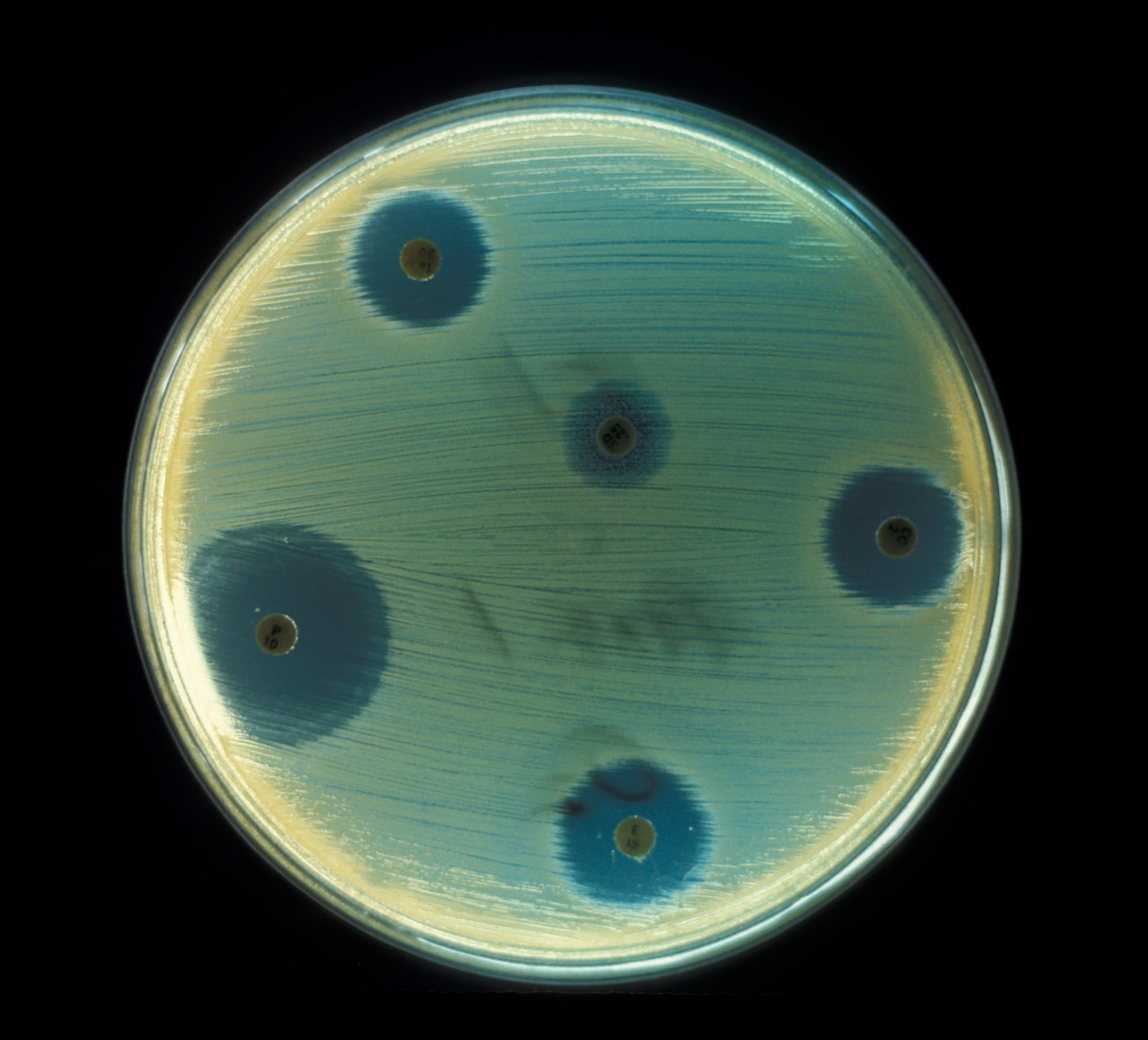
Credit: CDC / Provider: Don Stalons · Public domain
Antibiotics are medicines that kill bacteria or stop them from growing. Doctors use antibiotics to treat infections caused by bacteria, like strep throat, ear infections, and pneumonia. Before antibiotics existed, even small cuts could lead to deadly infections. Today, antibiotics save millions of lives every year.
The first true antibiotic was penicillin. A Scottish scientist named Alexander Fleming discovered it in 1928. He had left a dish of bacteria sitting out in his lab while he went on vacation. When he came back, he found that mold had blown into the dish. Around the mold, the bacteria had died. The mold was making a chemical that killed them. Fleming named the chemical penicillin. By the 1940s, scientists had figured out how to make penicillin in large amounts. It was used to treat wounded soldiers in World War II and saved countless lives.
How do antibiotics work? Bacteria are tiny living cells, and they have parts that human cells do not have. Some antibiotics break the outer walls of bacteria, which makes the bacteria pop open. Other antibiotics block the bacteria from making the proteins they need to grow. Either way, the bacteria die or stop spreading. Your immune system then cleans up what is left.
Antibiotics only work against bacteria. They do not work against viruses. Colds, the flu, and COVID-19 are caused by viruses, so antibiotics cannot fix them. Taking an antibiotic for a virus does no good and can actually cause harm.
The harm is called antibiotic resistance. When people use antibiotics too often, some bacteria survive and learn to fight back. Those tougher bacteria multiply and pass on their tricks. Over time, the medicine stops working. Doctors today are seeing infections that no antibiotic can cure. The World Health Organization calls antibiotic resistance one of the biggest health threats facing the world. Scientists are racing to find new antibiotics, but bacteria keep evolving.
This is why doctors are careful about prescribing antibiotics. If you get a sore throat, the doctor may test you first to see if bacteria are causing it. If the cause is a virus, no antibiotic will help. If you do get an antibiotic, it is important to take all the pills, even after you feel better. Stopping early lets the strongest bacteria survive.
Antibiotics are sometimes called miracle drugs. Before the 1940s, a scraped knee could kill a child. After penicillin, the same scrape was just a scrape. Few inventions have changed daily life as much as the small pill that fights back against bacteria.
Related
Last updated 2026-04-25