
Louis Pasteur
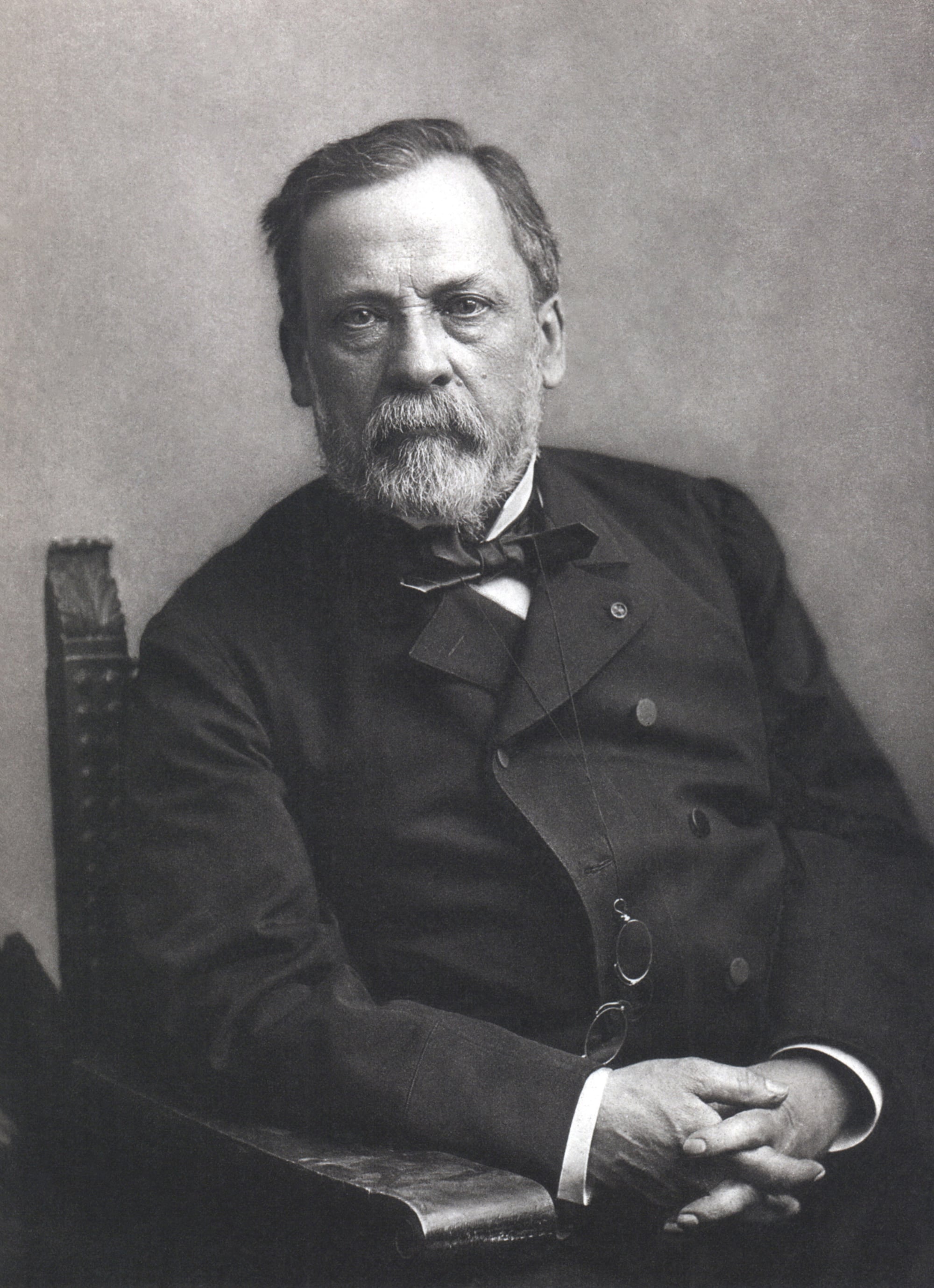
Credit: Paul Nadar · Public domain
Louis Pasteur was a French scientist who lived from 1822 to 1895. He is one of the most important figures in the history of medicine. His work showed that tiny living things, called germs, cause many diseases. He also invented vaccines for several deadly illnesses and a way to keep milk from spoiling. The process is still called pasteurization today.
Pasteur grew up in a small town in eastern France. His father was a tanner, a worker who turned animal hides into leather. Young Louis was a careful student but not a star. His teachers said he was patient and curious, two traits that would matter later. He studied chemistry in Paris and became a professor before he turned 30.
His first big discovery came from looking at crystals through a microscope. He noticed that some crystals could be twisted in two mirror-image shapes. This finding helped start a new branch of chemistry. But Pasteur soon turned to a bigger question: what makes food and drink go bad?
At the time, most people thought spoilage just happened on its own. Pasteur showed that tiny microbes in the air landed on food and made it rot. To prove it, he boiled broth in special flasks with curved necks. The curves trapped microbes from the air. The broth stayed fresh for years. This experiment helped kill an old idea called spontaneous generation, the belief that life could appear from nothing.
If microbes spoiled wine, Pasteur wondered, could they also make people sick? He became convinced that germs caused disease. Many doctors at the time disagreed. They thought illness came from bad smells or bad luck. Pasteur's careful experiments helped prove him right and changed medicine forever. Doctors began washing their hands and cleaning their tools. Millions of lives were saved.
Pasteur then turned to vaccines. A British doctor named Edward Jenner had made a smallpox vaccine almost a hundred years earlier. Pasteur figured out how to make new vaccines on purpose by weakening germs in the lab. He created vaccines for two animal diseases, anthrax and chicken cholera. Then in 1885, he tried something risky. A nine-year-old boy named Joseph Meister had been bitten badly by a rabid dog. Without treatment, rabies is almost always deadly. Pasteur gave the boy his experimental rabies vaccine. The boy lived.
Pasteur did not invent the microscope or discover the first germ. But he tied the pieces together and proved them with experiments anyone could repeat. The next time you drink a glass of milk, thank him. He made it safe.
Related
Last updated 2026-04-26