
Train
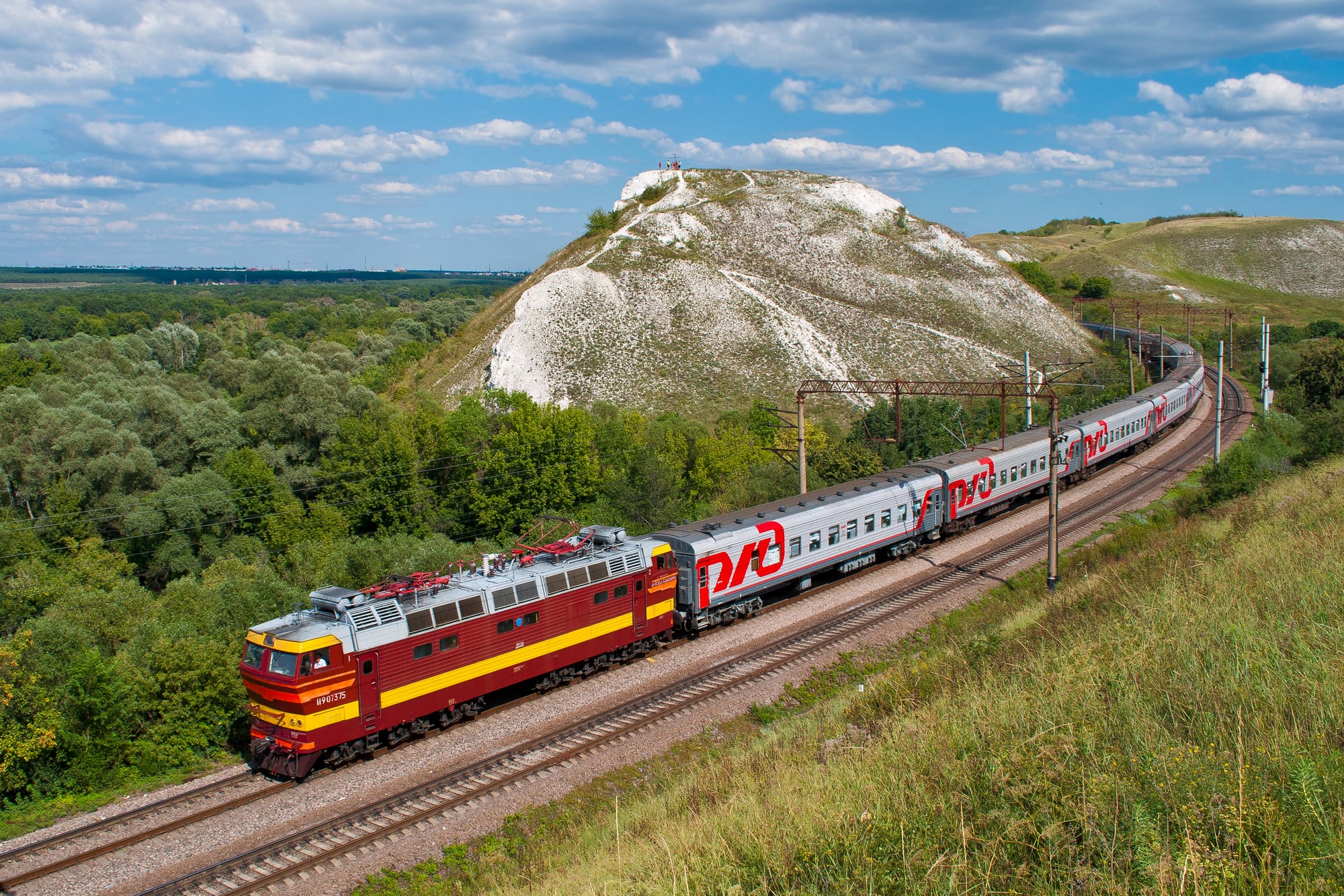
Credit: Алексей Задонский · CC BY-SA 4.0
A train is a line of connected vehicles that runs on a pair of metal rails. The front car has an engine called a locomotive, and the cars behind it carry people or cargo. Trains can be powered by steam, diesel fuel, or electricity. They are one of the most important inventions in the history of transportation.
The first trains used steam engines. In 1804, a British engineer named Richard Trevithick built the first working steam locomotive. By 1830, full steam railroads were carrying passengers between cities in England. The idea spread fast. Within 50 years, tracks crossed Europe, North America, India, and beyond. Trains let people and goods travel ten times faster than horses, and they could pull loads no horse could ever move.
Trains changed how the world worked. Before railroads, fresh food spoiled before it could reach distant cities. Mail took weeks. Towns far from rivers stayed small and isolated. Once trains arrived, factories could ship products across whole countries. Time zones were even invented because of trains. Different towns used to keep their own local time, but train schedules needed everyone to agree, so railroads pushed countries to set standard time zones in the 1880s.
Trains run on rails for a clever reason. Steel wheels rolling on steel rails make very little friction. A train uses far less fuel than a truck to move the same weight. A single freight train can carry as much cargo as several hundred big trucks. That makes trains one of the most efficient ways to move heavy things over land.
Today there are many kinds of trains. Freight trains haul coal, grain, cars, and shipping containers. Passenger trains carry commuters in and out of cities. High-speed trains in Japan, France, and China zip between cities at more than 200 miles per hour. Some trains do not even touch their tracks. Maglev trains float on powerful magnets, which removes almost all friction. Subways run underground, and monorails ride on a single raised beam.
The United States once had the largest passenger rail system in the world. After cars and airplanes took over in the twentieth century, most American passenger lines shut down. Other countries chose differently. Japan built its first bullet train in 1964, and Europe and China have built thousands of miles of high-speed track since. Many engineers argue that fast, electric trains are one of the best tools for cutting pollution from transportation.
Related
Last updated 2026-04-25