
Industrial Revolution
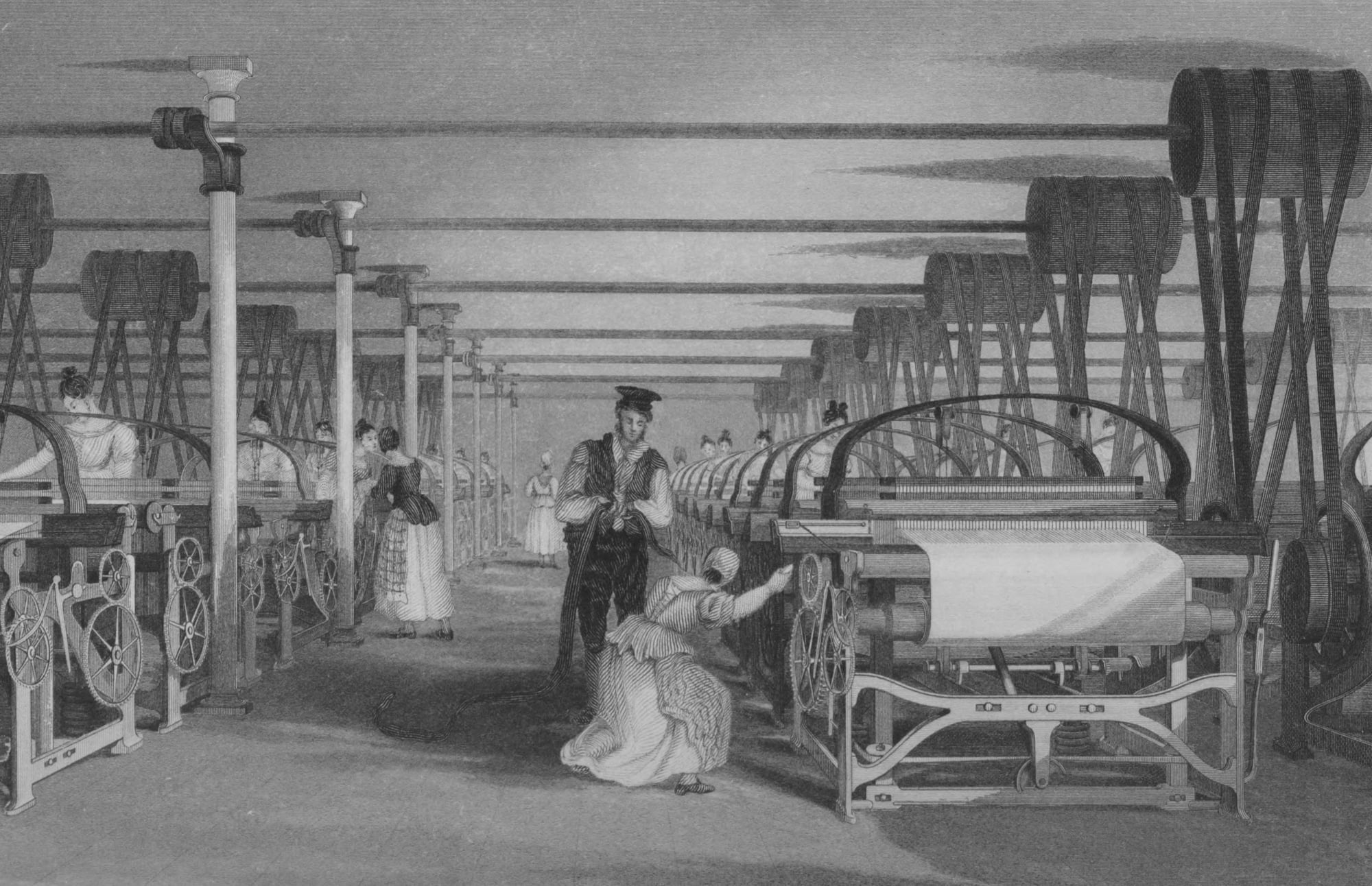
Credit: Illustrator T. Allom, Engraver J. Tingle · Public domain
The Industrial Revolution was a huge change in the way people made things, traveled, and worked. It began in Great Britain around 1760 and spread to other countries over the next 150 years. Before this time, almost everything was made by hand in homes or small workshops. By the end of the Industrial Revolution, machines in big factories did most of the work. The change was so deep that historians call it one of the most important events in human history.
Life before the change
For thousands of years, most people lived on farms. They grew their own food and made their own clothes. A family might spin wool and weave it into cloth right in their own kitchen. Almost everyone worked outdoors, and almost everyone was poor by modern standards. Travel was slow. A trip from London to Edinburgh took ten days by horse-drawn coach.
Why Britain went first
Britain had several things that came together at the right time. It had lots of coal in the ground. It had iron to make machines. It had rivers for moving goods, and a strong navy to ship them around the world. British inventors were also free to try new ideas, and rich merchants were willing to pay for them.
The steam engine changes everything
The biggest invention of the era was the steam engine. James Watt, a Scottish engineer, made a much better version in 1769. A steam engine burns coal to boil water. The hot steam pushes pistons, and the pistons turn wheels. For the first time, humans had a powerful machine that did not depend on muscles, wind, or running water. Steam engines could pump water out of mines, run factory machines, pull trains, and push ships across oceans.
The factory system
Before, a weaver worked at home on a simple loom. Now, hundreds of workers gathered in a big building called a factory. Powerful machines, run by one shared steam engine, did the spinning and weaving. One factory could make more cloth in a day than a whole village had once made in a year. Factory owners grew rich. Cloth that used to be expensive became cheap enough for ordinary families to buy.
Trains and ships
In 1825, the first public railway opened in England. Steam locomotives could pull heavy loads at 20 miles per hour, faster than any horse could run for long. Soon, railroads spread across Britain, Europe, and the United States. By 1869, you could ride a train all the way across North America. Steamships crossed oceans on schedules, no longer waiting for the wind. The world was suddenly much smaller.
Cities grow huge
Workers left the countryside and crowded into cities to take factory jobs. In 1750, only about 15 percent of British people lived in cities. By 1900, that number was about 75 percent. Manchester grew from a small town of 25,000 people in 1750 to a smoky giant of more than 500,000. New York, Chicago, and Berlin grew the same way. Cities had gas lights, then electric lights, then streetcars and subways.
A hard life for workers
The factories were not kind places. Workers, including children as young as 5 or 6, often worked 12 to 14 hours a day, six days a week. Machines were dangerous. Air in the factories was full of dust, and air in the cities was full of coal smoke. Pay was low and there were no laws to protect workers. Many people lived in crowded, dirty apartments where disease spread fast.
Slowly, things began to change. Workers formed groups called unions to demand better pay and safer conditions. Governments passed laws limiting child labor, shortening the workday, and requiring schools. These changes did not happen quickly or evenly, and historians still debate how much daily life improved for the average worker during the early years.
A second wave
Around 1870, a second burst of invention began. Steel replaced iron because it was stronger and lighter. Electricity replaced steam in many factories. The telephone, the light bulb, the car, and the airplane all appeared within about 50 years of each other. People who were born in the 1860s and lived to old age saw the world go from horse-drawn wagons to airplanes flying overhead.
What it left behind
The Industrial Revolution gave us the modern world. Cheap goods, fast travel, big cities, electricity in our homes, and machines for almost every task all trace back to it. But it also gave us new problems. Pollution, climate change, and the gap between rich and poor countries are partly its legacy too. Almost every choice you make today, from the clothes you wear to the phone in your pocket, sits on top of changes that began with one steam engine in a quiet British workshop.
Last updated 2026-04-26