
Steam Engine
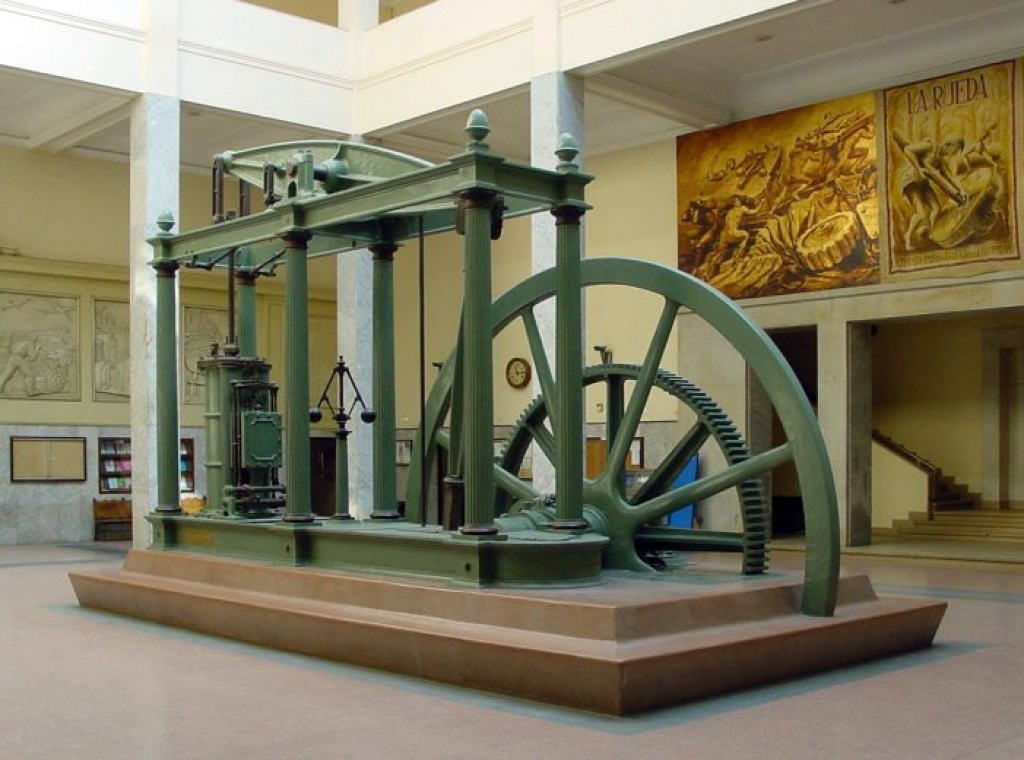
Credit: Nicolás Pérez · CC BY-SA 3.0
A steam engine is a machine that uses heated water to do work. Coal or wood is burned to boil water inside a tank called a boiler. The boiling water turns into steam, and steam takes up much more space than liquid water. That pressure is used to push parts of the engine and turn wheels or pump water. Steam engines were the first machines that let humans do heavy work without using muscle power from people or animals.
The idea is very old. A Greek inventor named Hero of Alexandria built a spinning steam toy nearly 2,000 years ago. But it was just a toy. Useful steam engines did not appear until the early 1700s. In 1712, an English inventor named Thomas Newcomen built the first steam engine that actually did a useful job. It pumped water out of coal mines so miners could dig deeper.
Newcomen's engine wasted a lot of fuel. A Scottish engineer named James Watt fixed that problem in the 1760s. He added a separate chamber where the steam could cool down, which kept the main cylinder hot. Watt's design used much less coal and could power many kinds of machines. Watt is often called the father of the modern steam engine, though he built on the work of others.
Steam engines changed the world. Before them, factories had to be built next to fast-moving rivers, because flowing water was the only way to power big machines. Steam engines worked anywhere you could deliver coal. Factories sprang up in cities. People moved off farms to work in them. This huge shift is called the Industrial Revolution.
Steam engines also changed how people traveled. In 1804, an English engineer named Richard Trevithick put a steam engine on rails and built the first steam locomotive. By the 1830s, trains were carrying people and goods across whole countries at speeds that would have seemed magical a few years earlier. Steamships crossed the Atlantic Ocean. A trip that once took two months by sailing ship took only two weeks.
Most steam engines today have been replaced by electric motors and engines that burn gasoline or diesel. But steam still does a huge amount of work. Most of the world's electricity is made by steam. In a power plant, fuel boils water, and the steam spins a giant fan called a turbine that turns a generator. So even when you flip on a light switch in your house, you are usually using a steam engine. The fire just looks different.
Last updated 2026-04-25