
Iceland
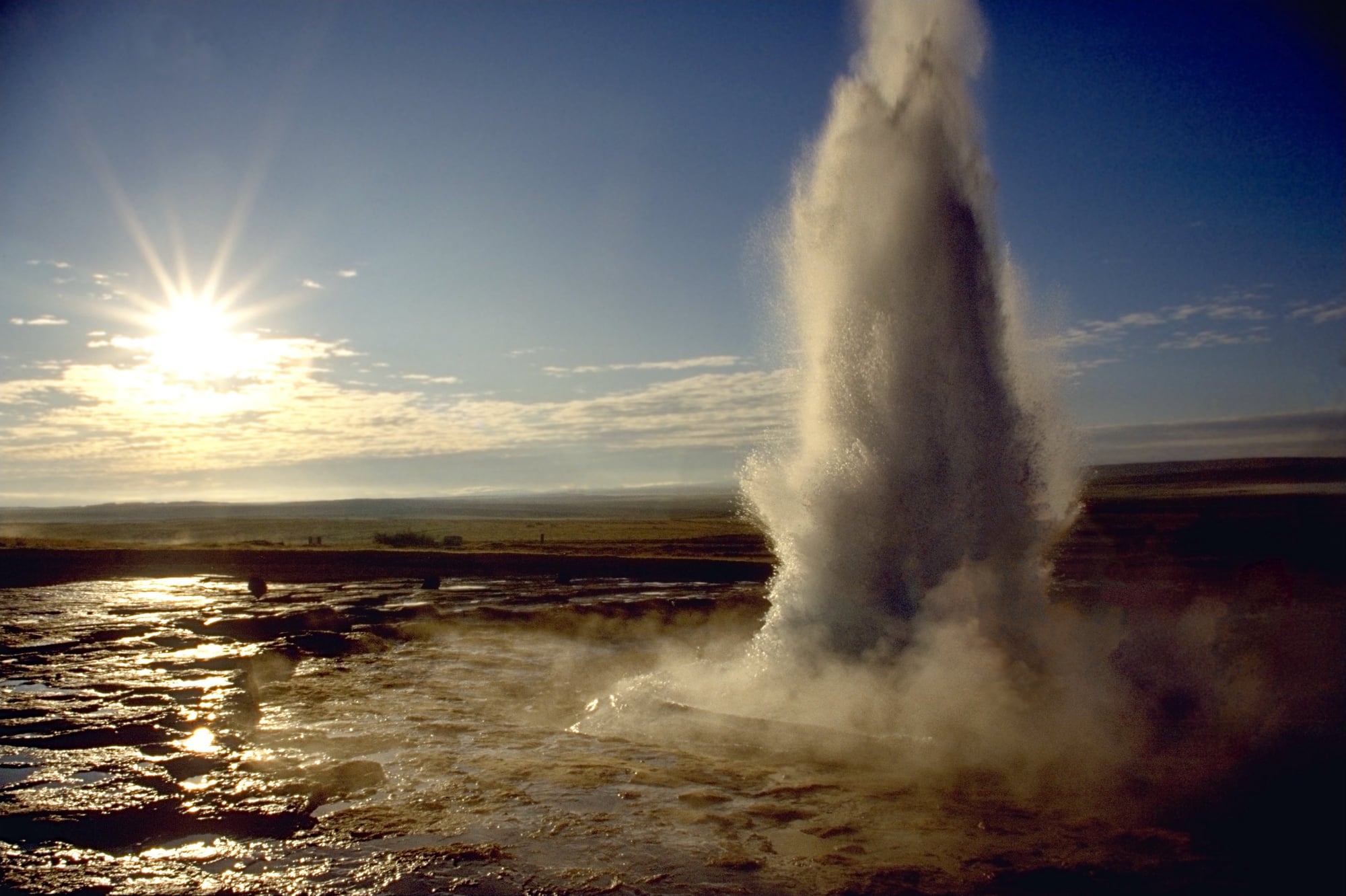
Credit: Andreas Tille · CC BY-SA 3.0
Iceland is an island country in the North Atlantic Ocean, just south of the Arctic Circle. It sits between Greenland and Norway. The country is about the size of the U.S. state of Kentucky, but only around 390,000 people live there. That makes Iceland one of the least crowded countries in Europe. Its capital and largest city is Reykjavík.
Iceland is famous for its strange and dramatic landscape. The island has more than 100 volcanoes, and dozens of them are still active. It also has about 270 glaciers, which are giant sheets of slow-moving ice. Because fire and ice meet here so often, people call Iceland "the land of fire and ice."
The reason for all this action is the ground underneath. Iceland sits right on top of the Mid-Atlantic Ridge, a huge crack where two of Earth's tectonic plates are slowly pulling apart. The plates move about one inch farther away from each other every year, roughly the speed your fingernails grow. Hot melted rock called magma rises up through the crack. That magma fuels the volcanoes and heats the water underground.
Geysers are another sign of all that heat. A geyser is a hot spring that shoots boiling water into the air. In fact, the English word "geyser" comes from an Icelandic geyser named Geysir. Icelanders use the natural heat in smart ways. Most homes in the country are warmed by hot water piped up from underground, and about 85 percent of the country's total energy comes from renewable sources.
People first settled Iceland around the year 874, when Vikings from Norway sailed west and built farms along the coast. In the year 930, the settlers started an outdoor meeting called the Althing, where leaders gathered to make laws. The Althing still runs today, which makes it one of the oldest parliaments in the world.
Life in Iceland is shaped by its far-north location. In summer, the sun barely sets, and the sky stays light almost all night. In winter, the sun barely rises, and dark days stretch on for weeks. On clear winter nights, the northern lights often ripple green and purple across the sky.
Iceland's wildlife is surprisingly small. The only land mammal that lived there before humans arrived was the Arctic fox. There are no snakes, no lizards, and no wild mice. But the ocean around Iceland is full of fish, whales, and seabirds, including the colorful puffin, which nests on the island's cliffs in huge numbers each summer.
Related
Last updated 2026-04-23