
Vikings
Credit: Larry Lamsa · CC BY 2.0
The Vikings were seafaring people from Scandinavia who raided, traded, and explored across much of Europe between about 793 and 1066 CE. They came from what is now Norway, Sweden, and Denmark. The word "Viking" comes from an Old Norse word that meant something like "raider" or "pirate." Not every Scandinavian was a Viking. Most were farmers and fishers. But the ones who sailed off to seek treasure and land left a mark on history that lasted for centuries.
The Viking Age began suddenly. In 793 CE, Viking ships landed at a monastery on the small English island of Lindisfarne. The raiders killed the monks, stole gold and silver, and sailed away. Europe was shocked. Over the next 250 years, Viking raids hit England, Ireland, France, Scotland, and lands as far away as Spain and Italy.
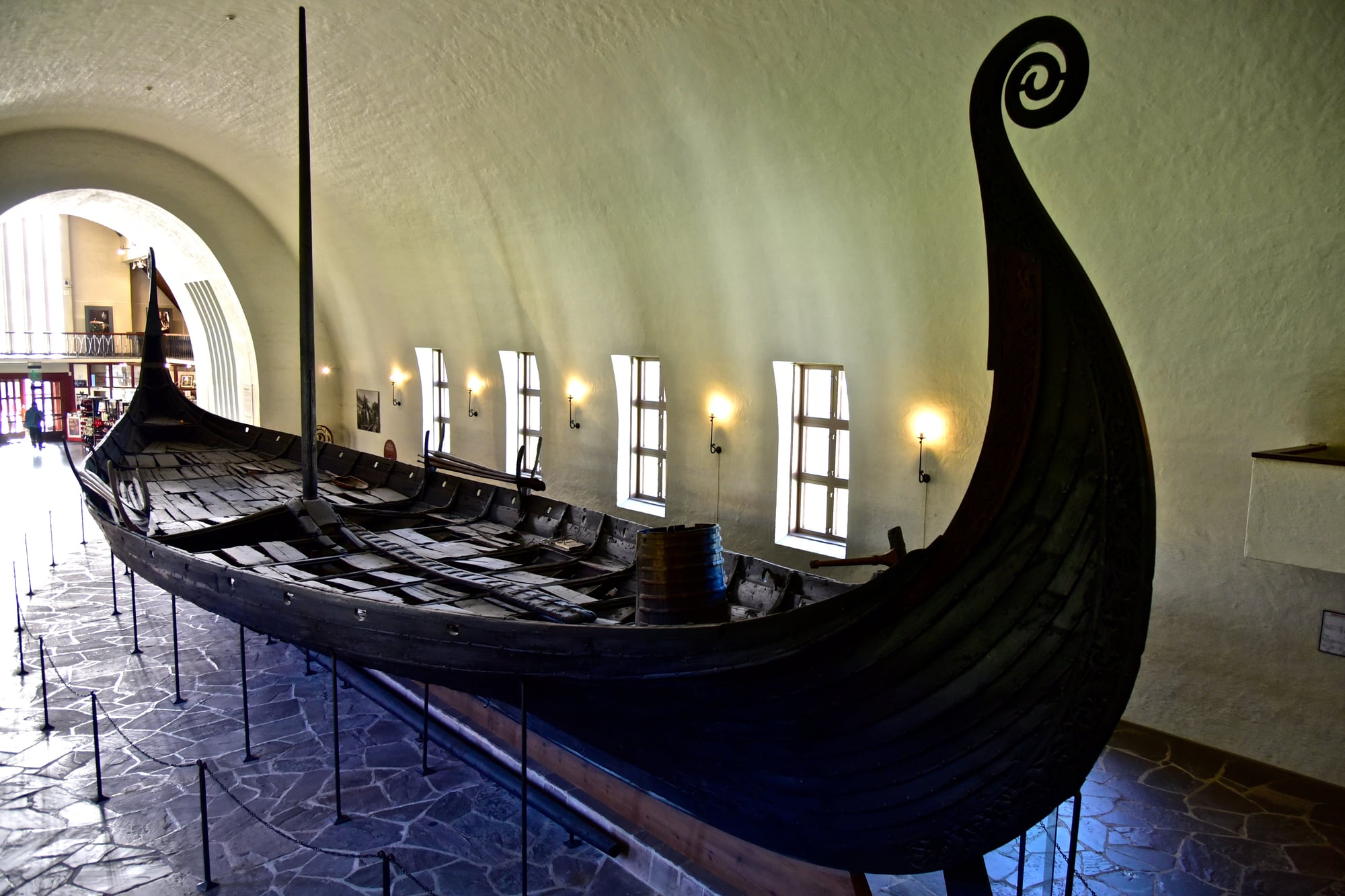
What made these raids possible was the Viking longship. A longship was long, narrow, and fast. It had a single square sail and rows of oars. Its shallow bottom let it sail right up onto a beach or far up a river, so Vikings could strike places nobody thought a ship could reach. A longship could cross the open ocean and still slip into a stream miles inland.
But Vikings did much more than raid. They were also traders, settlers, and explorers. They set up trading towns from Dublin in Ireland to Kyiv in Ukraine. They founded Iceland in the 870s and Greenland around 985. Around 1000 CE, a Viking named Leif Erikson sailed even farther west and reached North America. Archaeologists have found the remains of his small settlement at a place called L'Anse aux Meadows in Canada.
Viking society had farmers, craftsmen, warriors, and chiefs. Women could own property, ask for a divorce, and run farms when their husbands were away. Vikings worshipped many gods, including Odin, the god of wisdom and war, and Thor, the god of thunder. Stories about these gods were passed down for hundreds of years. Many were finally written down in Iceland in books called the sagas.
Did Vikings really wear horned helmets? No. That picture comes from costume designs for an opera in the 1800s. Real Viking helmets were simple iron or leather caps. The horned helmet myth has stuck around anyway, because it looks dramatic on stage.
The Viking Age ended in 1066, when a Norwegian king lost a major battle in England. By then, most Vikings had become Christian and settled into kingdoms. Their ships, sagas, and place names remain. English words like "sky," "knife," and "Thursday" all come from Old Norse, the Vikings' language.
Related
Last updated 2026-04-26