
Geyser
Credit: Wikimedia Commons · Public domain
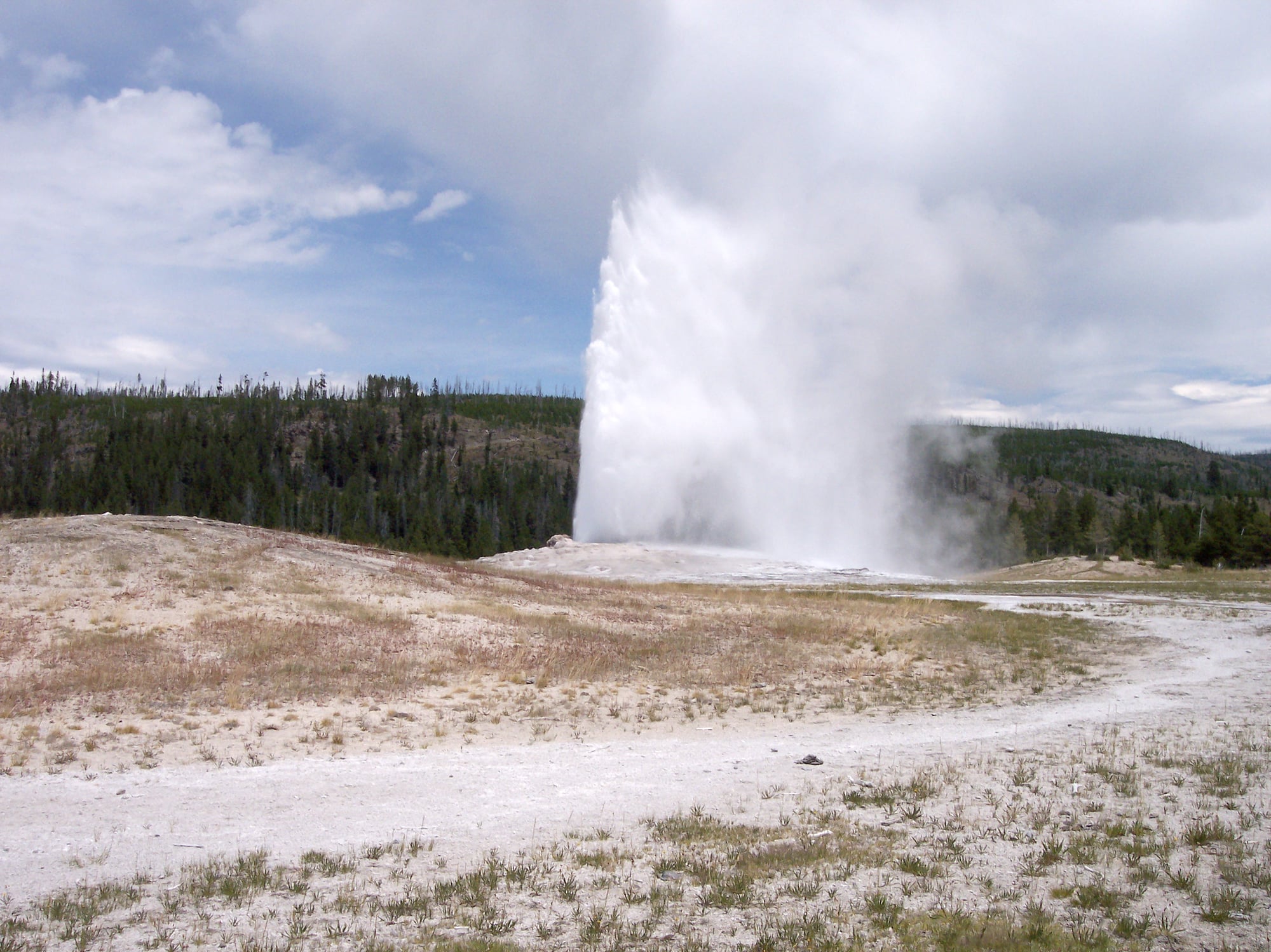
A geyser is a hot spring that shoots boiling water and steam high into the air. Geysers form in places where water from underground meets very hot rock deep inside the Earth. They are rare. There are only about 1,000 geysers in the entire world, and more than half of them are in one place: Yellowstone National Park in the United States.
To make a geyser, three things have to come together. First, there must be hot rock close to the surface, usually near old or active volcanoes. Second, there must be a steady supply of underground water, often from rain or melted snow. Third, the rock around the water must form a narrow, twisty tube that traps the water and lets pressure build up.
Here is how an eruption works. Water seeps down through cracks in the ground until it reaches rock heated by magma. The water gets very hot, but the weight of the water above it keeps it from boiling right away. Pressure builds and builds. Finally, some of the water flashes into steam. Steam takes up much more space than water, so it pushes everything above it straight up and out of the ground. The geyser erupts. Then the tube refills, and the slow heating starts over.
Geysers are picky. The plumbing under the ground has to be just right. If a tube widens, gets blocked, or shifts during an earthquake, a geyser can stop erupting and never start again. This has happened many times in Yellowstone over the years.
The most famous geyser is Old Faithful. It got its name because it erupts on a fairly steady schedule, sending boiling water about 130 feet into the air. That is about as tall as a 13-story building. The tallest active geyser in the world is also in Yellowstone. It is called Steamboat, and its biggest blasts can reach 300 feet, taller than the Statue of Liberty.
Geysers are found in just a few other places on Earth. Iceland has many, and the English word "geyser" actually comes from one of them, named Geysir. Other geyser fields are in New Zealand, Russia, and Chile. Scientists have even spotted geyser-like jets on other worlds. The icy moons Enceladus and Europa shoot water into space through cracks in their frozen surfaces. Studying geysers on Earth helps scientists guess what might be hiding under the ice on those distant moons.
Related
Last updated 2026-04-25