
Bay
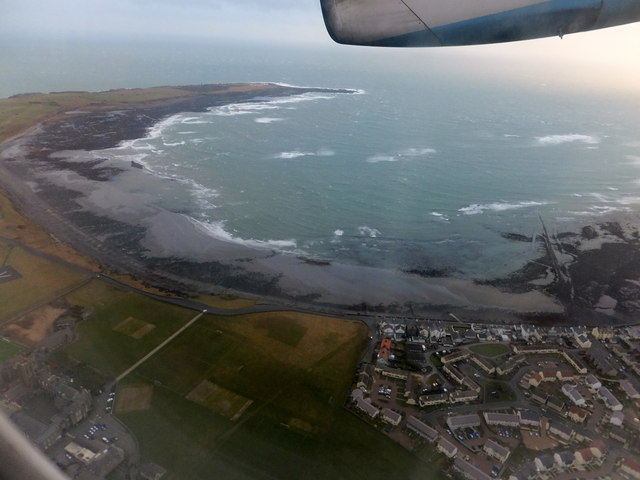
Credit: Richard Hoare · CC BY-SA 2.0
A bay is a body of water that is partly surrounded by land. It is connected to a larger body of water, like an ocean, sea, or lake. Bays are usually smaller than seas but bigger than coves. Their curved shoreline gives ships a safe place to stop, away from the open ocean.
Bays form in several ways. Some are carved out when ocean waves slowly wear away soft rock along a coast. The harder rock around the soft spot stays in place. Over thousands of years, the soft area becomes a wide curve filled with water. This wearing-away process is called erosion.
Other bays are made by moving land. When pieces of Earth's crust shift, they sometimes pull a coastline apart. Water then floods into the new low spot. The San Francisco Bay was made this way. Still other bays were carved by glaciers during the last ice age. As thick rivers of ice slid toward the sea, they scraped out deep valleys. When the ice melted, ocean water rushed in.
Bays are some of the busiest places on Earth. Big cities often grow up around them, because the calm water makes a perfect harbor for ships. New York City, Tokyo, San Francisco, Sydney, and Mumbai all sit on bays. Boats can load and unload there without fighting big ocean waves.
Bays are also rich in wildlife. Rivers often empty into them, bringing fresh water and bits of soil full of nutrients. Where the fresh water mixes with salty ocean water, a special habitat called an estuary forms. Crabs, oysters, shrimp, and many kinds of fish raise their young in these calm, food-filled waters. Birds like herons and pelicans hunt along the shore.
The biggest bay in the world is the Bay of Bengal, between India and Southeast Asia. It is about a thousand miles wide. The Hudson Bay in Canada is also huge, covering an area larger than the state of Texas. Chesapeake Bay, on the East Coast of the United States, is famous for its blue crabs and its long, ragged shoreline.
What makes a bay different from a gulf? The truth is, the line is fuzzy. A gulf is usually larger and reaches deeper into the land, but mapmakers do not always agree. The Gulf of Mexico is bigger than most bays, but the Bay of Bengal is bigger than most gulfs. The names often come from history rather than from a strict rule.
Related
Last updated 2026-04-25