
Sea
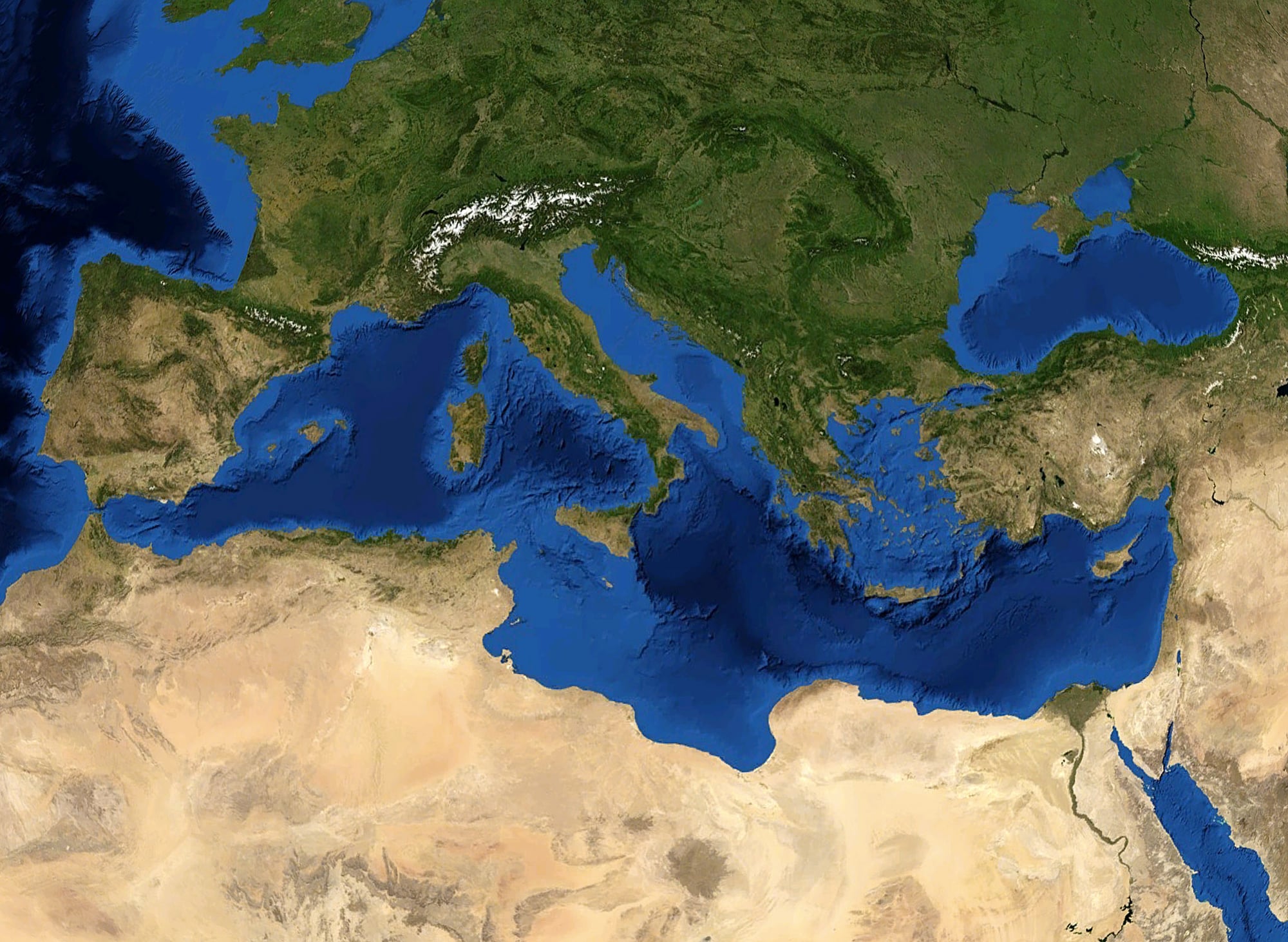
Credit: of the modification : Eric Gaba (Sting) · Public domain
A sea is a large body of salt water that is partly closed in by land. Seas are smaller than oceans and are often connected to one. Some seas, like the Caspian Sea, are completely surrounded by land and act more like giant salty lakes. There are around 50 seas on Earth. Together with the oceans, they cover most of the planet's surface.
Sea water is salty because rivers carry tiny bits of salt from rocks on land into it. The water then evaporates into the sky, but the salt stays behind. Over millions of years, the salt builds up. A gallon of sea water holds about a cup of salt. Some seas are much saltier than others. The Dead Sea, between Israel and Jordan, is almost ten times saltier than most sea water. People float on top of it without trying.
Seas come in different shapes and types. The Mediterranean Sea sits between Europe, Africa, and Asia, and connects to the Atlantic Ocean through a narrow gap called the Strait of Gibraltar. The Caribbean Sea is dotted with thousands of islands. The Red Sea is famous for its bright coral reefs. The Sargasso Sea, in the middle of the Atlantic, has no land borders at all. It is shaped instead by ocean currents that swirl around it.
Seas are full of life. Sunlight reaches down only about 650 feet, so most plants and algae live near the surface. Below that, the water gets darker and colder. Fish, whales, sea turtles, octopuses, jellyfish, and millions of tiny creatures called plankton all share these waters. Plankton may be small, but they make up the base of the sea's food web. They also produce a large share of the oxygen we breathe.
People have lived near seas for thousands of years. Seas gave early humans food, salt, and a way to travel between distant lands. The ancient Greeks, Phoenicians, and Vikings became powerful in part because they were skilled sailors. Today, ships still carry most of the goods that move between countries.
Seas are also changing. As the planet warms, sea water expands and ice on land melts into it. Sea levels are slowly rising. Pollution and overfishing have hurt many sea creatures. Scientists are still mapping the seafloor, and they say we know less about the deep sea than we do about the surface of the Moon.
Related
Last updated 2026-04-25