
Erosion
Credit: Chensiyuan · CC BY-SA 4.0
Erosion is the slow process of wearing away rock and soil and carrying the pieces somewhere else. It is one of the main ways the surface of the Earth changes over time. Wind, water, ice, and gravity all cause erosion. Without it, there would be no canyons, no sandy beaches, and no wide river valleys.
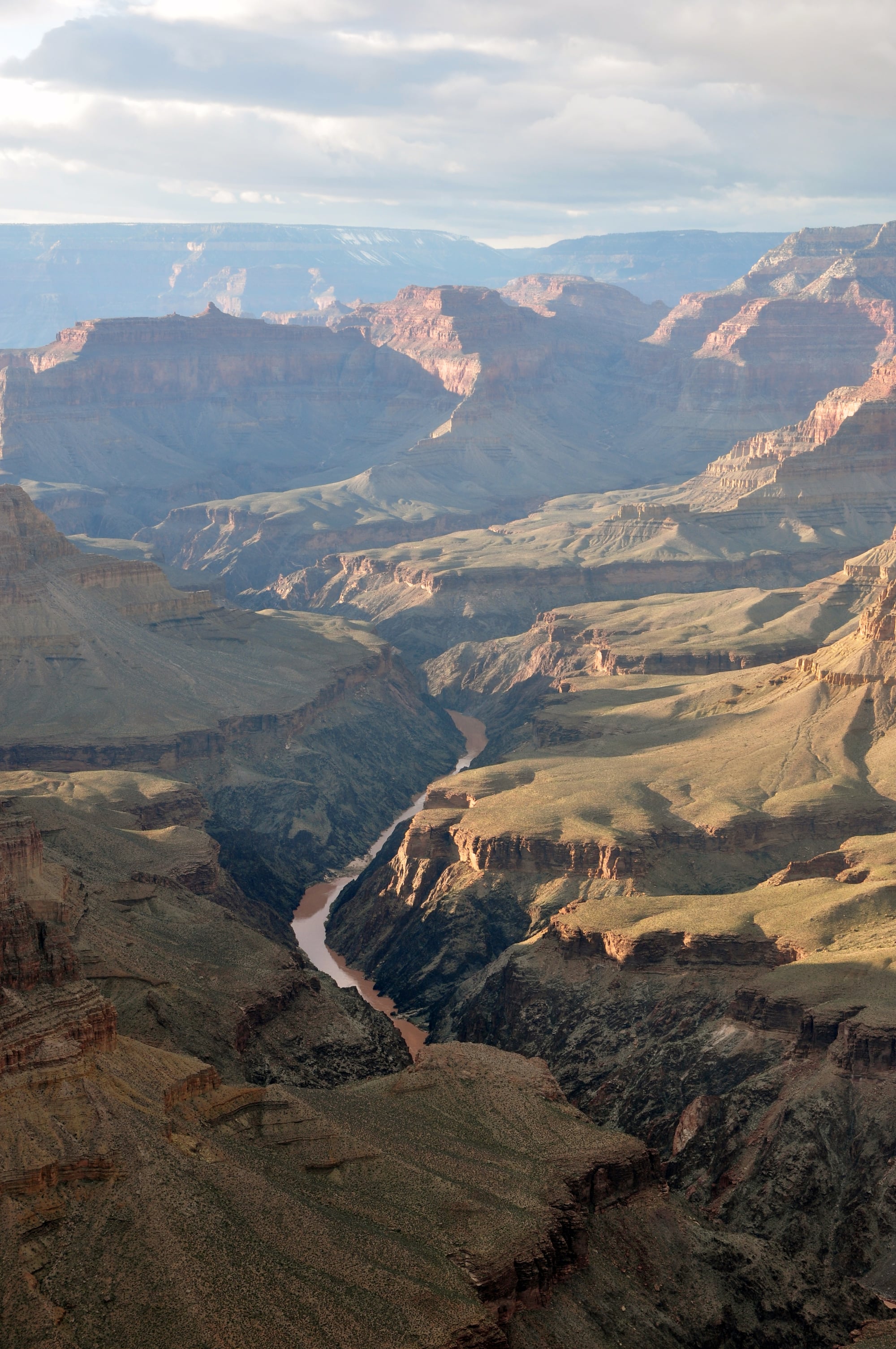
The most powerful cause of erosion on Earth is moving water. Rivers pick up small bits of rock and sand and drag them along. Over millions of years, this slowly cuts into the land. The Grand Canyon was carved this way by the Colorado River. Ocean waves do the same thing along coasts, breaking down cliffs and grinding rock into sand. Most of the sand on a beach is made of tiny pieces of rock that water carried there.
Wind is another important force. In deserts, wind picks up loose sand and blows it against rocks. Over time, the sand acts like sandpaper. It can carve stones into strange shapes and even cut holes through them. Wind erosion is also why dust storms happen on dry farmland.
Ice causes some of the biggest changes of all. Glaciers are huge sheets of ice that move very slowly across the land. As a glacier slides, it scrapes up rock and dirt underneath it. When the ice finally melts, it leaves behind wide U-shaped valleys, lakes, and piles of stone. Many lakes in the northern United States and Canada were carved out by glaciers during the last ice age, more than 10,000 years ago.
Gravity also plays a part. When rain soaks the soil on a steep hill, gravity can pull the wet earth downhill in a landslide. Even without a landslide, soil slowly creeps down slopes year after year.
Erosion can be a problem for people. When farmers cut down trees or plow up grass, the soil has nothing holding it in place. Wind and rain can wash it away. In the 1930s, huge dust storms swept across the central United States during a disaster called the Dust Bowl. Millions of acres of farmland were ruined when the topsoil blew away.
The opposite of erosion is deposition. That is when wind, water, or ice drops the bits of rock and soil they were carrying. Erosion takes material from one place; deposition leaves it in another. Together, the two processes constantly reshape the planet, even though the changes are usually too slow for people to see.
Related
Last updated 2026-04-25