
Ocean
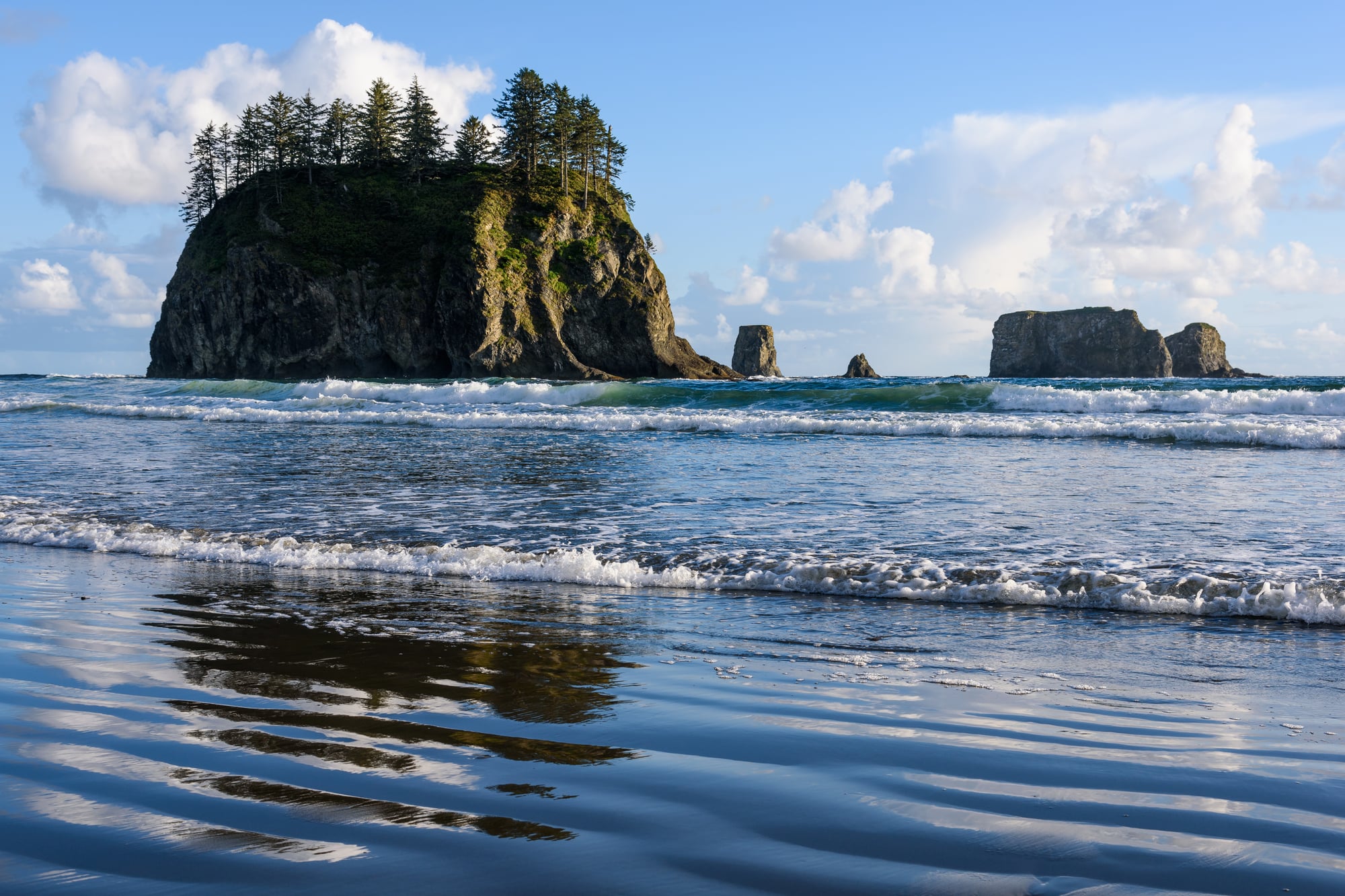
Credit: King of Hearts · CC BY-SA 4.0
The ocean is the huge body of salt water that covers most of Earth's surface. It is one continuous body of water, but people divide it into five named oceans: the Pacific, Atlantic, Indian, Southern, and Arctic. Together they cover about 71 percent of the planet. From space, Earth looks blue because of all the ocean.
The ocean holds about 97 percent of all the water on Earth. The other three percent is fresh water, locked up in rivers, lakes, glaciers, and underground. Ocean water is salty because rivers carry tiny bits of salt from rocks into the sea. The water leaves again as vapor when the sun heats it, but the salt stays behind. Over billions of years, the salt has built up.
The ocean is very deep. Its average depth is about 12,100 feet, more than two miles down. The deepest spot is in the Pacific Ocean, in a place called the Mariana Trench. It reaches almost 36,000 feet below the surface. Mount Everest, the tallest mountain on Earth, would fit inside that trench with more than a mile of water still above its peak.
Sunlight only reaches the top few hundred feet of the ocean. Below that is the twilight zone, where the light fades to a deep blue. Below that is the midnight zone, where no sunlight reaches at all. The water there is near freezing, the pressure is crushing, and yet animals still live there. Some glow in the dark to find food or attract mates.
The ocean shapes life on the whole planet. Tiny plants and bacteria called plankton drift near the surface. They make about half of the oxygen we breathe through photosynthesis. The ocean also stores huge amounts of heat from the sun and moves it around the world in giant currents. These currents change the weather on land. They are why parts of Europe stay warm in winter even though they sit far north.
Humans have explored only a small part of the ocean. Better maps exist for the surface of Mars than for the ocean floor. Scientists think millions of species may live in the deep sea that no one has ever seen. New ones get discovered every year.
The ocean is also under stress. Plastic trash, oil spills, overfishing, and warmer water from climate change are damaging coral reefs and harming sea life. How well the ocean recovers will shape the future of nearly every living thing on Earth.
Related
Last updated 2026-04-25