
Clownfish
Credit: Janderk · Public domain
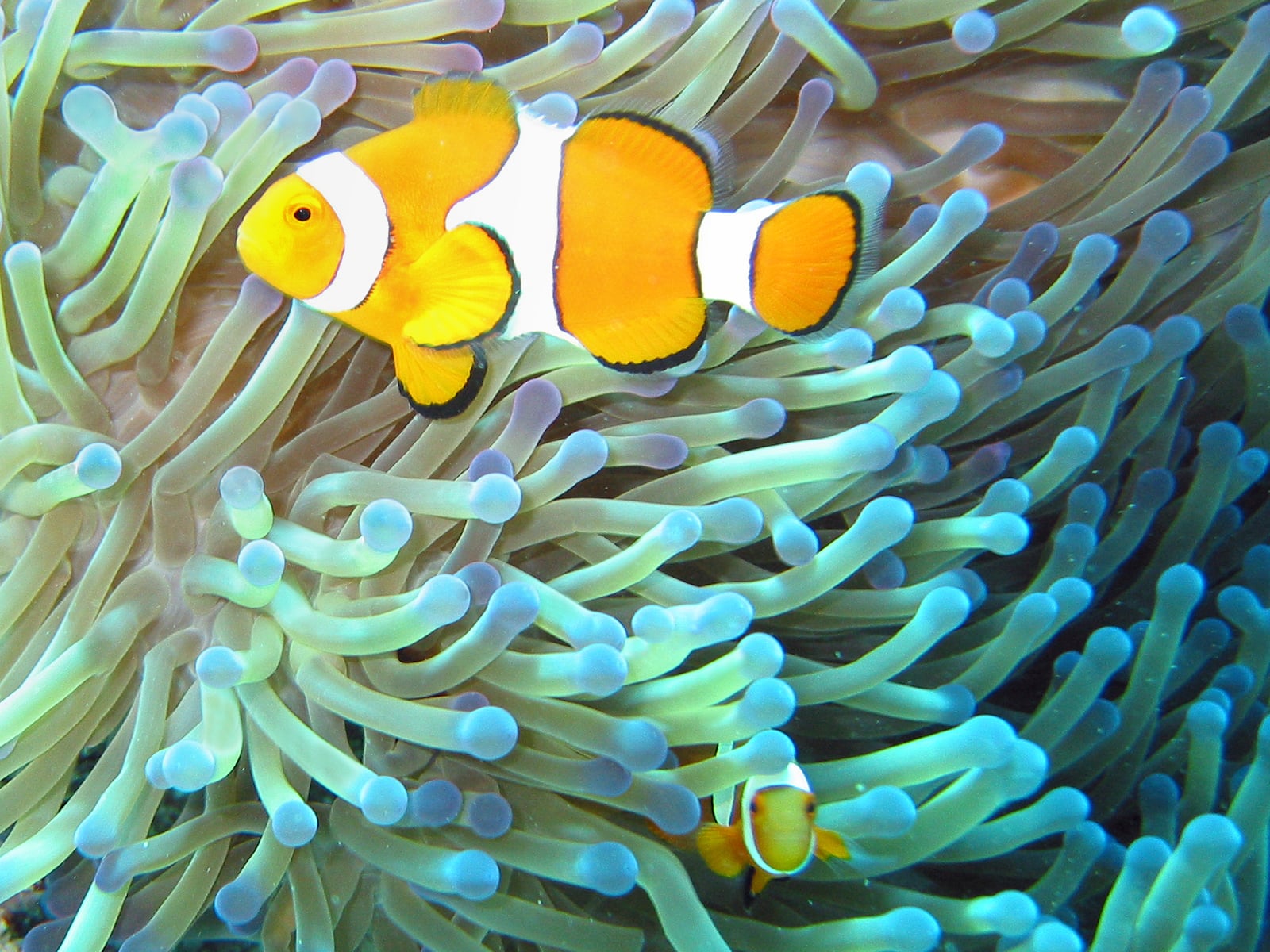
The clownfish is a small, brightly colored fish that lives in the warm, shallow waters of the Pacific and Indian Oceans. Most clownfish are orange with white stripes outlined in black. They grow only about 4 inches long, roughly the length of a crayon. There are about 30 different species of clownfish. The most famous one is the orange clownfish, the kind you see in the movie Finding Nemo.
Clownfish live among the waving arms of sea anemones. An anemone looks like an underwater flower, but it is actually an animal. Its tentacles are covered in tiny stingers that shoot out poison to catch small fish for food. Somehow, clownfish are not stung. A thick layer of slime coats their bodies and protects them. Scientists think the slime tricks the anemone into treating the clownfish like part of itself.
This is a perfect example of symbiosis, which is when two different animals help each other survive. The anemone protects the clownfish from bigger predators that would get stung if they tried to attack. In return, the clownfish chases away fish that would nibble on the anemone. Clownfish also drop bits of food that the anemone can eat, and their waste acts like a tiny underwater fertilizer. Neither animal could live as well without the other.
Every clownfish group has a strict pecking order. At the top is one large female. Below her is one breeding male. The rest are smaller males who wait their turn. Every clownfish starts life as a male. If the female dies, the top male changes sex and becomes the new female. The next male in line steps up to become her partner. This ability to switch sex is called sequential hermaphroditism, and it is rare among animals.
Clownfish lay their eggs on flat rocks right next to their anemone home. The father does most of the parenting. He fans the eggs with his fins to keep them clean and full of oxygen. He eats any eggs that go bad so they do not rot. After about a week, the eggs hatch, usually on a night with a bright moon. The tiny babies drift away in the open ocean for a few weeks before finding an anemone of their own.
Coral reefs, where clownfish live, are in trouble. Warmer ocean water and pollution are killing the corals and anemones they need. Protecting reefs means protecting the clownfish's home too.
Related
Last updated 2026-04-22