
Coral
Credit: Jerry Reid · Public domain
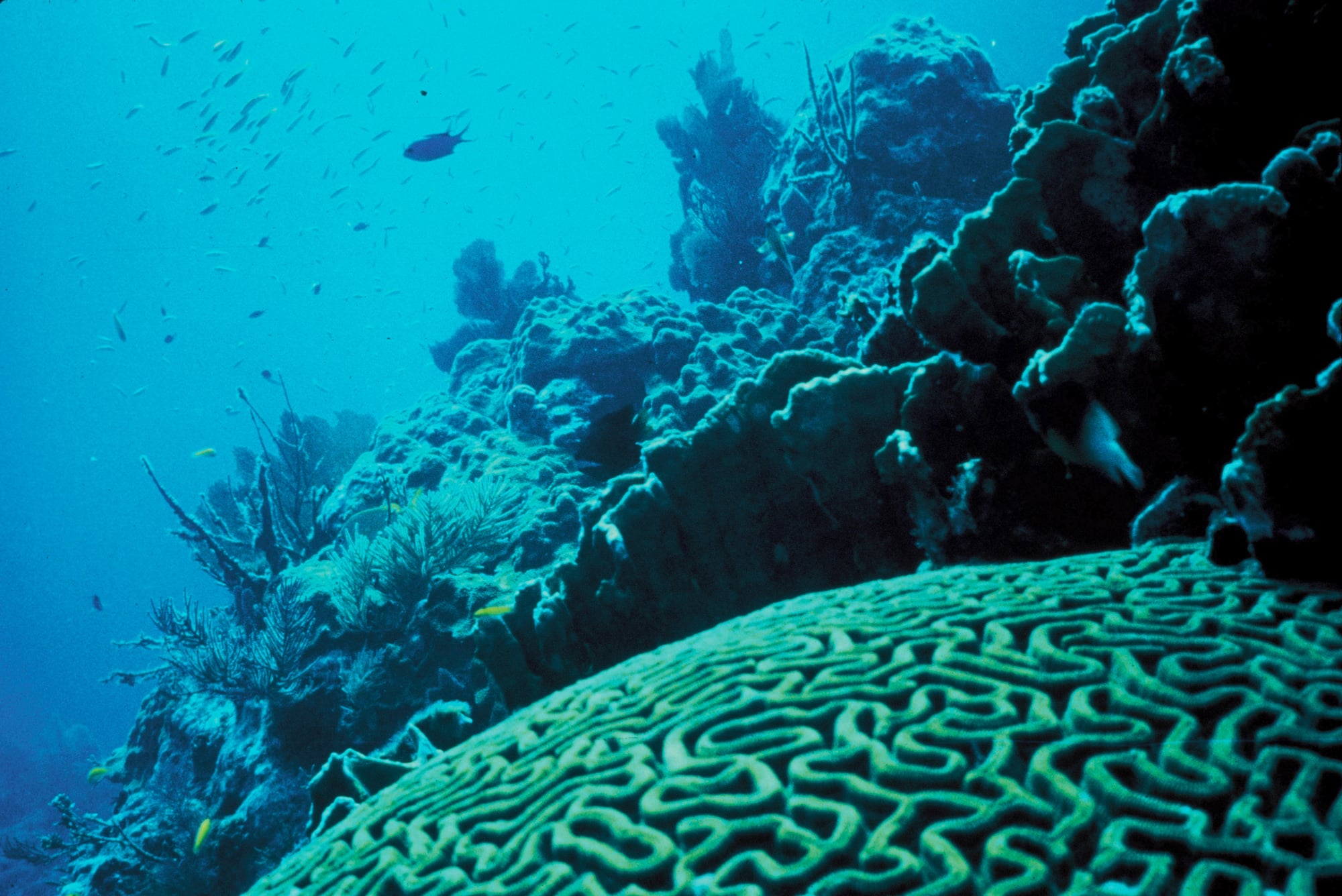
Coral is a small sea animal that lives attached to the ocean floor. Most corals live in warm, shallow water near the coasts of tropical countries. A single coral animal is called a polyp. A polyp has a soft tube-shaped body with a mouth at the top surrounded by tiny stinging arms called tentacles. Most coral polyps are the size of a pencil eraser or smaller.
Coral polyps are closely related to jellyfish and sea anemones. Like their cousins, they use their stinging tentacles to catch tiny animals from the water and pull the food into their mouths. But corals do something their cousins do not. They build hard skeletons out of limestone, the same material found in chalk and seashells. When a polyp dies, its skeleton is left behind. New polyps grow on top of the old ones.
Over thousands of years, those skeletons pile up into huge rocky structures called coral reefs. The biggest reef in the world is the Great Barrier Reef off the coast of Australia. It stretches about 1,400 miles, farther than the distance from New York City to Miami. It is the largest structure built by living things anywhere on Earth.
Most corals have a secret partner. Tiny plant-like algae called zooxanthellae live inside each polyp's body. The algae make food from sunlight through photosynthesis. They share that food with the coral, and the coral gives the algae a safe home. The algae also give the coral its bright color. This is why reefs grow only in clear, shallow water where sunlight can reach.
When ocean water gets too warm, the coral gets stressed and pushes the algae out. The coral turns ghostly white. Scientists call this coral bleaching. A bleached coral is not dead yet, but it is starving. If the water does not cool down, the coral will die. Bleaching events have damaged reefs all over the world as ocean temperatures rise.
Reefs matter far beyond their beauty. About one quarter of all ocean species spend part of their lives on a coral reef, even though reefs cover less than one percent of the ocean floor. Fish, sea turtles, sharks, octopuses, shrimp, and thousands of other animals depend on them. Reefs also protect coastlines from big storm waves. Scientists around the world are working to save coral reefs. Some are even growing new coral in underwater nurseries and planting it back on damaged reefs.
Related
Last updated 2026-04-22