
Parthenon
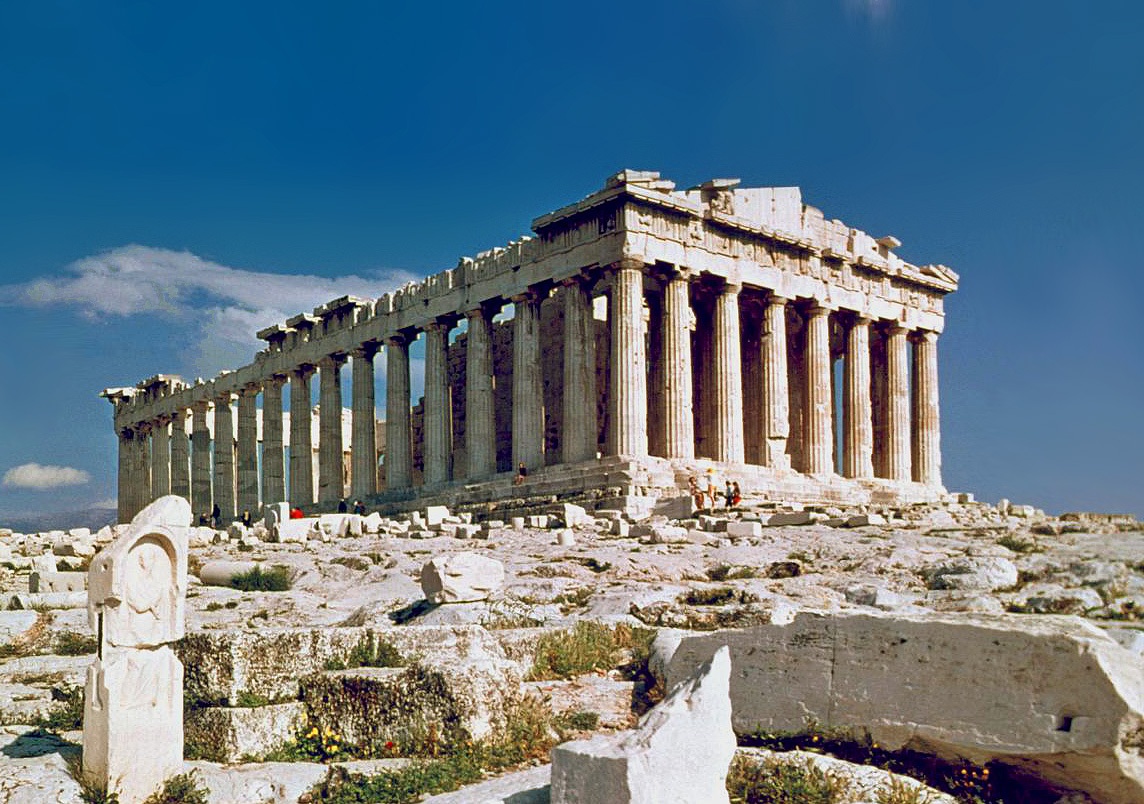
Credit: Steve Swayne · CC BY 2.0
The Parthenon is an ancient Greek temple that sits on top of a rocky hill in Athens, Greece. The hill is called the Acropolis. The temple was built between 447 and 432 BCE to honor the goddess Athena, the protector of the city. It is one of the most famous buildings in the world, and it has been standing for nearly 2,500 years.
The Parthenon is made almost entirely of white marble. The marble was cut from a mountain about 10 miles away and hauled up the steep hill by oxen and workers. The temple is about 228 feet long and 101 feet wide. It is held up by 46 tall outer columns. Each column is made of separate stone drums stacked on top of each other.
Greek builders used clever tricks to make the temple look perfect to the human eye. Straight columns actually look thinner in the middle, so the builders made the columns slightly fatter in the middle to fix that. The floor is not flat either. It curves gently upward in the center. These small adjustments are the reason the Parthenon looks so balanced.
Inside stood a giant statue of Athena. It was almost 40 feet tall, taller than a three-story building. The sculptor Phidias covered it in ivory and over a ton of gold. The statue is long gone, but ancient writers described it in detail.
The Parthenon has had many lives. The Greeks worshipped Athena there for about 800 years. Later it became a Christian church, then a mosque after the Ottoman Empire took over Athens. In 1687, it was being used to store gunpowder during a war. A cannonball hit the building and the gunpowder exploded. The roof and many walls were blown apart in an instant.
Even broken, the Parthenon stayed famous. In the early 1800s, a British nobleman named Lord Elgin took many of its sculptures and shipped them to London. They are still on display at the British Museum today. Greece has been asking for the sculptures back for many years. The two countries still disagree about who should keep them. Some people say the sculptures belong with the building they were carved for. Others say the British Museum saved them from further damage.
Today, the Parthenon is being slowly restored. Workers replace damaged pieces with new marble cut from the same ancient mountain. Millions of visitors climb the Acropolis each year to see it. The building has outlasted empires, religions, and wars, and it still stands above the city it was built to protect.
Related
Last updated 2026-04-26