
Capitalism
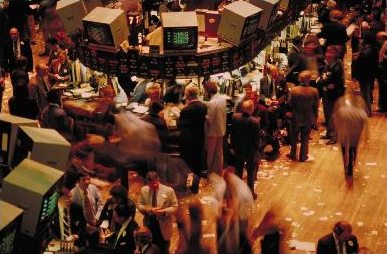
Credit: en:User:Taak · Public domain
Capitalism is an economic system in which businesses and property are owned by private people, not by the government. In a capitalist system, people start companies, buy and sell goods, and try to earn money called profit. Prices are set by what buyers will pay and what sellers will accept. Most countries in the world today, including the United States, run on some form of capitalism.
The basic idea is simple. A person who owns a bakery decides what to bake, what to charge, and who to hire. Customers decide whether to buy. If the bread is good and the price is fair, the bakery makes money. If not, it closes. This back and forth between buyers and sellers is called the market.
Capitalism grew out of an older system called feudalism, where kings and nobles owned almost all the land. As trade grew in Europe in the 1500s and 1600s, merchants gained wealth and power. The Industrial Revolution in the 1700s and 1800s sped things up. Factories, railroads, and banks created huge new businesses. A Scottish thinker named Adam Smith wrote a famous book in 1776 called The Wealth of Nations. He argued that when people freely trade and compete, the whole society can become richer.
Supporters of capitalism say it rewards hard work and good ideas. Competition pushes companies to make better products at lower prices. New inventions, from the light bulb to the smartphone, often came from people hoping to sell something useful and earn money doing it.
Critics point to real problems. Capitalism can create big gaps between rich and poor. Workers in early factories often labored 14 hours a day in dangerous conditions for tiny pay. Companies can also harm the environment when pollution is cheaper than cleaning up. These worries led to labor unions, child labor laws, and rules about safety and pollution.
No country runs on pure capitalism. Even the most market-friendly nations have public schools, public roads, fire departments, and laws that protect workers and customers. Economists still argue about the right balance. How much should governments step in? How much should be left to the market? The debate has gone on for more than 200 years and shows no sign of ending.
The next time you buy a snack at a store, you are taking part in a system that shapes much of the modern world.
Related
Last updated 2026-04-26