
Native Americans
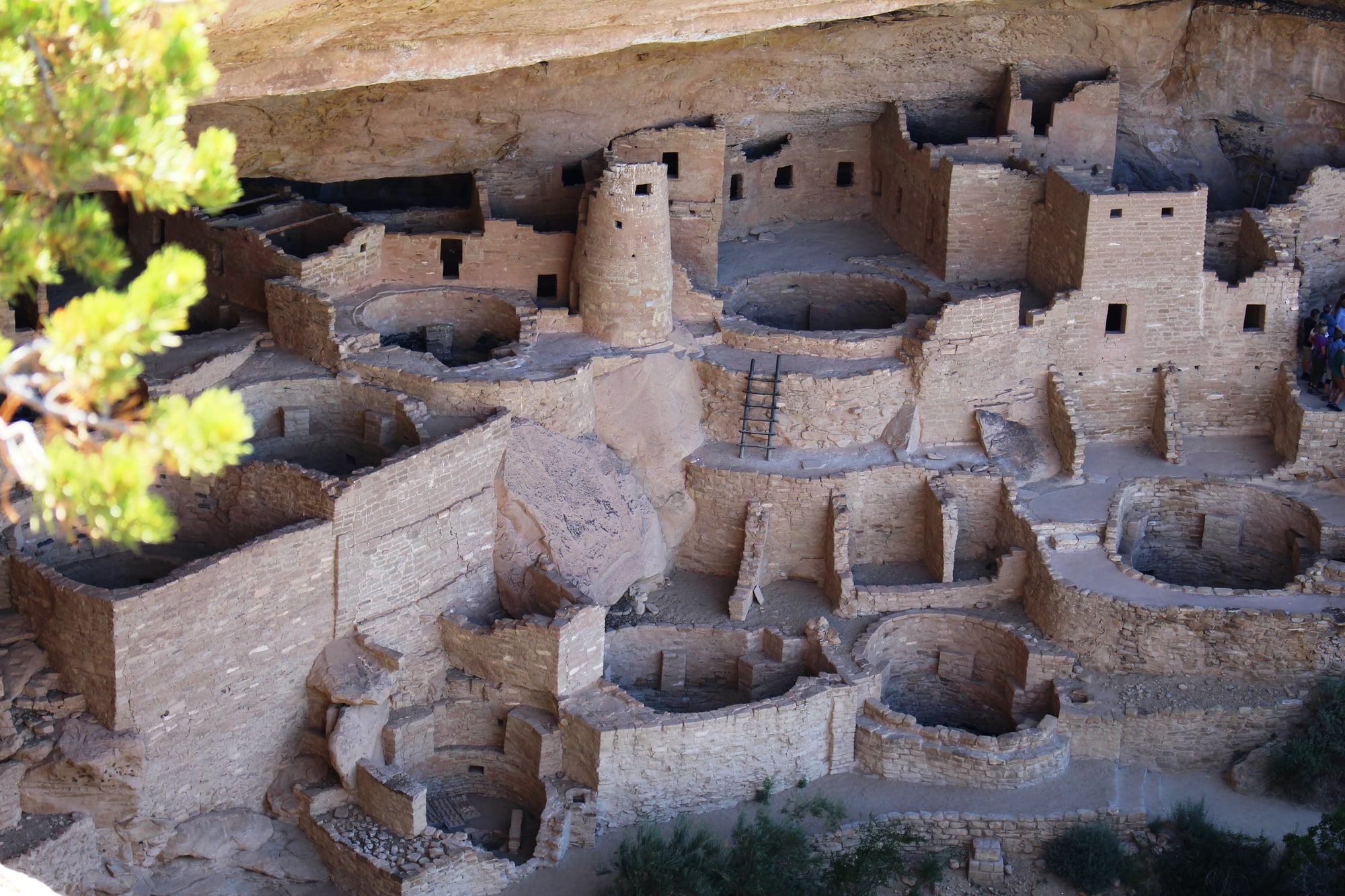
Credit: Lacee Curtis · CC BY-SA 4.0
Native Americans are the original peoples of North and South America. They lived across both continents for thousands of years before Europeans arrived in the late 1400s. Today, "Native American" usually refers to the Indigenous peoples of what is now the United States. In Canada they are often called First Nations, and in Mexico and Central America, Indigenous peoples. There are 574 federally recognized tribes in the United States today, and many more communities that are not on that list.
How they got here
Scientists agree that the first people in the Americas came from Asia, but they argue about exactly when and how. For a long time, most thought people walked across a land bridge from Siberia to Alaska about 13,000 years ago. New finds keep pushing that date back. Some sites in North and South America may be 20,000 years old or older. A few researchers now think people came partly by boat, traveling along the coast. The story is still being rewritten as new evidence comes in.
Many peoples, not one
Before Europeans arrived, the Americas were home to millions of people. Estimates range from about 50 million to more than 100 million across both continents. They were not one group. They spoke hundreds of different languages and lived in very different ways.
The Inuit hunted seals and whales in the Arctic. The Haida built huge cedar canoes on the Pacific coast. The Pueblo peoples built towns of stone and adobe in the Southwest, some of them four or five stories tall. The Lakota and Cheyenne hunted bison on the Great Plains. The Cherokee and Creek farmed corn, beans, and squash in the Southeast. The Iroquois, in what is now New York, formed a powerful league of six nations with a written constitution called the Great Law of Peace.
Far to the south, the Maya built stone cities and studied the stars. The Aztecs ruled an empire from a city built on a lake. The Inca ran a road system through the Andes Mountains that stretched for 25,000 miles, longer than the distance around Earth at the equator.
Life before contact
Native peoples shaped the land they lived on. They cleared fields, set controlled fires to help grasslands grow, and built mounds, dams, and irrigation canals. They invented or first grew many foods the world now depends on, including corn, potatoes, tomatoes, peppers, chocolate, and peanuts. About three out of every five food crops grown today were first farmed by Indigenous peoples in the Americas.
Religion, story, and family were tied to the land. Many tribes traced family through the mother's side. Children learned through stories told by elders. Animals, mountains, and rivers were often seen as relatives, not just resources.
Contact and catastrophe
When Europeans arrived starting in 1492, everything changed. The biggest killer was not war but disease. Smallpox, measles, and flu had been in Europe for centuries, and Europeans had built up some resistance. Native peoples had never been exposed to these germs. In some regions, 50 to 90 percent of the people died within a hundred years of contact. Whole villages were wiped out before they ever saw a European face.
War, slavery, and forced labor took more lives. Land was taken by treaty and by force. As the United States grew, the government signed hundreds of treaties with tribes and broke most of them. In 1830, President Andrew Jackson signed the Indian Removal Act. The U.S. Army forced the Cherokee, Creek, Choctaw, Chickasaw, and Seminole peoples to walk west to land in present-day Oklahoma. Thousands died on the journey. The Cherokee call it the Trail of Tears.
In the late 1800s, Native children were taken from their families and sent to boarding schools. They were punished for speaking their own languages or wearing traditional clothes. The schools tried to erase Native cultures. Many children never came home.
Native America today
Native peoples are still here. There are about 9.7 million people in the United States who identify as Native American or Alaska Native. Tribes run their own governments, courts, schools, and businesses on lands called reservations, and many members live in cities too. Languages that almost died are being taught again to children. Powwows, ceremonies, and storytelling continue.
Native nations also keep fighting for treaty rights, clean water, and protection of sacred sites. In 2021, Deb Haaland, a member of the Pueblo of Laguna, became the first Native American to lead a U.S. cabinet department, the Department of the Interior, the very agency that once ran the boarding schools. The history of Native America is not finished. It is still being written by the people who have lived here longest.
Related
Last updated 2026-04-26