
Sacagawea
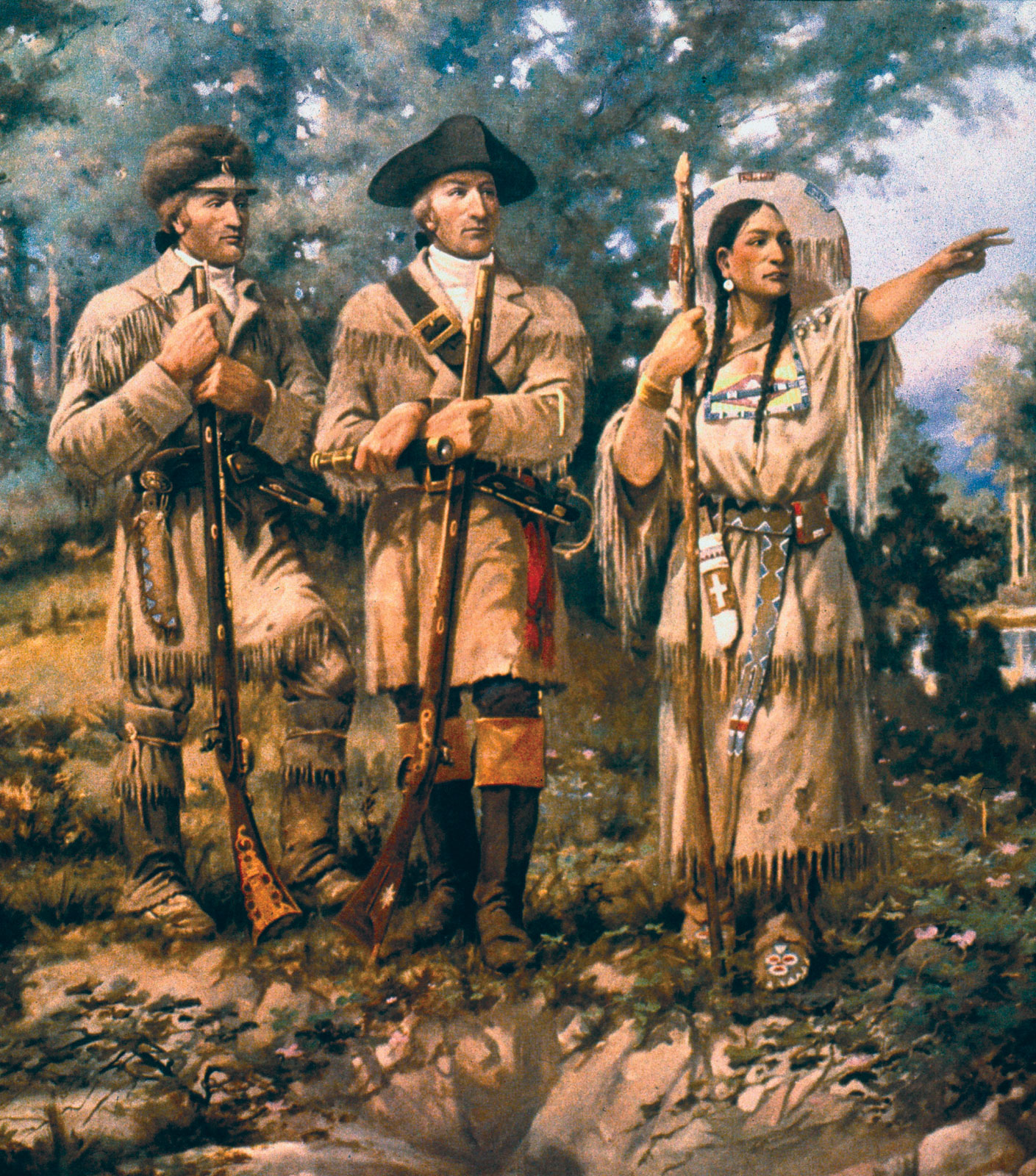
Credit: Edgar Samuel Paxson · Public domain
Sacagawea was a Lemhi Shoshone woman who helped guide the Lewis and Clark Expedition across western North America. She was born around 1788 in what is now Idaho. She traveled with the explorers from 1805 to 1806. Her work as a guide, translator, and peacemaker helped the expedition succeed.
When Sacagawea was about 12 years old, a group of Hidatsa warriors raided her village. They captured her and took her hundreds of miles east, to what is now North Dakota. A few years later, a French Canadian fur trader named Toussaint Charbonneau took her as one of his wives. She was still only a teenager.
In 1804, Meriwether Lewis and William Clark arrived nearby. President Thomas Jefferson had sent them to explore the new Louisiana Purchase and find a route to the Pacific Ocean. They hired Charbonneau as a translator. They wanted Sacagawea too, because she spoke Shoshone. The expedition would need horses from the Shoshone to cross the Rocky Mountains.
Sacagawea set out with the group in April 1805. She was carrying her two-month-old son, Jean Baptiste. Clark nicknamed the baby "Pomp." Sacagawea did far more than translate. She knew which wild plants were safe to eat. She calmed the fears of Native peoples the explorers met. A war party seeing a woman and baby with the group understood it was not coming to fight.
Her most famous moment came in August 1805. The expedition met a band of Shoshone in the mountains. Sacagawea began to translate, then realized the chief was her own brother, Cameahwait. She had not seen him since she was kidnapped years before. The reunion helped Lewis and Clark get the horses they needed to cross the Rockies before winter.
The expedition reached the Pacific Ocean in November 1805 and made it back home in 1806. Sacagawea received nothing for her work. Her husband was paid about $500 and given land. After the trip, she lived in St. Louis for a time so Clark could help educate her son. Most historians believe she died in 1812, around age 24, from a sickness. A few Shoshone stories say she lived much longer and died on a reservation in 1884. The truth is still debated.
Today Sacagawea appears on the U.S. one-dollar coin. There are more statues of her in the United States than of almost any other woman.
Related
Last updated 2026-04-26