
Drone
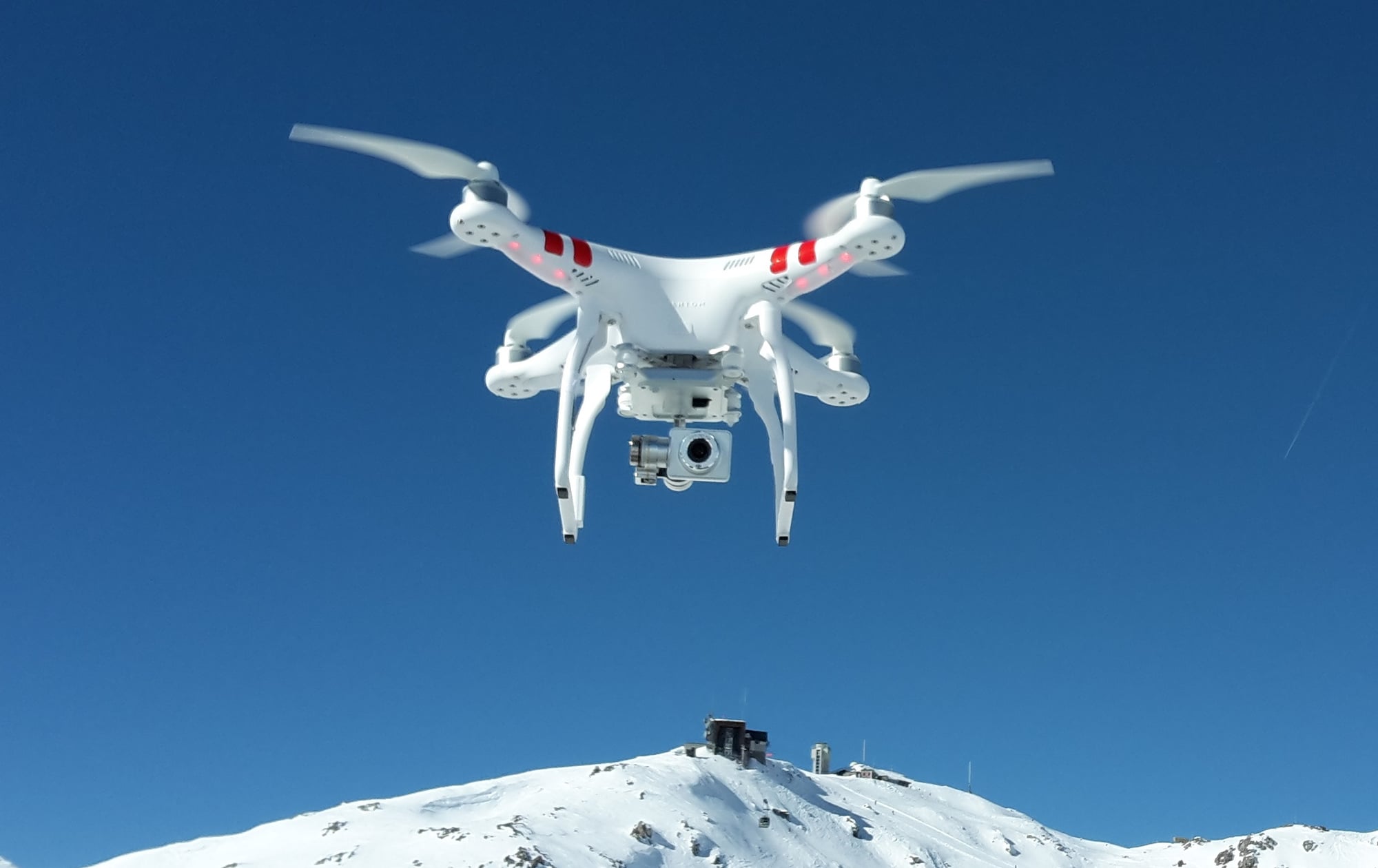
Credit: Capricorn4049 · CC BY-SA 4.0
A drone is a flying machine that has no pilot inside it. Most drones are small aircraft with four spinning propellers, called quadcopters. A person on the ground controls the drone using a remote, a phone, or a computer. Some drones can also fly themselves by following a path stored in their software.
Drones come in many sizes. The smallest can fit in the palm of your hand. The biggest military drones have wingspans of 130 feet, wider than a Boeing 737 jet. In between are the medium-sized drones used by photographers, farmers, and delivery companies.
Most small drones lift off using four propellers. Each propeller spins very fast and pushes air down. That push, called thrust, lifts the drone up. To turn or move sideways, the drone speeds up some propellers and slows down others. A computer chip inside makes these changes hundreds of times per second. Without that chip, the drone would tip over and crash in less than a second.
Drones do many useful jobs. Farmers use them to check crops and spray water only where it is needed. Filmmakers use them to shoot movie scenes from the sky. Scientists fly drones over volcanoes, glaciers, and forests where it would be dangerous for people to go. Search and rescue teams use drones with heat cameras to find lost hikers at night. Some companies are testing drones that deliver medicine to hospitals or drop packages at houses.
Armies also use drones. Military drones can stay in the sky for more than 24 hours and carry cameras or weapons. They are flown by pilots sitting in offices thousands of miles away. People around the world disagree about whether armed drones make war safer or more dangerous, and governments are still arguing over what rules should apply.
Drones cause problems too. They can crash into airplanes, fly too close to wildfires, or peek into people's backyards. Because of this, most countries have rules about where drones can fly and how high they can go. In the United States, drones usually cannot fly above 400 feet or near airports. Larger drones must be registered, like cars.
The word "drone" was first used because the buzzing sound of an early test plane reminded people of a male bee, which is also called a drone. The first remote-controlled flying machines were built more than 100 years ago, but the small, cheap drones most people know today only became common around 2010.
Related
Last updated 2026-04-25