
Mars Rover
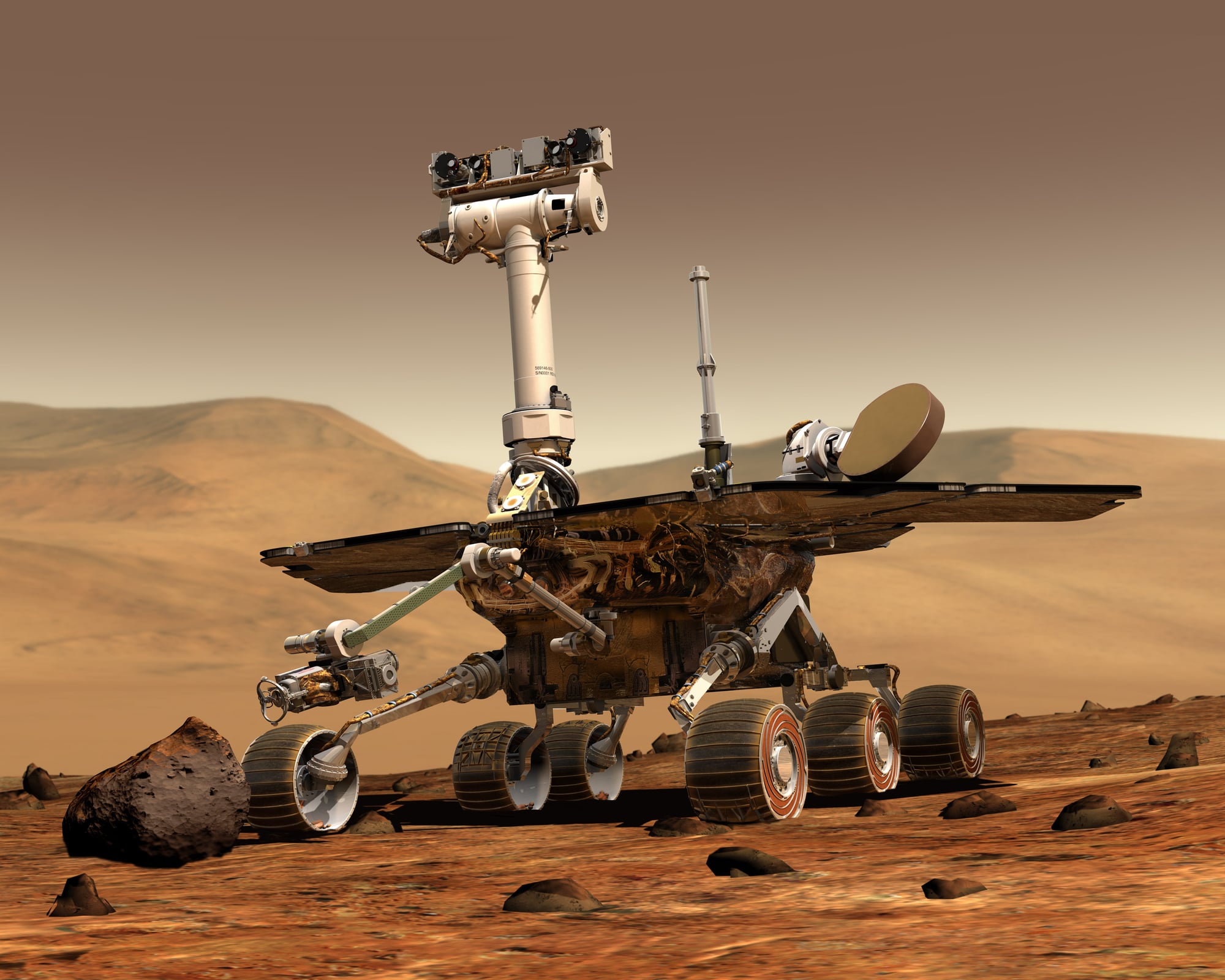
Credit: NASA/JPL/Cornell University, Maas Digital LLC · Public domain
A Mars rover is a robot vehicle that drives across the surface of Mars. Rovers are sent by space agencies on Earth to explore the planet, take pictures, and study the rocks and soil. They are controlled by teams of scientists and engineers millions of miles away. So far, five rovers have landed safely and driven on Mars, all built by NASA in the United States. China landed its first rover, Zhurong, in 2021.
The first Mars rover was Sojourner, which landed in 1997. It was about the size of a microwave oven and only drove about 330 feet in total. Since then, rovers have gotten much bigger and smarter. Curiosity, which landed in 2012, is the size of a small car. Perseverance, which landed in 2021, is even bigger and carries 23 cameras.
Mars is about 140 million miles from Earth on average. Radio signals take between 5 and 20 minutes to travel each way. That means a rover cannot be driven like a remote-control car. If a driver on Earth saw a cliff ahead, the rover would have fallen off long before the warning arrived. Instead, engineers send a list of instructions once a day. The rover uses its own cameras and computer to avoid rocks and holes on its own.
Landing a rover is one of the hardest parts. Mars has a thin atmosphere, so parachutes alone cannot slow a heavy rover enough. Curiosity and Perseverance used a trick called the "sky crane." A rocket-powered platform hovered above the ground and gently lowered the rover on cables. Engineers call the landing "seven minutes of terror," because the whole trip from the top of the atmosphere to the ground takes about that long.
The rovers look for signs that Mars once had life. Billions of years ago, Mars had rivers, lakes, and maybe even an ocean. The rovers have found dried-up riverbeds, clay, and salts, all clues that liquid water used to flow. Perseverance has also collected tubes of rock and soil. A future mission is supposed to pick them up and bring them back to Earth, where scientists can study them in labs.
We still do not know if life ever existed on Mars. That is the biggest question the rovers are trying to answer. Every drive, every photo, and every scoop of dirt might bring us closer to finding out.
Related
Last updated 2026-04-22