
Artificial Intelligence
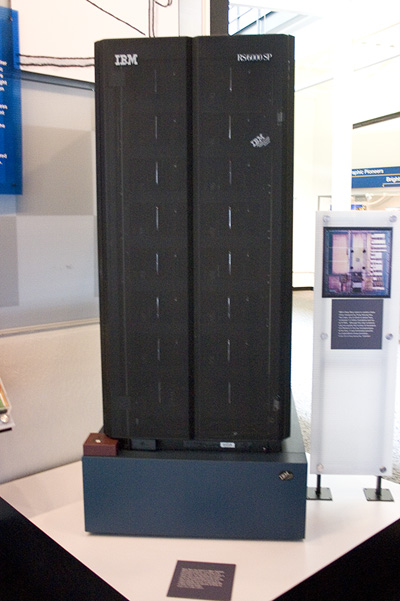
Credit: James the photographer · CC BY 2.0
Artificial intelligence, often called AI, is the science of making computers do things that normally need human thinking. That includes seeing, listening, reading, talking, solving problems, and learning from mistakes. AI is a part of computer science. It is one of the fastest-changing areas of technology in the world today.
How AI works
A regular computer program follows steps that a person wrote out. It does only what those steps say. AI is different. Most modern AI uses something called machine learning. Instead of being told every rule, the computer is shown lots of examples. It looks for patterns in the examples and slowly gets better at the task.
Imagine teaching a computer to spot pictures of cats. You do not write rules like "a cat has whiskers" or "a cat has pointy ears." Instead, you show the computer millions of pictures. Some are labeled "cat" and some are labeled "not cat." The computer adjusts itself a tiny bit after each picture. After enough examples, it can spot a cat in a picture it has never seen before.
The part of the computer that learns is called a neural network. The name comes from the brain, because the network is made of small units that pass signals to each other, a little like brain cells. A big neural network can have billions of these units. Training one can take weeks and use as much electricity as a small town.
A short history
The idea of thinking machines is older than computers. In 1950, the British mathematician Alan Turing asked a famous question: can machines think? He suggested a test. If a person chats with a hidden machine and cannot tell it apart from a human, the machine has passed.
The phrase "artificial intelligence" was first used at a meeting at Dartmouth College in 1956. For the next 50 years, AI moved in waves. Researchers got excited, ran out of computer power, and slowed down. Then a new idea would arrive and the field would speed up again. By the 2010s, computers were finally fast enough and the internet held enough example data to train huge neural networks. AI began to work much better, and very quickly.
What AI can do today
AI is already part of daily life, even when you do not notice it. When a phone unlocks by looking at your face, that is AI. When a video app guesses what you want to watch next, that is AI. Spam filters in email, voice assistants like Siri and Alexa, and the maps that find the fastest route to school all use AI.
Newer programs called large language models can write stories, answer questions, translate between languages, and explain math problems. Other AI programs can make pictures, write music, drive cars, and help doctors spot illnesses in medical scans. AI has helped scientists figure out the shapes of nearly every protein in the human body, a problem that used to take years for each one.
What AI cannot do
AI is powerful, but it is not magic. It does not really understand the world the way a person does. It also makes mistakes that look strange to humans. An image AI might draw a hand with seven fingers. A language AI might invent a fact that sounds right but is wrong. People call these mistakes "hallucinations."
AI also depends on the examples it learned from. If those examples leave out certain people or places, the AI will work poorly for them. If the examples contain unfair ideas, the AI can repeat those ideas. Researchers are still working hard on these problems.
The big debate
People disagree strongly about what AI will mean for the future. Some scientists think AI will cure diseases, fight climate change, and help kids learn better than ever. Others worry that AI will take away jobs, spread false information, or be used as a weapon. A small group of researchers thinks future AI could become smarter than humans and be hard to control. Other experts think that idea is far-fetched.
Governments are now passing laws about how AI can be used. Companies are racing to build bigger and smarter systems. Schools are figuring out when AI should help with homework and when it should not. There is no clear answer yet, and the rules are still being written.
One thing is certain. The kids using AI today will grow up shaping it. The choices people make in the next ten or twenty years, about what to build, what to allow, and what to ban, will decide what kind of partner artificial intelligence becomes for the human race.
Related
Last updated 2026-04-25