
Yangtze River
Credit: Andrew Hitchcock · CC BY 2.0
The Yangtze River is the longest river in Asia and the third-longest river in the world. It flows across China for about 3,900 miles, from the high mountains of Tibet in the west to the East China Sea near Shanghai. Only the Nile and the Amazon are longer. In Chinese, the river is called Chang Jiang, which means "Long River."
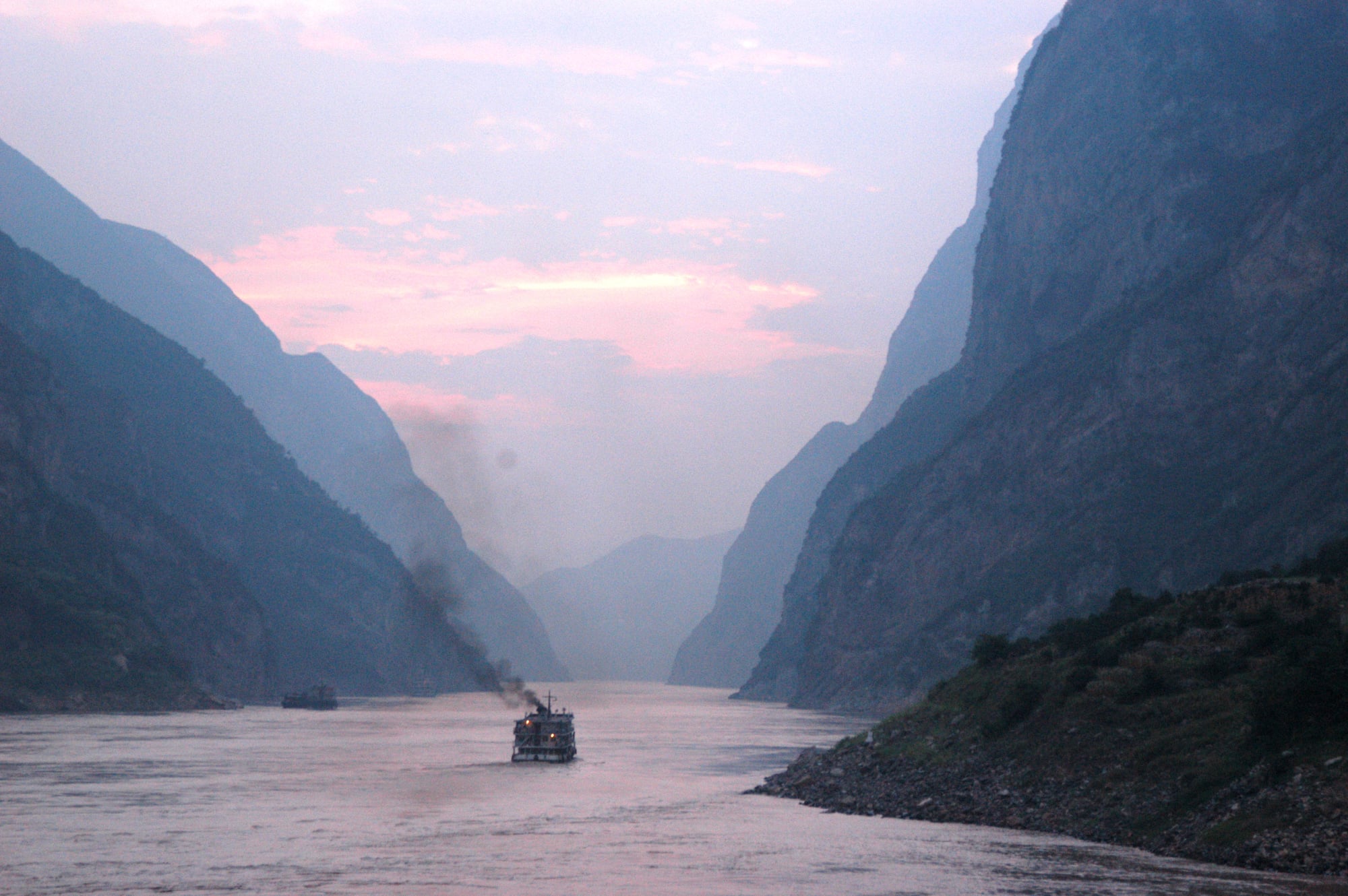
The Yangtze starts high on the Tibetan Plateau, more than 17,000 feet above sea level. That is higher than most airplanes fly on a short trip. From those icy peaks, the river tumbles down through steep valleys, crosses wide plains, and finally spreads into a huge delta at the coast. Along the way, it drops through three famous canyons called the Three Gorges, where the water squeezes between cliffs that rise up to 4,000 feet.
About one out of every three people in China lives in the Yangtze's river basin. That is more than 400 million people, or more than the entire population of the United States. The river gives them drinking water, water for farms, and a path for boats. Rice farms line its banks, and big cities like Chongqing, Wuhan, Nanjing, and Shanghai all grew up beside it.
The Yangtze has shaped Chinese history for thousands of years. Ancient Chinese empires used it to move soldiers, food, and trade goods. Many famous poems and paintings feature its misty gorges. The river has also flooded many times, sometimes with terrible results. A flood in 1931 killed hundreds of thousands of people and is one of the deadliest natural disasters ever recorded.
To control floods and make electricity, China built the Three Gorges Dam across the river. The dam finished in 2006. It is the largest power station in the world by the amount of electricity it can make. The dam created a lake behind it almost 400 miles long. Building it also forced more than 1 million people to move from their homes, and it flooded ancient villages and temples. People still argue about whether the dam was worth the cost.
The Yangtze is home to unusual animals found nowhere else. The Chinese alligator, one of the smallest alligators in the world, lives in its wetlands. The finless porpoise swims in its waters. Sadly, the Yangtze river dolphin, called the baiji, was declared likely extinct in 2007. Pollution, boat traffic, and fishing nets pushed it over the edge. Scientists now work hard to protect the animals that remain.
Related
Last updated 2026-04-23