
Amazon River
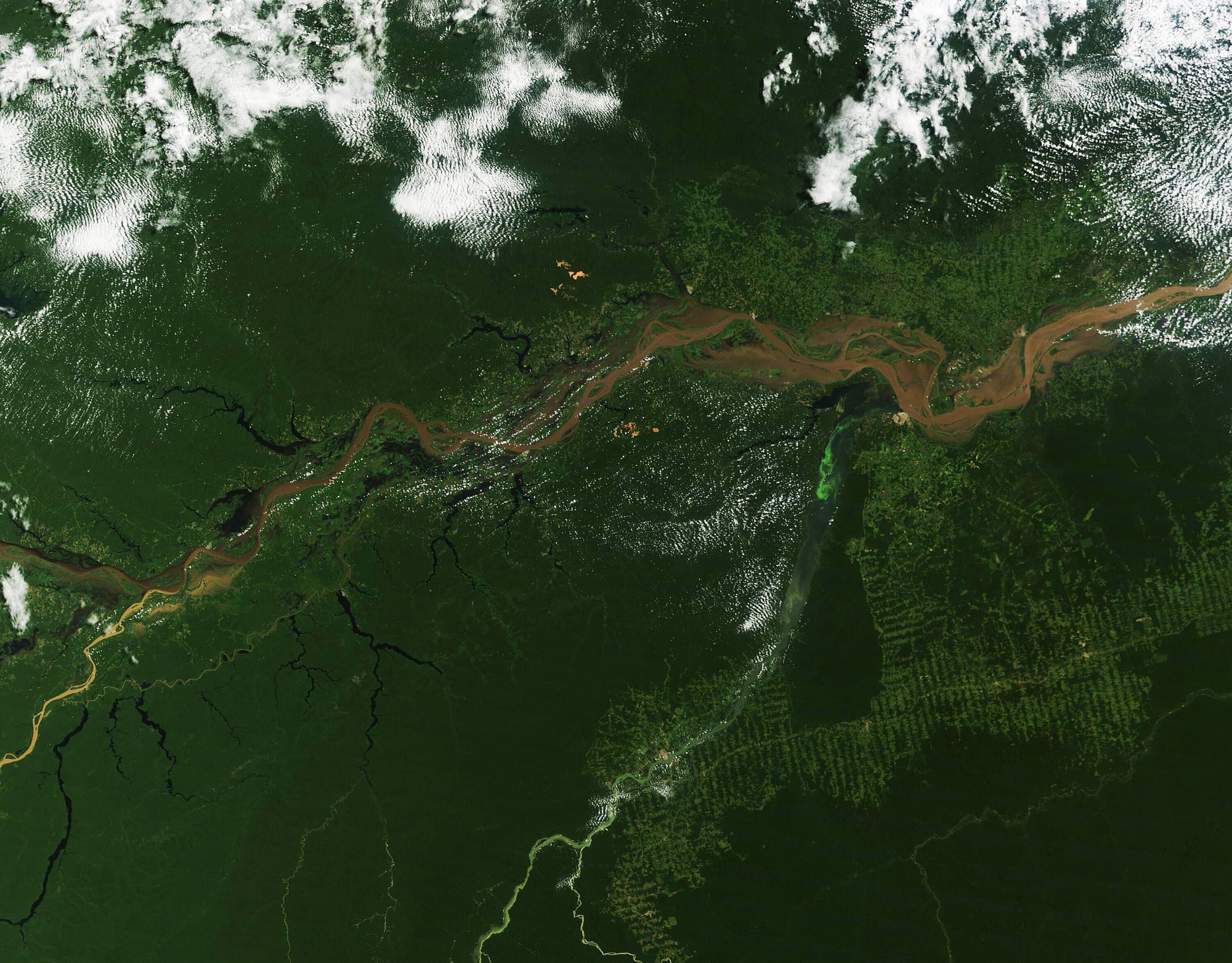
Credit: MODIS Land Rapid Response Team, NASA GSFC · Public domain
The Amazon River is the largest river in the world by volume of water. It flows across South America, starting high in the Andes Mountains of Peru and emptying into the Atlantic Ocean on the coast of Brazil. The river is about 4,000 miles long. That makes it either the longest or second-longest river on Earth, depending on how you measure it. Scientists still argue about whether the Amazon or the Nile is longer.
The Amazon carries more water than any other river. In fact, it carries more water than the next seven biggest rivers combined. About one-fifth of all the fresh water that flows from land into the world's oceans comes from the Amazon. Where the river meets the sea, its mouth is so wide that an island inside it, called Marajó, is nearly the size of Switzerland.
The river does not travel alone. More than 1,100 smaller rivers, called tributaries, feed into it along the way. Together, the Amazon and its tributaries drain an area of about 2.7 million square miles. That area, called the Amazon Basin, covers parts of nine countries and holds the largest rainforest on Earth.
Life in the Amazon is amazing and strange. The river is home to pink river dolphins, giant otters, electric eels, and piranhas. Arapaima, one of the biggest freshwater fish in the world, can grow to 10 feet long, longer than most cars. Each year, when the river floods, water rises up to 30 feet and spills into the forest. Fish then swim between the trees and eat fruit that falls from the branches.
People have lived along the Amazon for thousands of years. Today, many Indigenous groups still make their homes in the basin, and some live in places that are hard to reach by road. The city of Manaus, in Brazil, sits deep in the rainforest. Boats are the main way to get there. At Manaus, the dark water of the Rio Negro meets the sandy water of the Rio Solimões. The two flow side by side for about four miles without mixing, because they have different speeds and temperatures.
The Amazon is also under pressure. Logging, mining, and farming have cleared large parts of the surrounding rainforest. Scientists worry about what will happen to the river and the animals that depend on it. Even so, the Amazon is still so huge that parts of it have never been fully explored. New fish species are discovered there almost every year.
Related
Last updated 2026-04-23