
Ancient China
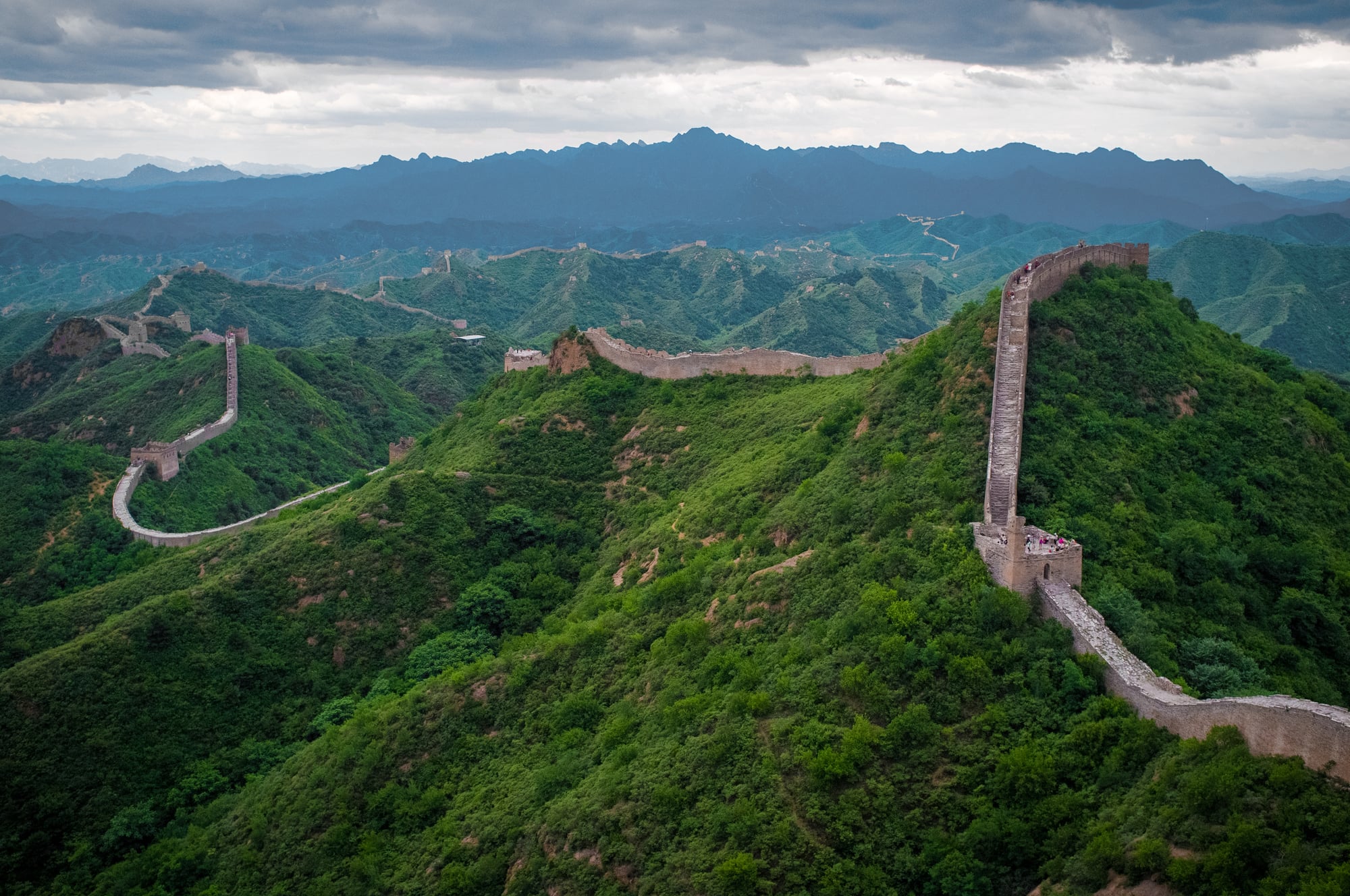
Credit: Severin.stalder · CC BY-SA 3.0
Ancient China was one of the world's oldest civilizations. It grew up along two big rivers in East Asia, the Yellow River and the Yangtze River. The first Chinese cities appeared around 2000 BCE. Ancient China lasted for thousands of years, until the last emperor stepped down in 1912. During that time, China invented writing, paper, gunpowder, the compass, and many other things the world still uses today.
The land and the rivers
The Yellow River is sometimes called "the cradle of Chinese civilization." It flows across northern China and carries fine yellow soil that is great for farming. But the river also flooded often, which destroyed villages and killed many people. Ancient Chinese rulers spent huge amounts of work building dikes and canals to control it. The Yangtze River, farther south, is longer and calmer. Rice grew well in the warm, wet land along its banks.
Dynasties
For most of its history, China was ruled by a series of royal families called dynasties. When one family lost power, another took over. People believed each ruling family had something called the "Mandate of Heaven." This was the idea that the gods had chosen them to rule. If a dynasty became cruel or weak, people believed heaven took the mandate away and gave it to someone new.
The Shang dynasty, around 1600 BCE, is the first dynasty we have strong written proof of. The Zhou dynasty came next and lasted almost 800 years. After that came the Qin, the Han, the Tang, the Song, the Yuan, the Ming, and the Qing. Each dynasty had its own art, fashions, and ideas.
The first emperor
In 221 BCE, a king named Qin Shi Huang conquered the other Chinese kingdoms and made himself the first emperor of a united China. He was a harsh ruler. He made everyone use the same writing, the same money, and the same width of cart wheel. He started building the Great Wall to keep out invaders from the north. He also built himself a tomb guarded by an army of life-sized clay soldiers. There are more than 8,000 of these "Terracotta Warriors," and each face is different. Farmers digging a well found them by accident in 1974.
The Great Wall
The Great Wall of China is one of the most famous human-made things on Earth. It is not a single wall built at one time. It is many walls, built and rebuilt by different dynasties over almost 2,000 years. The wall most tourists visit today was built mostly during the Ming dynasty, between about 1368 and 1644. End to end, all the pieces of the wall stretch more than 13,000 miles. That is more than four times the distance across the United States.
Inventions
Ancient China gave the world some of its most important inventions. The Chinese made paper around 100 CE, almost a thousand years before Europeans did. They invented the magnetic compass, which let sailors find north far from shore. They invented gunpowder, first used for fireworks and later for weapons. They invented printing with carved wooden blocks, hundreds of years before the printing press appeared in Europe. They also invented silk, kites, the wheelbarrow, and the rudder for steering ships.
Confucius and big ideas
Around 500 BCE, a teacher named Confucius traveled around China sharing his ideas. He taught that people should respect their parents, treat others fairly, and behave with honor. He said good leaders should set a good example, not rule through fear. His ideas became one of the strongest forces in Chinese life and lasted for more than 2,000 years. Another important set of ideas, called Daoism, taught that people should live simply and in harmony with nature.
The Silk Road
For hundreds of years, traders carried Chinese goods across Asia along a network of routes called the Silk Road. The most famous good was silk, a smooth cloth made from the threads of silkworm cocoons. China kept the secret of how to make silk for almost 3,000 years. Along the Silk Road, ideas and inventions traveled too, in both directions.
The end of imperial China
The last dynasty was the Qing, which ruled from 1644 to 1912. By the late 1800s, China had fallen behind Europe and Japan in technology and weapons. Foreign powers forced China into bad trade deals and took control of parts of the country. In 1912, a six-year-old emperor named Puyi stepped down, and China became a republic.
The empire was over, but its mark on the world was huge. Today, more than a billion people speak Chinese. Many things in your daily life, from the paper in your notebook to the compass in your phone, started in ancient China.
Related
Last updated 2026-04-26