
Colorado River
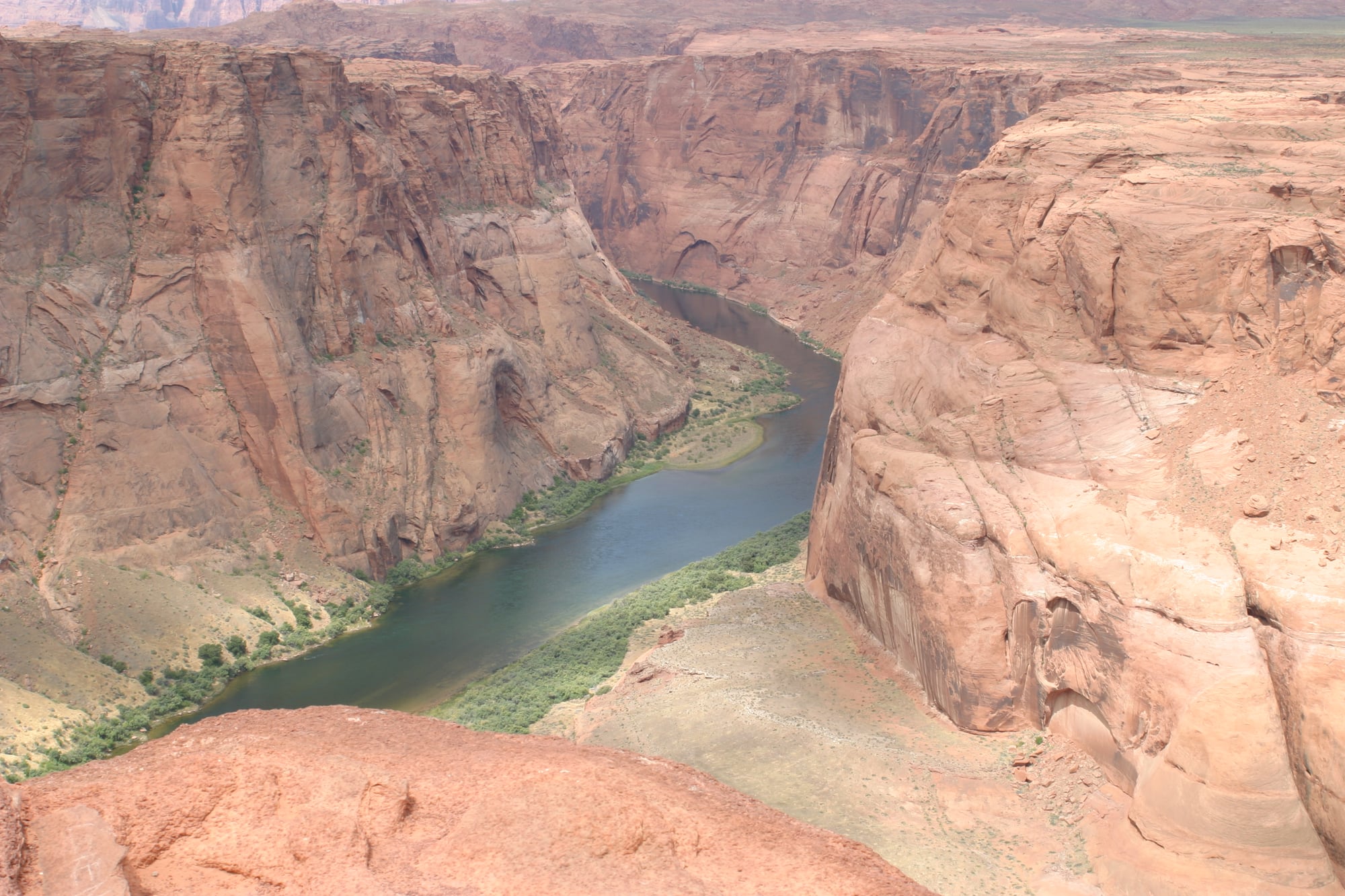
Credit: Adrille · CC BY-SA 3.0
The Colorado River is a long river in the western United States and northern Mexico. It starts high in the Rocky Mountains of Colorado and flows about 1,450 miles to the Gulf of California. Along the way, it passes through seven U.S. states and two Mexican states. It is one of the most important rivers in North America, even though it is not one of the biggest.
The river begins as melting snow near the top of the Rocky Mountains. At its source, the water is clear and cold. As the river flows south and west, it gathers water from many smaller rivers, called tributaries. The biggest tributary is the Green River, which joins the Colorado in Utah.
The Colorado is famous for the canyons it has carved. Over millions of years, the river has cut through layers of rock to form some of the deepest canyons in the world. The most famous is the Grand Canyon in Arizona, which is more than a mile deep in places. The river is still cutting deeper today, just very slowly. It carves about the thickness of a sheet of paper each year.
The water of the Colorado is often a muddy reddish brown. That is actually how the river got its name. "Colorado" means "colored red" in Spanish. Spanish explorers named it for the red mud and sand the water picks up as it flows through the desert.
Today the Colorado River is one of the most controlled rivers on Earth. Huge dams block its path to store water and make electricity. The most famous is Hoover Dam, built in the 1930s between Nevada and Arizona. Behind Hoover Dam sits Lake Mead, one of the largest human-made lakes in the United States. Glen Canyon Dam, farther upstream, created another huge lake called Lake Powell.
About 40 million people depend on the Colorado for drinking water. The river also waters millions of acres of farmland that grow vegetables, fruit, and hay. Cities like Las Vegas, Phoenix, Los Angeles, and San Diego all pull water from the Colorado, even though some of them are far away.
This heavy use has caused a serious problem. Scientists and farmers and city leaders argue about how to share the water, because there is not enough for everyone who wants it. Long droughts have made Lake Mead and Lake Powell shrink to record low levels. Some scientists worry the river cannot keep supplying so many people. The future of the Colorado may be the biggest water question in the American West.
Related
Last updated 2026-04-23