
Canyon
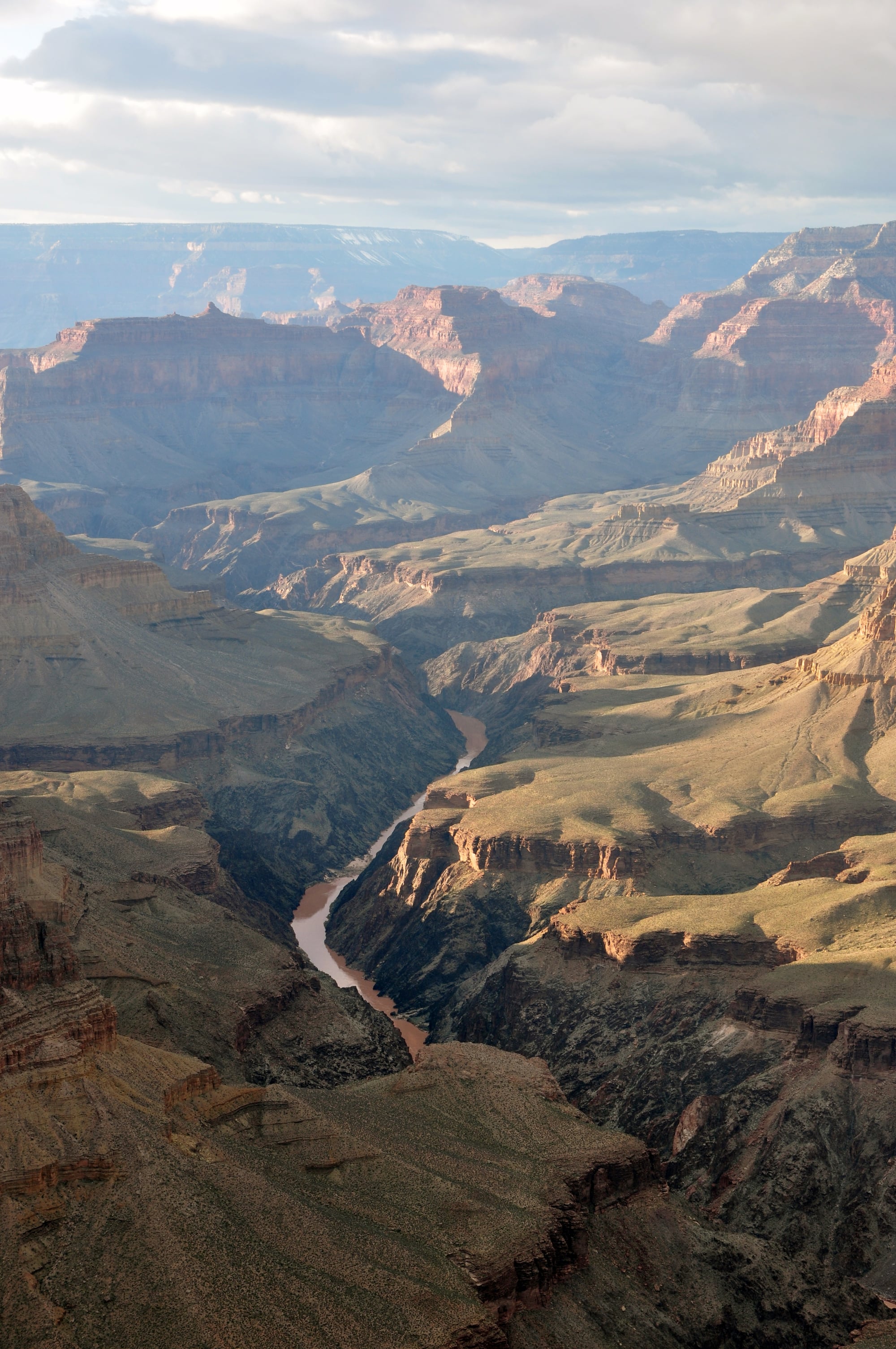
Credit: Chensiyuan · CC BY-SA 4.0
A canyon is a deep, narrow valley with steep, rocky sides. Most canyons are carved by rivers that slowly cut down through the land over millions of years. Canyons are found on every continent. They are most common in dry places, where there are few plants to hold the soil in place and protect the rock.
The word "canyon" comes from the Spanish word cañón, which means "tube" or "pipe." That makes sense if you stand inside one. The walls rise straight up on both sides, and the river runs along the bottom like water through a long stone hallway.
Canyons form through a slow process called erosion. A river picks up sand, gravel, and small stones as it flows. These bits scrape against the rock of the riverbed, wearing it down a little at a time. As the river cuts deeper, the walls on each side grow taller. In a wet, grassy area, rain and plants would smooth the walls into a wide valley. In a dry area, the walls stay steep, and a canyon forms.
Different kinds of rock make different kinds of canyons. Many famous canyons cut through sedimentary rock, which forms in flat layers. The layers show up as colorful stripes in the canyon walls. Each stripe is a record of a different time in Earth's past, sometimes hundreds of millions of years ago.
Some canyons are huge. The Grand Canyon in Arizona is 277 miles long and over a mile deep in places. Others are tight enough to touch both walls at the same time. These are called slot canyons. Many slot canyons in the American Southwest are only a few feet wide but more than 100 feet deep.
Canyons are not only found on land. Underwater canyons cut into the edges of the continents below the ocean. The biggest one, Zhemchug Canyon in the Bering Sea, is even deeper than the Grand Canyon. Other planets have canyons too. Mars has a canyon called Valles Marineris that is about 2,500 miles long, almost as wide as the United States.
People have lived in canyons for thousands of years. The steep walls offered shelter, and the rivers at the bottom gave water for drinking and farming. The Ancestral Puebloans built whole villages into the cliff walls of canyons in the American Southwest. Many of those stone homes are still standing today, tucked into the rock as if the canyon itself were holding them up.
Related
Last updated 2026-04-25