
Gregor Mendel
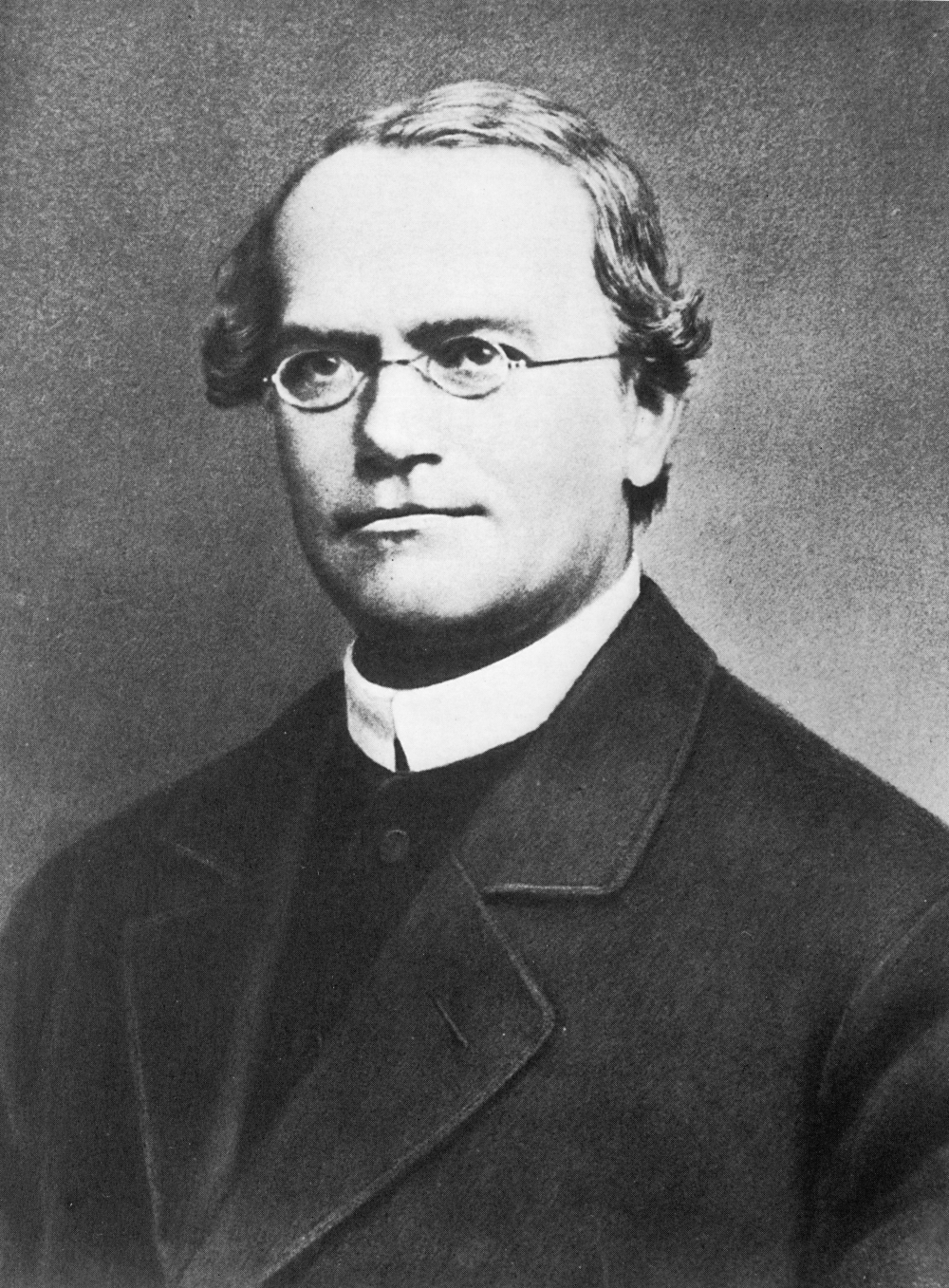
Credit: Unknown author · Public domain
Gregor Mendel was a scientist and monk who discovered the basic rules of how living things pass traits to their children. He lived from 1822 to 1884 in what is now the Czech Republic. His work with pea plants became the foundation of the science of genetics. People sometimes call him the "father of genetics."
Mendel was born on a small farm. His family did not have much money, but he loved learning. To keep studying as an adult, he joined a monastery in the city of Brno in 1843. The monks there valued science. They sent him to the University of Vienna to study math, physics, and biology. When he came back to the monastery, he began his most famous work in the garden.
Between 1856 and 1863, Mendel grew thousands of pea plants. He chose peas because they have clear, easy-to-spot traits. Some plants are tall, others are short. Some seeds are green, others are yellow. Some seeds are smooth, others are wrinkled. Mendel carefully bred plants together and counted what their offspring looked like. He grew about 28,000 plants in all.
What he found surprised him. Traits did not blend together like paint. A tall plant crossed with a short plant did not make a medium plant. Instead, the babies were all tall. But when those tall plants made their own babies, some short plants showed up again. Mendel realized that each trait must be carried by tiny invisible "factors" that pass from parent to child. Today we call these factors genes.
Mendel published his results in 1866. Almost no one paid attention. The paper sat unread in libraries for more than 30 years. Mendel became the head of his monastery and spent his last years on paperwork and taxes. He died in 1884, never knowing how important his work would become.
In 1900, three different scientists in three different countries rediscovered Mendel's paper at almost the same time. Suddenly his rules made sense of questions biologists had been stuck on for decades. They explained how parents pass features to their kids and how Charles Darwin's idea of evolution could actually work in real living things.
Today, every biology textbook teaches Mendel's rules. They help doctors understand inherited diseases, help farmers breed better crops, and help scientists study DNA itself. Some historians think Mendel's results look almost too neat, and they wonder if he tidied his data. But the rules he uncovered have held up for more than 150 years of testing.
Related
Last updated 2026-04-26