
Charles Darwin
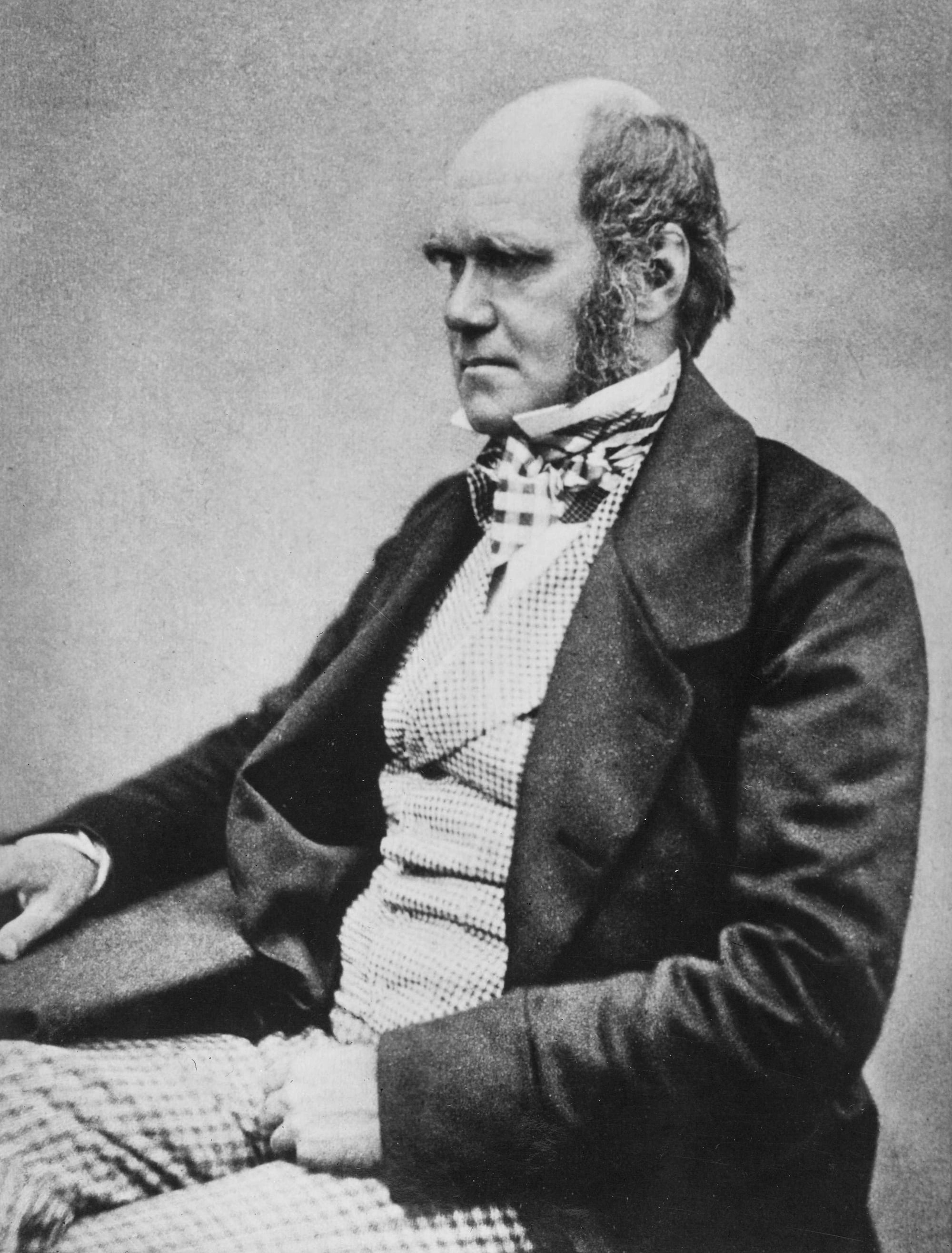
Credit: Charles_Darwin_seated.jpg: Henry Maull (1829–1914) and John Fox (1832–1907) (Maull & Fox) [3] derivative work: Beao · Public domain
Charles Darwin was an English scientist who came up with the theory of evolution by natural selection. He lived from 1809 to 1882. His ideas changed the way people understood living things, and they are still the foundation of modern biology.
Darwin was born in Shrewsbury, England, into a wealthy family. As a boy, he loved collecting beetles, rocks, and bird eggs. His father wanted him to become a doctor. But Darwin could not stand the sight of surgery, which in those days was done without painkillers. He switched to studying to become a country pastor instead. Even then, he spent most of his time outdoors studying plants and animals.
In 1831, when Darwin was 22, he was offered a spot on a British navy ship called HMS Beagle. The ship was sailing around the world to make maps of coastlines. Darwin signed on as the ship's naturalist. The trip was supposed to last two years. It lasted almost five.
The voyage took Darwin to South America, Australia, and many islands in between. Everywhere he went, he collected fossils, plants, and animals. The Galápagos Islands, off the coast of Ecuador, made the biggest impression on him. He noticed that finches on different islands had different beak shapes. Tortoises had different shell shapes. The animals seemed to match the food and the land where they lived.
Back in England, Darwin spent years thinking about what he had seen. He kept careful notebooks. Slowly, an idea took shape. Living things produce more young than can survive. The young that happen to have helpful traits, like a beak that fits the local seeds, are more likely to live and have babies of their own. Over many generations, helpful traits become common, and species slowly change. Darwin called this process natural selection.
In 1859, he published his ideas in a book called On the Origin of Species. It sold out the first day. Many scientists were quickly convinced. Many religious leaders were upset, because the book suggested that humans and apes shared a common ancestor. Darwin himself avoided public arguments. He kept working quietly at his country house, studying earthworms, orchids, and barnacles.
Darwin did not know how traits were actually passed from parents to children. The science of genetics had not been invented yet. Even so, his core idea held up. When DNA was discovered in the twentieth century, it fit Darwin's theory almost perfectly. Today, evolution by natural selection is one of the most tested ideas in all of science.
Related
Last updated 2026-04-26