
Abraham Lincoln
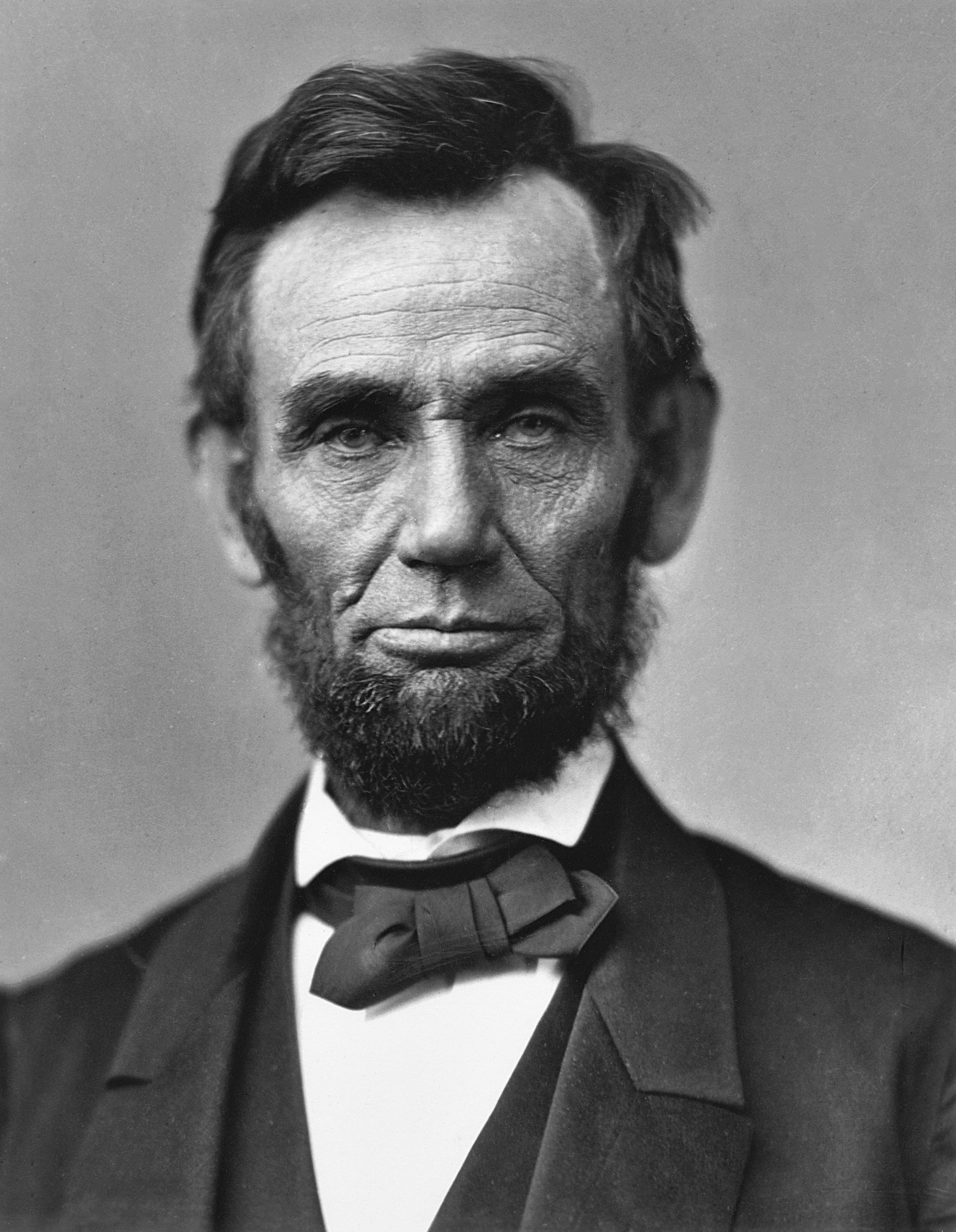
Credit: Alexander Gardner · Public domain
Abraham Lincoln was the 16th president of the United States. He led the country through the Civil War, the bloodiest war in American history. He also signed the order that began ending slavery in the United States. Lincoln lived from 1809 to 1865. Many historians rank him as one of the greatest presidents the country has ever had.
Early life
Lincoln was born in a one-room log cabin in Kentucky. His family was poor. They moved to Indiana when he was seven, and later to Illinois. As a boy, Lincoln chopped wood, plowed fields, and helped his father build their home. He went to school for less than a year in his whole life. Almost everything he learned, he taught himself by reading borrowed books late at night by firelight.
He grew up to be tall and thin. As an adult, he stood six feet four inches, which was much taller than most men of his time. He worked as a store clerk, a postmaster, and a surveyor before deciding to become a lawyer. He read law books on his own and passed the test to practice law in 1836.
Entering politics
Lincoln joined the Illinois state legislature when he was 25. Later he served one term in the U.S. House of Representatives. He returned to law for several years, but the country was tearing itself apart over slavery, and he could not stay away from politics. In the South, slavery was legal. Millions of Black people were forced to work without pay, beaten, and treated as property. In the North, more and more people wanted slavery to end.
Lincoln joined a new political party called the Republican Party. In 1858, he ran for the U.S. Senate against Stephen Douglas. The two men held seven public debates that drew huge crowds. Lincoln lost that race, but the debates made him famous across the country. Two years later, in 1860, he was elected president.
The Civil War
Lincoln's election scared many people in the South. They believed he would try to end slavery. Within a few months, eleven Southern states left the United States to form their own country, called the Confederacy. In April 1861, Confederate soldiers attacked a U.S. fort in South Carolina. The Civil War had begun.
The war lasted four years. About 750,000 soldiers died, more Americans than have died in any other war before or since. Lincoln took command as the nation's leader during this terrible time. He picked generals, planned strategy, and made the hard choice to keep fighting even when the war was going badly. He worried constantly. Photographs from the war years show his face growing thinner and more lined.
The Emancipation Proclamation
On January 1, 1863, Lincoln signed the Emancipation Proclamation. This order freed all enslaved people in the Confederate states. It did not free everyone right away, because the Confederacy did not obey Lincoln's orders. But as Union armies marched south, they freed enslaved people wherever they went. Black men also began joining the Union Army by the hundreds of thousands. Their fight helped win the war.
The Gettysburg Address
In November 1863, Lincoln gave a short speech at the battlefield of Gettysburg, Pennsylvania, where thousands of soldiers had died a few months earlier. The speech was only about two minutes long, but it became one of the most famous speeches in American history. Lincoln said the country had been founded on the idea that "all men are created equal." He promised that the dead would not have died in vain, and that "government of the people, by the people, for the people" would not perish from the earth.
Death and legacy
The Civil War ended in April 1865 with a Union victory. The Confederacy surrendered. Just five days later, Lincoln went to Ford's Theatre in Washington with his wife, Mary, to watch a play. A man named John Wilkes Booth, who supported the Confederacy, walked into the president's box and shot him in the back of the head. Lincoln died the next morning. He was 56 years old.
The country was stunned. Lincoln's funeral train carried his body more than 1,600 miles back to Illinois, and millions of people came out to watch it pass. After the war, three new amendments were added to the Constitution. They ended slavery, made formerly enslaved people citizens, and gave Black men the right to vote.
Lincoln's face is carved into Mount Rushmore. It is also on the penny and the five-dollar bill. The Lincoln Memorial in Washington shows him sitting in a giant marble chair, looking out across the country he kept together.
Related
Last updated 2026-04-26