
Emancipation Proclamation
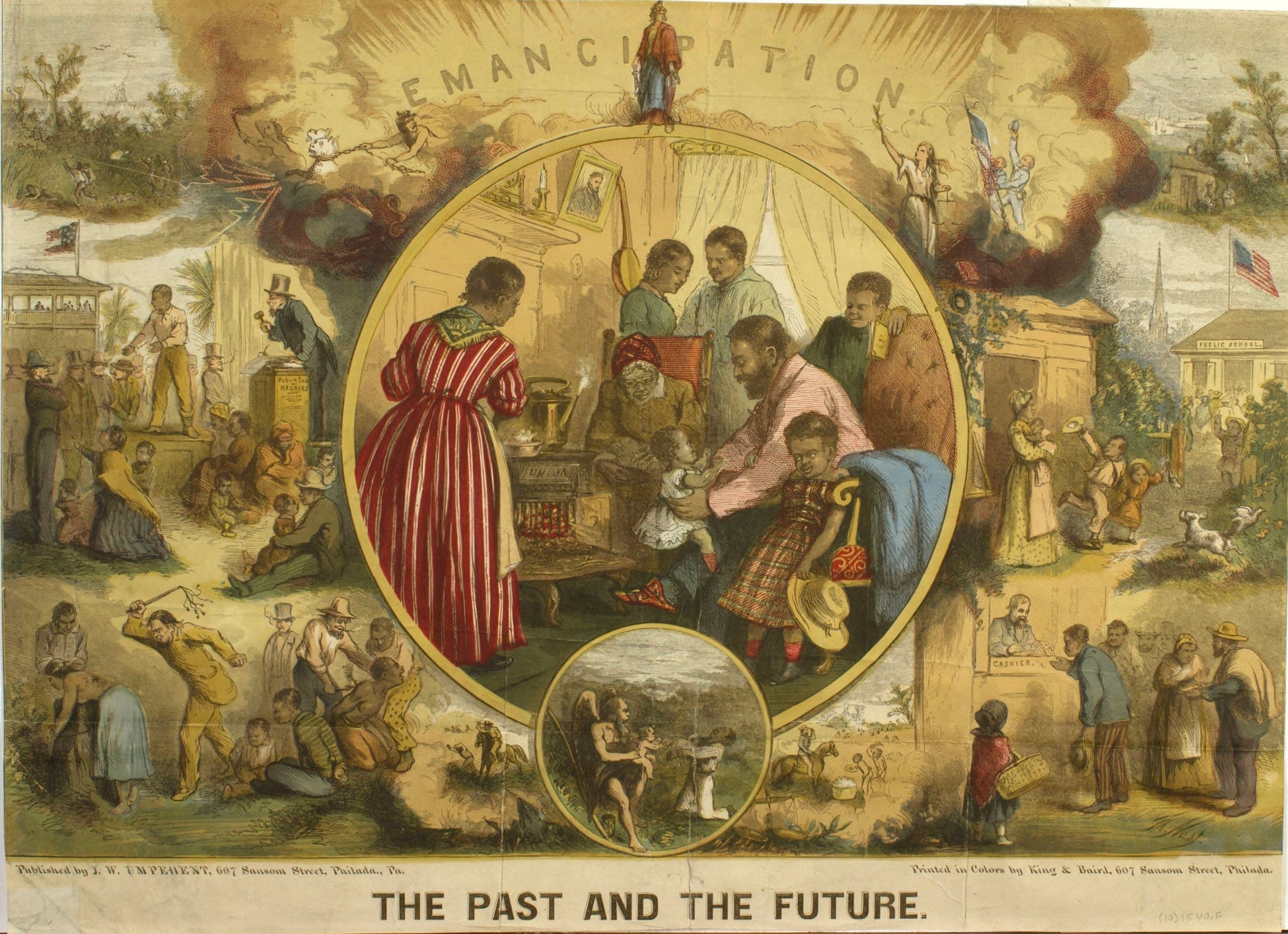
Credit: Thomas Nast · Public domain
The Emancipation Proclamation was an order signed by President Abraham Lincoln on January 1, 1863. It declared that all enslaved people in the Confederate states "are, and henceforward shall be free." The order was issued during the Civil War, the war between the northern Union states and the southern Confederate states. It changed what the war was about and helped lead to the end of slavery in the United States.
When the Civil War began in 1861, slavery was legal in 15 states. About four million Black people were held as slaves, mostly in the South. At first, Lincoln said the war was only about keeping the country together. He did not think he had the power to end slavery in states where it already existed. But as the war went on, his thinking changed.
Lincoln decided that ending slavery in Confederate territory could help win the war. Enslaved people did much of the labor that kept the Confederate army fed and supplied. If they were free, the South would lose that work. Freed Black men could also fight for the Union. Lincoln waited for a Union victory before announcing his plan, so it would not look like a desperate move. After the Battle of Antietam in September 1862, he issued a warning. He gave the Confederacy 100 days to return to the Union, or he would free the people they had enslaved.
The Confederacy did not return. So on New Year's Day in 1863, Lincoln signed the final Proclamation.
The order had real limits. It only freed enslaved people in states fighting against the Union. It did not free people in the four "border states" (Maryland, Delaware, Kentucky, and Missouri), which allowed slavery but had stayed in the Union. In Confederate areas, the Union army had no power yet, so the order could not be enforced right away. Some historians point out that on the day it was signed, it freed almost nobody immediately.
But its meaning was huge. As Union soldiers moved south, they brought freedom with them. Hundreds of thousands of enslaved people walked off plantations and into Union lines. About 200,000 Black men joined the Union army and navy and helped win the war. The fight was now openly about ending slavery.
Slavery itself was not fully abolished until December 1865, when the 13th Amendment was added to the Constitution. The Proclamation did not finish the job, but it started it. Frederick Douglass called January 1, 1863, "the most memorable day in American annals." A handwritten copy of the Proclamation is kept today at the National Archives in Washington.
Related
Last updated 2026-04-26