
Tundra
Credit: Hannes Grobe, AWI · CC BY-SA 2.5
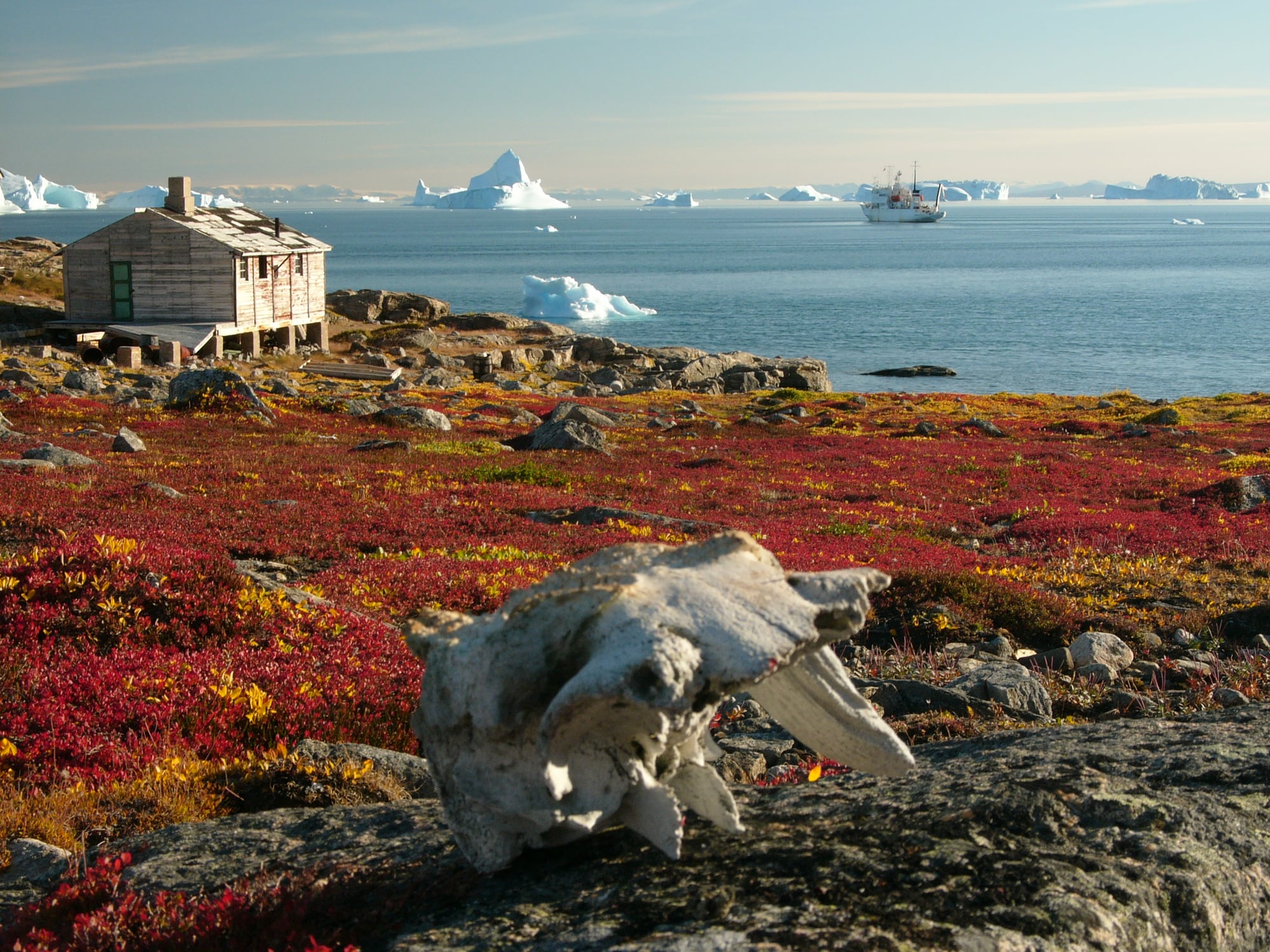
The tundra is a cold, treeless biome found in the far north of the world and on high mountains. The word "biome" means a large area with a certain climate and certain kinds of living things. Tundra is one of the coldest biomes on Earth. The ground is frozen for most of the year, and the growing season is very short. Even so, plants, animals, and people live there.
There are two main kinds of tundra. Arctic tundra wraps around the top of the world, covering parts of Alaska, Canada, Greenland, Russia, and northern Europe. Alpine tundra is found high up on mountains, above the line where trees can grow. Both types are cold, windy, and dry. Some tundra areas get less rain in a year than parts of the Sahara Desert.
The most important feature of Arctic tundra is permafrost. Permafrost is a layer of soil that stays frozen year-round, sometimes hundreds of feet deep. Only the top few inches thaw in summer. Because tree roots cannot push through the frozen ground, no trees grow. Instead, the tundra is covered with mosses, lichens, small shrubs, and grasses. In summer, tiny flowers bloom in bursts of color across the wet, soggy ground.
Tundra animals are built for the cold. Caribou grow thick coats and travel hundreds of miles each year to find food. Arctic foxes turn white in winter to blend in with the snow. Lemmings tunnel under the snow to stay warm. Polar bears hunt along the icy edges. In summer, huge clouds of mosquitoes appear, and millions of birds fly in to nest and eat them. When the cold returns, most of the birds fly away again.
People live in the tundra too. The Inuit, Sami, Yupik, and other Indigenous peoples have lived in these lands for thousands of years. They learned to hunt, fish, and travel across the snow long before modern tools existed.
The tundra is changing fast. As Earth warms, the permafrost is starting to thaw. This is a problem for two reasons. Houses, roads, and pipelines built on frozen ground are sinking and cracking. And the thawing soil releases methane, a gas that traps heat in the air, which warms the planet even more. Scientists are watching the tundra closely. What happens there does not stay there. The frozen north helps keep the whole planet's climate steady.
Last updated 2026-04-25