
Biome
Credit: Sten Porse · CC BY-SA 3.0
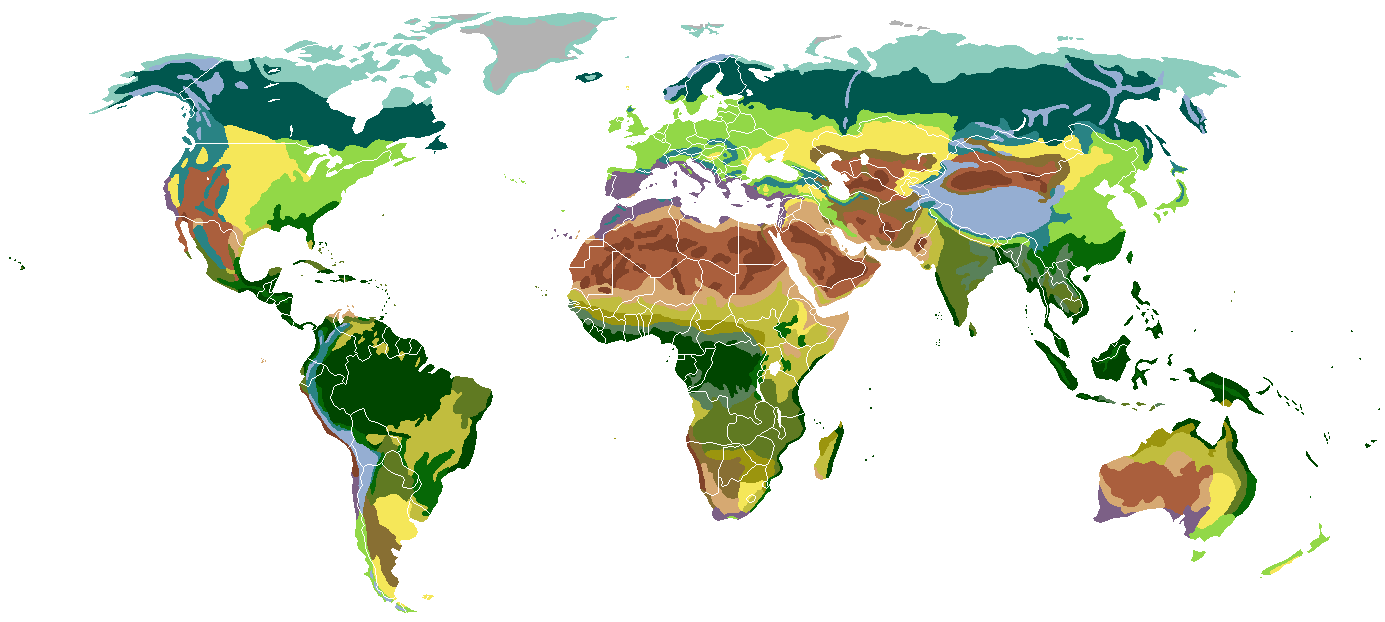
A biome is a large area of Earth where the climate, plants, and animals all fit together in a similar way. Scientists use biomes to sort the planet's living world into big categories. Two forests on opposite sides of the Earth can belong to the same biome if they have the same kind of weather and similar kinds of life. The word comes from the Greek word "bios," which means life.
Climate is what makes a biome. Temperature and rainfall decide which plants can grow in a place. The plants then decide which animals can live there. A cactus cannot survive in a freezing tundra. A polar bear cannot hunt in a rainforest. Each biome is a match between a climate and the living things that do well in it.
Scientists usually name five main land biomes: forest, grassland, desert, tundra, and aquatic. Most split these further. Forests include tropical rainforests near the equator, temperate forests in places like the eastern United States, and cold boreal forests across northern Canada and Russia. Grasslands include African savannas and the North American prairies. Deserts can be hot, like the Sahara, or cold, like parts of Antarctica. Tundra covers the frozen ground near the poles and on high mountains.
Water biomes cover more of Earth than land biomes do. Oceans make up the biggest biome of all, covering about 71 percent of the planet's surface. Freshwater biomes include lakes, rivers, ponds, and wetlands. Coral reefs are a special water biome packed with more kinds of life per square mile than almost anywhere else on Earth.
Biomes are not fixed forever. They shift when the climate shifts. During the last ice age, about 20,000 years ago, huge sheets of ice covered land that is now forest and city. As Earth warmed, the ice pulled back and the biomes moved with it. Today, climate change is moving biome edges again. Forests are creeping north into what used to be tundra. Deserts are spreading in some regions. These changes are happening in decades, not thousands of years.
Scientists sometimes disagree about where one biome ends and another begins. A dry forest and a wet grassland can blend into each other for miles, with no clear line between them. Some researchers count five biomes, others count nine or more. The living world does not always fit neatly into human categories, but biomes help us see the big patterns.
Related
Last updated 2026-04-23