
Polar Bear
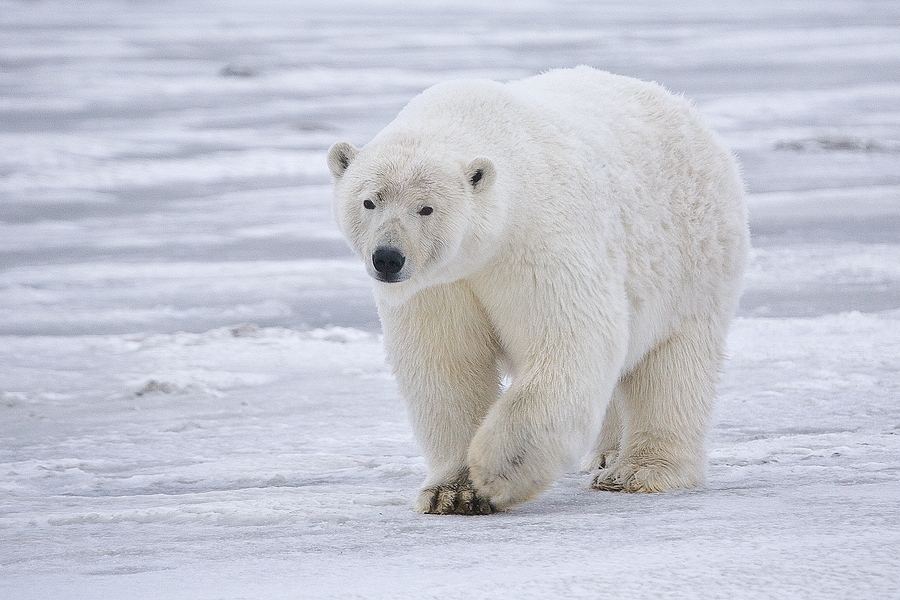
Credit: Alan Wilson · CC BY-SA 3.0
The polar bear is a large bear that lives in the cold lands around the Arctic Ocean. It is the biggest bear in the world and the biggest land meat-eater on Earth. Adult males can weigh 900 to 1,600 pounds, about as much as a small car. Polar bears live in five countries: the United States (Alaska), Canada, Russia, Norway, and Greenland.
Everything about a polar bear is built for the cold. It has two layers of fur and a thick layer of fat, up to four inches deep, under its skin. Its ears and tail are small, which keeps heat from escaping. Its paws are huge, almost 12 inches across, and work like snowshoes on the ice. Small bumps and short hairs on the bottoms of the paws keep the bear from slipping.
Polar bears are strong swimmers. They can paddle for days without stopping. One bear was tracked swimming 426 miles in nine days to find sea ice. Scientists sometimes group them with sea mammals because they spend so much of their lives in the water.
Their main food is seals. A polar bear waits by a hole in the sea ice where seals come up to breathe. When a seal pokes its head out, the bear grabs it with its paws and teeth. Without sea ice, polar bears cannot hunt this way. On land in summer, they may eat eggs, berries, or dead animals washed up on the shore, but none of those foods keep them as healthy as seals do.
Mother polar bears dig dens in the snow to have their cubs. Newborn cubs are tiny, only about one pound, or the size of a guinea pig. They stay in the den with their mother for about four months, drinking her rich milk. When they come out in spring, they follow her onto the ice to learn to hunt. Cubs stay with their mother for around two and a half years.
Polar bears are in trouble. As Earth's climate warms, the Arctic sea ice melts earlier each spring and freezes later each fall. That gives the bears less time to hunt seals. Scientists list the polar bear as a vulnerable species. Some studies guess that two-thirds of the world's polar bears could be gone by 2050 if the ice keeps shrinking. Researchers still disagree about exactly how fast this will happen, but they agree the ice is the key to the polar bear's future.
Related
Last updated 2026-04-22