
Snow
Credit: Wilson Bentley · Public domain
Snow is frozen water that falls from clouds in the form of small ice crystals. It is one of the main types of precipitation, along with rain, sleet, and hail. Snow forms in cold parts of the world and during cold seasons. It covers about a third of Earth's land surface at some point each year.
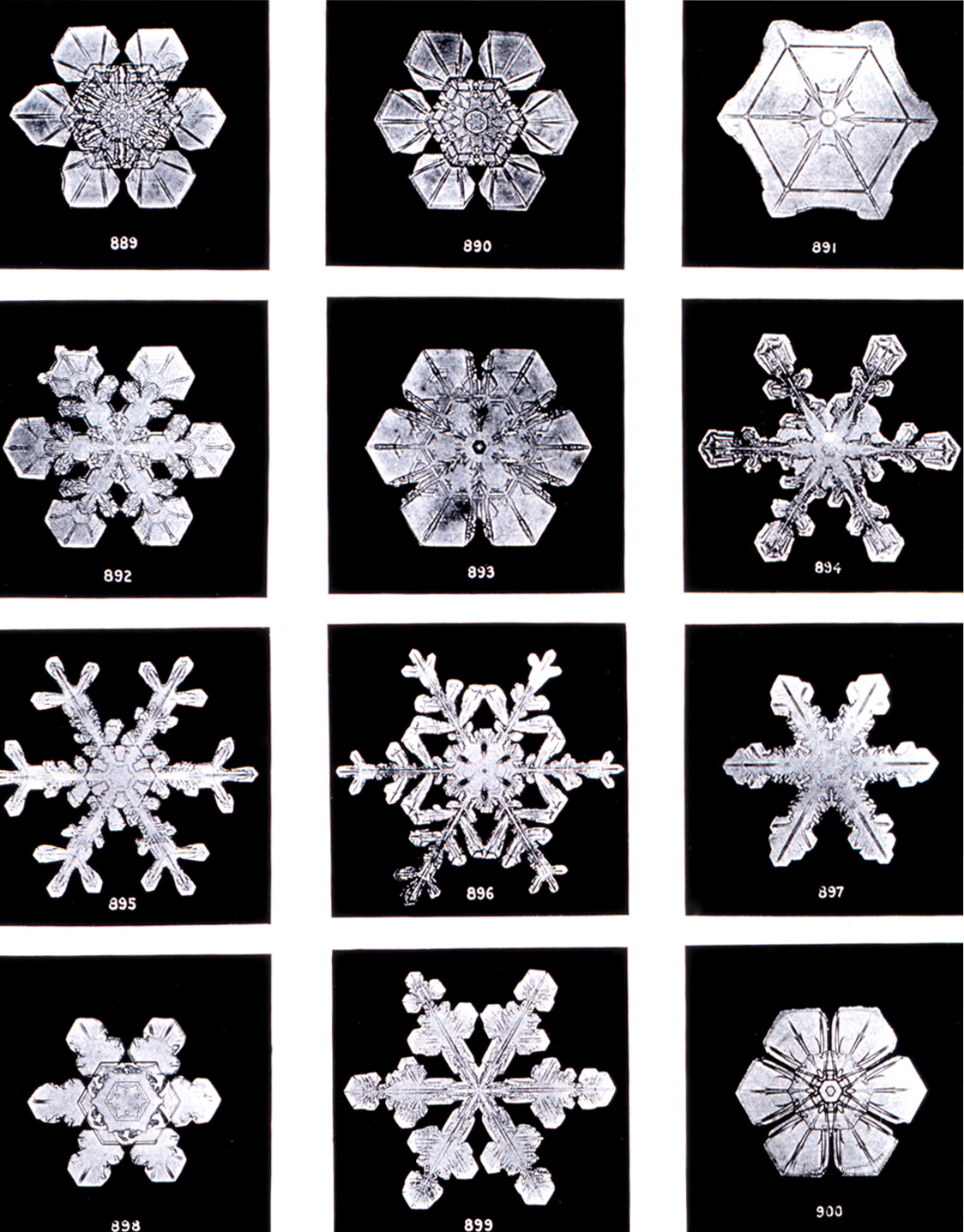
Snow starts inside a cloud. When the air in a cloud is below freezing, tiny drops of water freeze around bits of dust or pollen. These specks are called ice nuclei. As more water vapor sticks to the frozen drop, it grows into a six-sided crystal called a snowflake. Snowflakes always have six sides because of the way water molecules link together when they freeze.
Each snowflake takes a different path through the cloud. It moves through patches of different temperatures and different amounts of moisture. Those changes shape the arms and points of the crystal. People often say no two snowflakes are alike. Scientists think this is almost always true for larger flakes, since the number of possible patterns is enormous.
For snow to reach the ground, the air all the way down has to stay cold enough. If the flakes pass through warmer air, they melt into rain. If they melt and then refreeze, they become sleet. Real snow needs cold air from the cloud to your boots.
Snow looks white, but it is actually made of clear ice. Each crystal has many tiny surfaces that bounce light in every direction. When all the colors of light bounce back together, your eye sees white. That is also why packed ice and frozen lakes can look bluish. Thicker ice absorbs a little of the red light and reflects more blue.
Snow does important work for the planet. A thick blanket of snow keeps the soil below it warmer than the air above, which helps plants and small animals survive winter. Mountain snow melts in spring and feeds rivers that millions of people use for drinking water and farming. As the climate warms, scientists are watching snowpack closely. In many places, snow is melting earlier each year, which changes when water reaches the valleys below.
The most snow ever recorded from a single storm in the United States fell at Mount Shasta Ski Bowl in California in 1959. About 189 inches piled up in less than a week, taller than most adults stacked head to foot. Even bigger storms have likely happened in places where no one was measuring.
Related
Last updated 2026-04-25