
Mountain
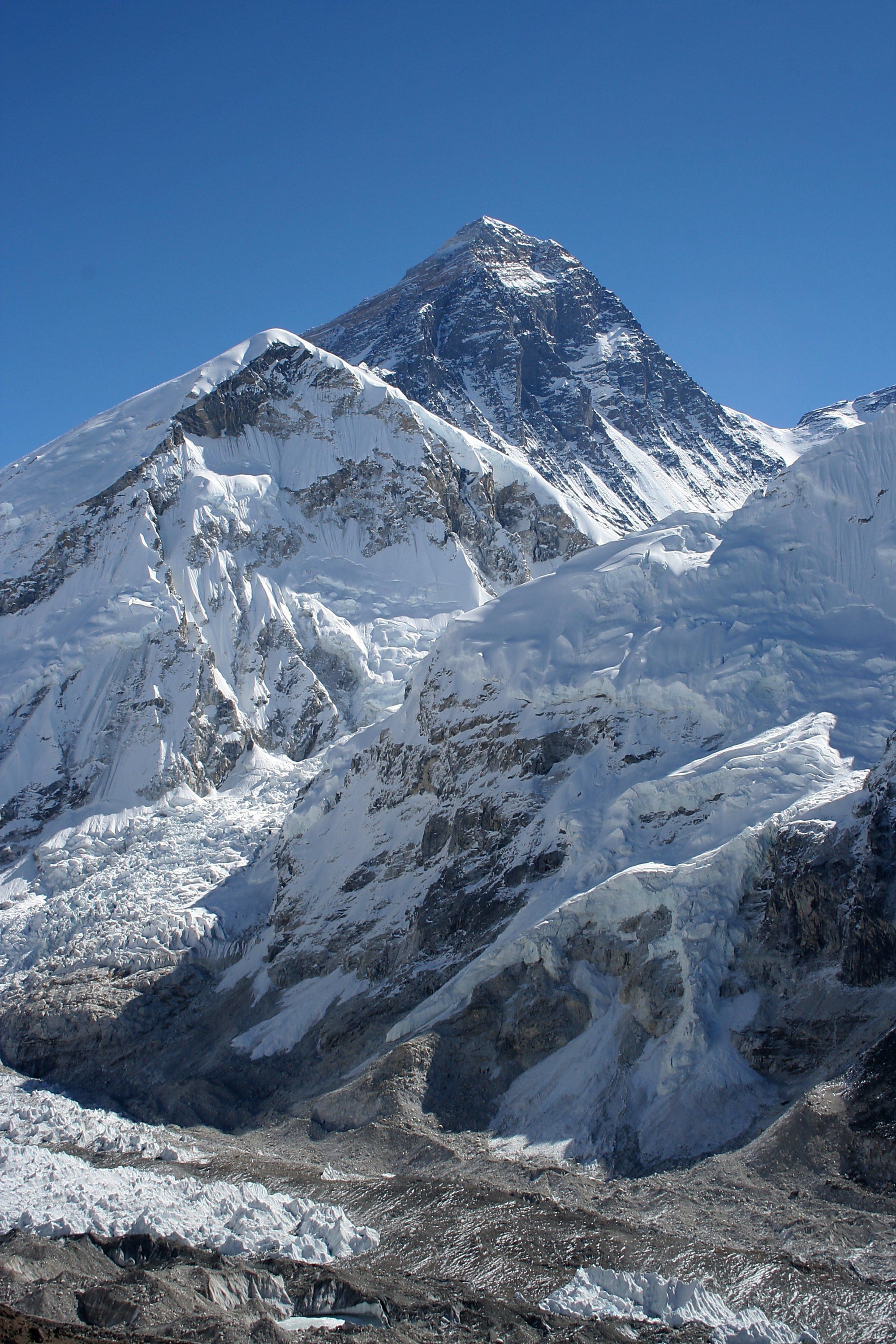
Credit: Pavel Novak · CC BY-SA 2.5
A mountain is a tall landform that rises high above the land around it. Mountains have steep sides and a narrow top called a peak or summit. They are taller than hills, though there is no exact rule for the cutoff. Most geographers count a landform as a mountain if it rises at least 1,000 feet above its base.
Mountains form in a few different ways, but the most common way involves plate tectonics. Earth's outer layer is broken into giant pieces called plates. These plates slowly move, only a few inches each year. When two plates push into each other, the land between them crumples upward. This is how the Himalayas formed. India crashed into Asia about 50 million years ago, and the rock buckled up to make the highest peaks on Earth. The Himalayas are still rising about half an inch every year.
Other mountains are built by volcanoes. Hot melted rock pushes up from inside the Earth and hardens layer by layer. Mount Fuji in Japan and the volcanoes of Hawaii were built this way. Some mountains form when huge blocks of rock break along cracks called faults and one block lifts up. The Sierra Nevada in California formed by this kind of lifting.
The weather on a mountain changes as you go up. The higher you climb, the colder and thinner the air gets. For every 1,000 feet you climb, the temperature drops about 3 to 5 degrees Fahrenheit. That is why many tall mountains have snow on top all year, even near the equator. Mount Kilimanjaro sits just south of the equator in Africa, but its summit is covered in ice.
Different plants and animals live at different heights on a mountain. The lower slopes might have thick forests. Higher up, the trees get shorter and finally stop growing at a place called the tree line. Above that, only tough grasses, mosses, and small flowers survive. Animals like mountain goats, snow leopards, and yaks have thick fur and strong lungs that help them live where the air is thin.
Mountains matter to people too. About one in ten humans lives in a mountain region. Mountains store fresh water as snow and ice, then release it into rivers each spring. Many of the world's biggest rivers, including the Ganges, the Amazon, and the Mississippi, begin in mountains. Mountains also show up in stories and beliefs around the world. Many cultures have treated their tallest peaks as sacred places where gods or spirits live.
Related
Last updated 2026-04-25