
Jungle
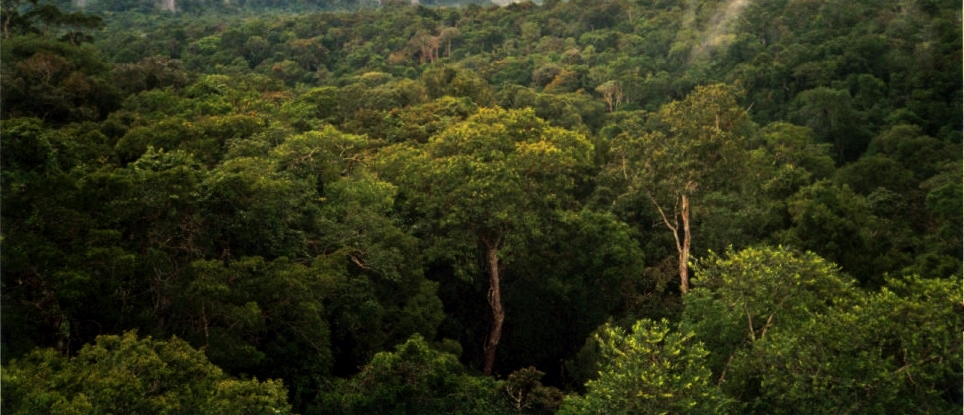
Credit: Phil P Harris. · CC BY-SA 2.5
A jungle is a thick, tangled forest that grows in warm, wet parts of the world. Most jungles are found near the equator, where the weather stays hot all year and heavy rain falls almost every day. The biggest jungles are in South America, central Africa, and Southeast Asia. The Amazon in South America is the largest of them all. It covers more than two million square miles, an area bigger than India.
The word "jungle" and the word "rainforest" are often used to mean the same thing, but they are a little different. A rainforest has tall trees whose leaves form a thick roof high overhead. This roof is called the canopy. The canopy blocks most of the sunlight, so the ground below stays dim and fairly open. A jungle is what grows where sunlight does reach the ground, like along rivers, in clearings, or at the edge of a forest. Bushes, vines, and small trees crowd together so closely that a person sometimes has to cut a path through with a knife.
Jungles are home to more kinds of plants and animals than almost any other place on Earth. Scientists believe that more than half of all the world's species live in tropical forests, even though these forests cover only about six percent of the land. A single tree in the Amazon can hold dozens of frog species, hundreds of insect species, and birds that live nowhere else. Jaguars, gorillas, tigers, parrots, sloths, and tree frogs all live in jungles around the world.
Plants in a jungle compete hard for sunlight. Trees grow tall and straight, racing upward. Vines called lianas climb the trunks like ropes. Other plants, called epiphytes, grow on the branches of trees instead of in the soil. Orchids and many ferns live this way.
Jungles also help the whole planet. Their trees pull carbon dioxide out of the air and release oxygen. They store huge amounts of carbon in their wood and soil, which helps slow climate change. They also shape the weather by sending water vapor into the sky, where it forms clouds and rain.
Jungles are shrinking fast. People cut them down for farms, cattle ranches, roads, and wood. Every minute, an area of tropical forest about the size of 30 soccer fields disappears. Many groups around the world are working to protect what is left.
Related
Last updated 2026-04-25