
Walrus
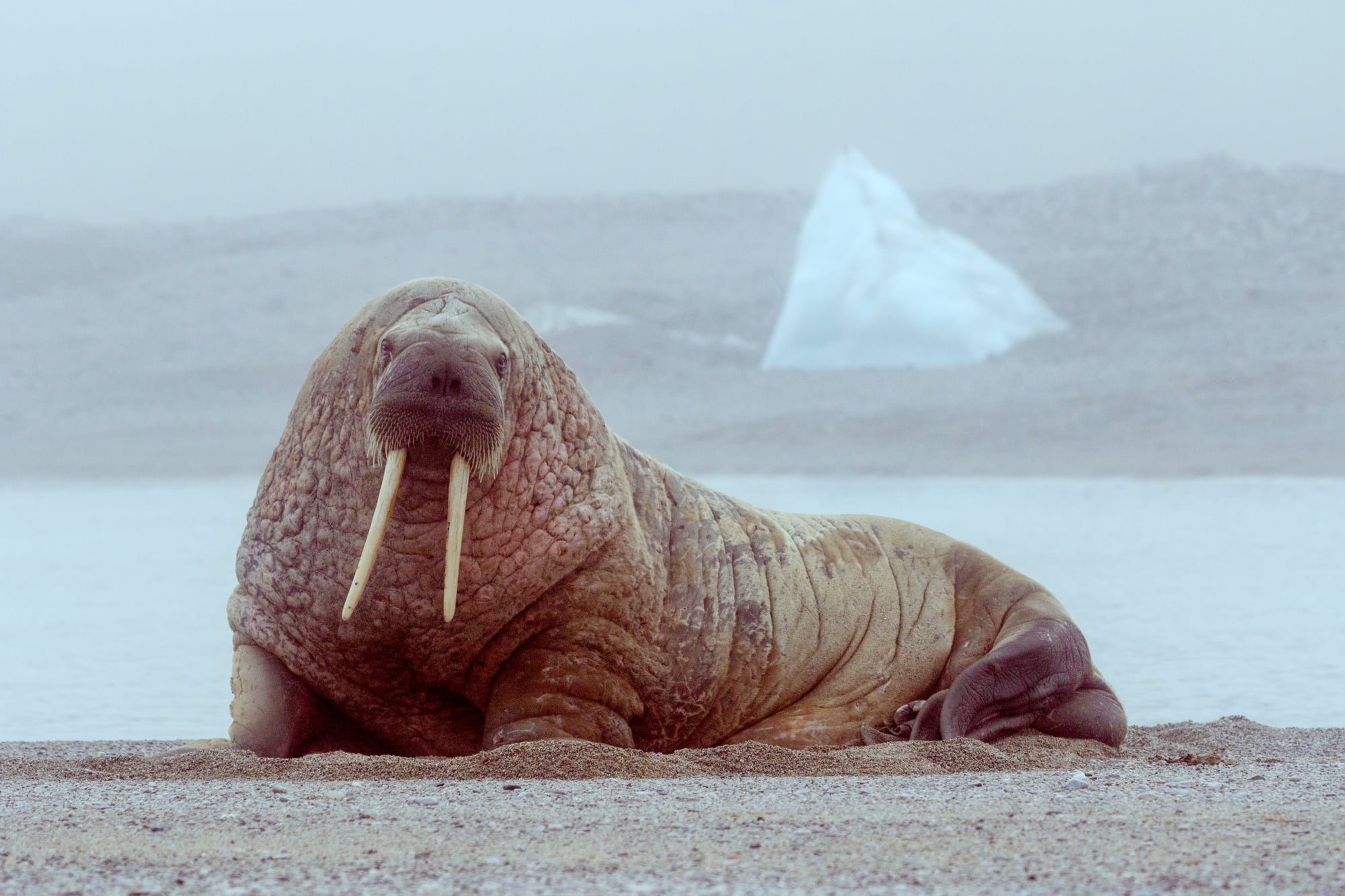
Credit: Nixette · CC BY-SA 4.0
The walrus is a large marine mammal that lives in the cold waters around the Arctic. It belongs to the same group of animals as seals and sea lions. A walrus has thick brown skin, a bushy mustache of stiff whiskers, and two long ivory tusks that grow from its upper jaw. Adult males can weigh up to 3,700 pounds. That is almost as much as a small car.
Walruses spend their lives split between the sea and the ice. They dive to the shallow ocean floor to find food, then haul themselves out onto sea ice or rocky beaches to rest. When hundreds of walruses pile up together on the ice, the group is called a haul-out. They lie almost on top of each other, which helps keep them warm.
The tusks are actually overgrown teeth. Both males and females have them, and they can grow more than three feet long. Walruses use their tusks like ice picks to pull themselves out of the water. They also use them to punch breathing holes through thin ice and to fight each other over space on the ice or over mates. Scientists sometimes call the walrus "the tooth-walker" because of this.
Those bristly whiskers on a walrus's face are not just for show. Each whisker is packed with nerves, which makes the walrus's face about as sensitive as a human hand. A walrus uses its whiskers to feel around on the dark seafloor, searching for clams, mussels, and snails buried in the mud. Once it finds a clam, it sucks the soft body right out of the shell. A single walrus can eat thousands of clams in one day.
A thick layer of fat called blubber keeps walruses warm. The blubber can be six inches thick. Under cold water, a walrus's skin even looks pale, almost white, because blood flow moves away from the surface to save heat. On a warm day on land, the skin turns pink again as blood rushes back.
Walruses depend on sea ice to rest, give birth, and raise their young. As the Arctic warms and sea ice melts earlier each year, walruses are being forced onto crowded beaches on land. When something startles them there, they sometimes stampede, and young calves can be crushed. Scientists are still studying how well walruses can adapt to a changing Arctic. For now, their future is tied closely to the ice they live on.
Related
Last updated 2026-04-22