
Swan
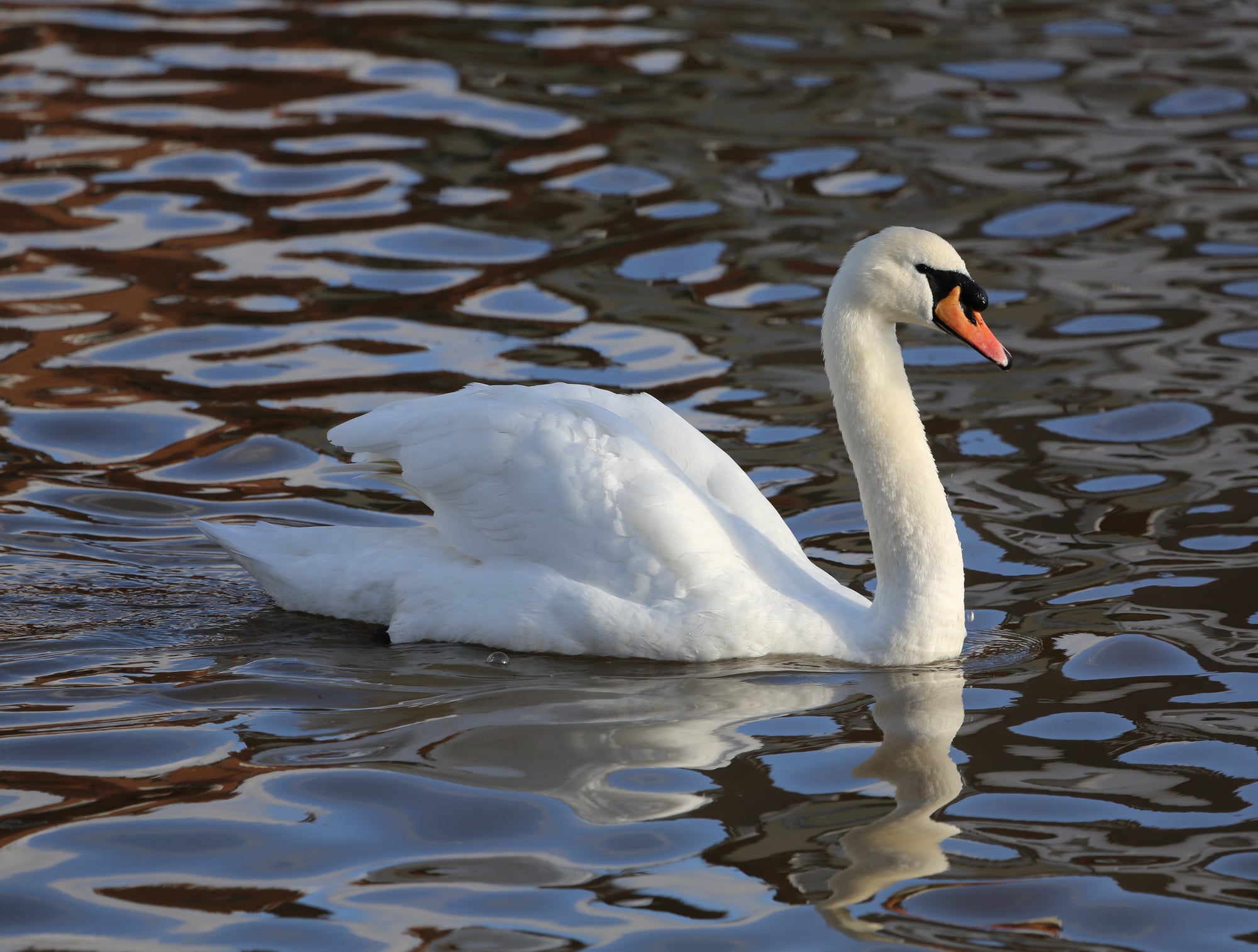
Credit: Geni · CC BY-SA 4.0
A swan is a large water bird that lives on lakes, rivers, and ponds. Swans are closely related to ducks and geese, but they are bigger than either one. They have long, curved necks, webbed feet, and wide wings. Most adult swans are white, though some kinds are black or black and white. There are seven species of swans in the world, and they live on every continent except Africa and Antarctica.
Swans are among the largest flying birds on Earth. A full-grown trumpeter swan can weigh nearly 30 pounds. Its wings stretch up to 10 feet from tip to tip, wider than most cars are long. That much wing is needed to lift so much body into the air. A swan cannot just jump off the ground and fly. It runs across the surface of the water for 20 or 30 feet, flapping hard, before it finally gets airborne.
Swans eat mostly plants. They stretch their long necks underwater to pull up roots, stems, and leaves from the bottom of a lake or pond. They also eat grass on shore, and sometimes small insects and snails. A swan's long neck lets it reach food that ducks and geese cannot.
Swans usually pair up for life. A male and female build a big nest together out of reeds and grass, often on a small island or at the edge of the water. The female lays four to seven eggs and sits on them for about five weeks. Baby swans are called cygnets. Young cygnets are gray or brown and fluffy. They do not turn white until they are about a year old. The parents guard their babies fiercely. An angry swan can knock down a grown person with its wings.
Swans have been important in human stories for thousands of years. In ancient Greek myths, the god Zeus turned himself into a swan. A famous Hans Christian Andersen tale, "The Ugly Duckling," is about a young swan who grows up thinking he is a strange duck. The ballet Swan Lake, written in 1875, is still performed all over the world.
In England, a strange old law is still on the books. Since the 1100s, all unmarked mute swans on open water belong to the king or queen. Every summer, royal officials travel up the River Thames in a ceremony called Swan Upping. They count the swans, check their health, and record each bird. The tradition is nearly 900 years old and still happens today.
Related
Last updated 2026-04-22