
Migration (Animal)
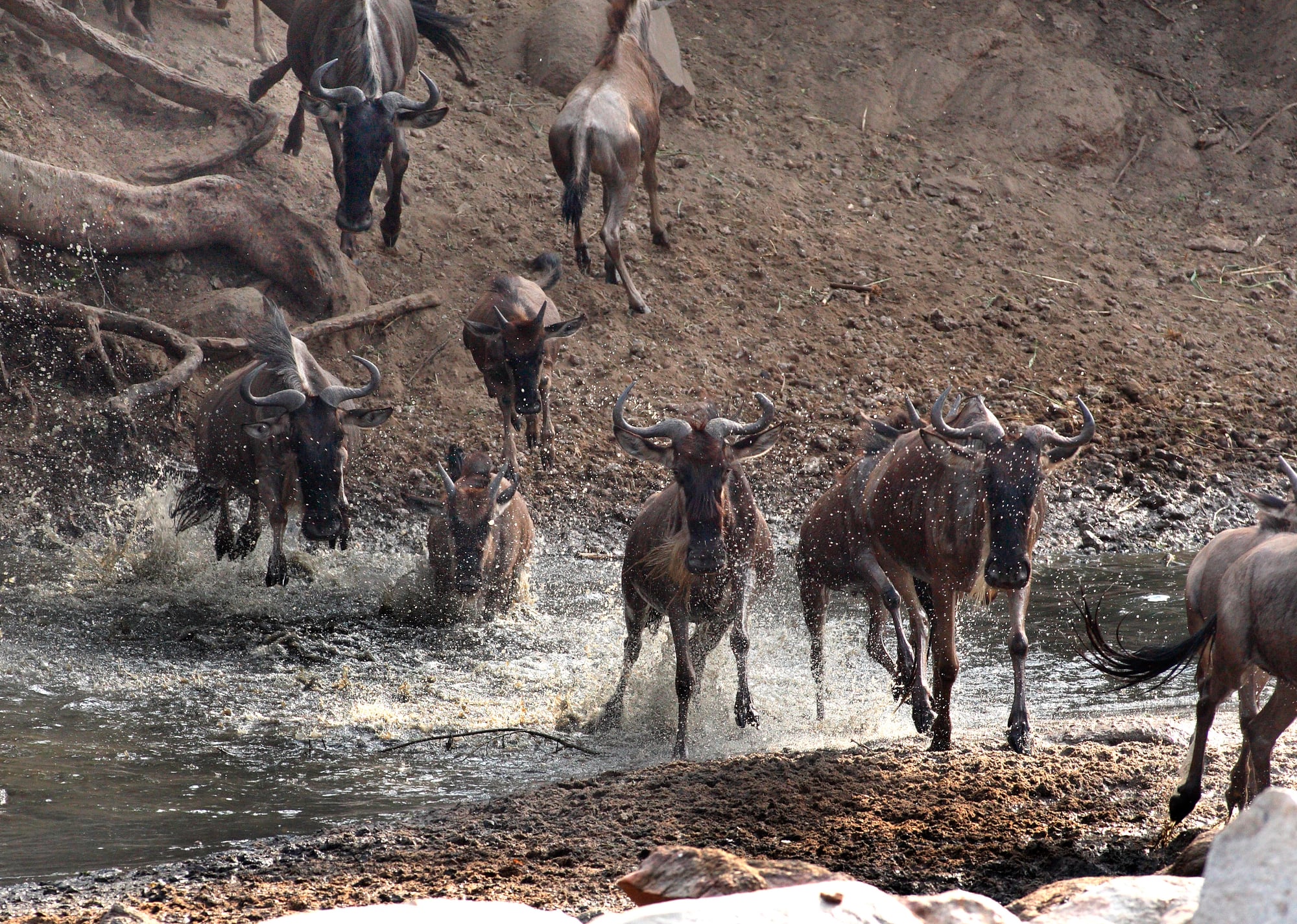
Credit: Wolves201 · CC BY-SA 4.0
Animal migration is the regular, long-distance movement of animals from one place to another. Most animals migrate to find food, to find warmer weather, or to reach a safe place to have their young. They usually travel the same routes every year, season after season, and then return home.
Many kinds of animals migrate. Birds, whales, fish, insects, and even some mammals make long trips each year. Some travel a few hundred miles. Others cross entire oceans or continents. The Arctic tern holds the record. This small seabird flies from the Arctic to Antarctica and back every year. That trip covers about 44,000 miles, almost twice the distance around the Earth.
Birds are the most famous migrators. In North America, millions of geese, ducks, and songbirds fly south every fall to spend winter in warmer places. In spring, they fly back north to nest. Hummingbirds as small as your thumb cross the Gulf of Mexico in a single nonstop flight of about 500 miles.
Whales migrate too. Humpback whales spend the summer in cold waters near Alaska, where they eat huge amounts of tiny fish and krill. In winter, they swim thousands of miles to warm tropical waters to have their babies. Gray whales travel even farther, about 10,000 miles round trip.
Some of the most surprising migrators are tiny. Monarch butterflies fly up to 3,000 miles from Canada and the northern United States to forests in central Mexico. The butterflies that make the trip have never been there before. No single monarch lives long enough to make the whole round trip. Their great-great-grandchildren fly back north in the spring.
How do migrating animals find their way? Scientists have been studying this question for a long time, and parts of it are still a mystery. We know that many birds use the sun and the stars like a map. Some birds and sea turtles can sense Earth's magnetic field and use it like a built-in compass. Salmon use their sense of smell to find the exact stream where they were born, sometimes after years at sea. But exactly how monarch butterflies know the way to a specific Mexican forest they have never seen is still not fully understood.
Migration is hard and dangerous. Animals face bad weather, predators, and exhaustion. More and more, they also face problems caused by humans, like tall buildings, bright city lights, and habitat loss. Still, every spring and fall, billions of animals set out on journeys their ancestors have made for thousands of years.
Last updated 2026-04-23