
Lake
Credit: WolfmanSF · CC BY-SA 3.0
A lake is a large body of water surrounded by land. Most lakes are filled with fresh water, but some are salty. They form in low spots where water collects and cannot easily flow away. Lakes are found on every continent, even Antarctica, where some lakes lie buried under thick sheets of ice.
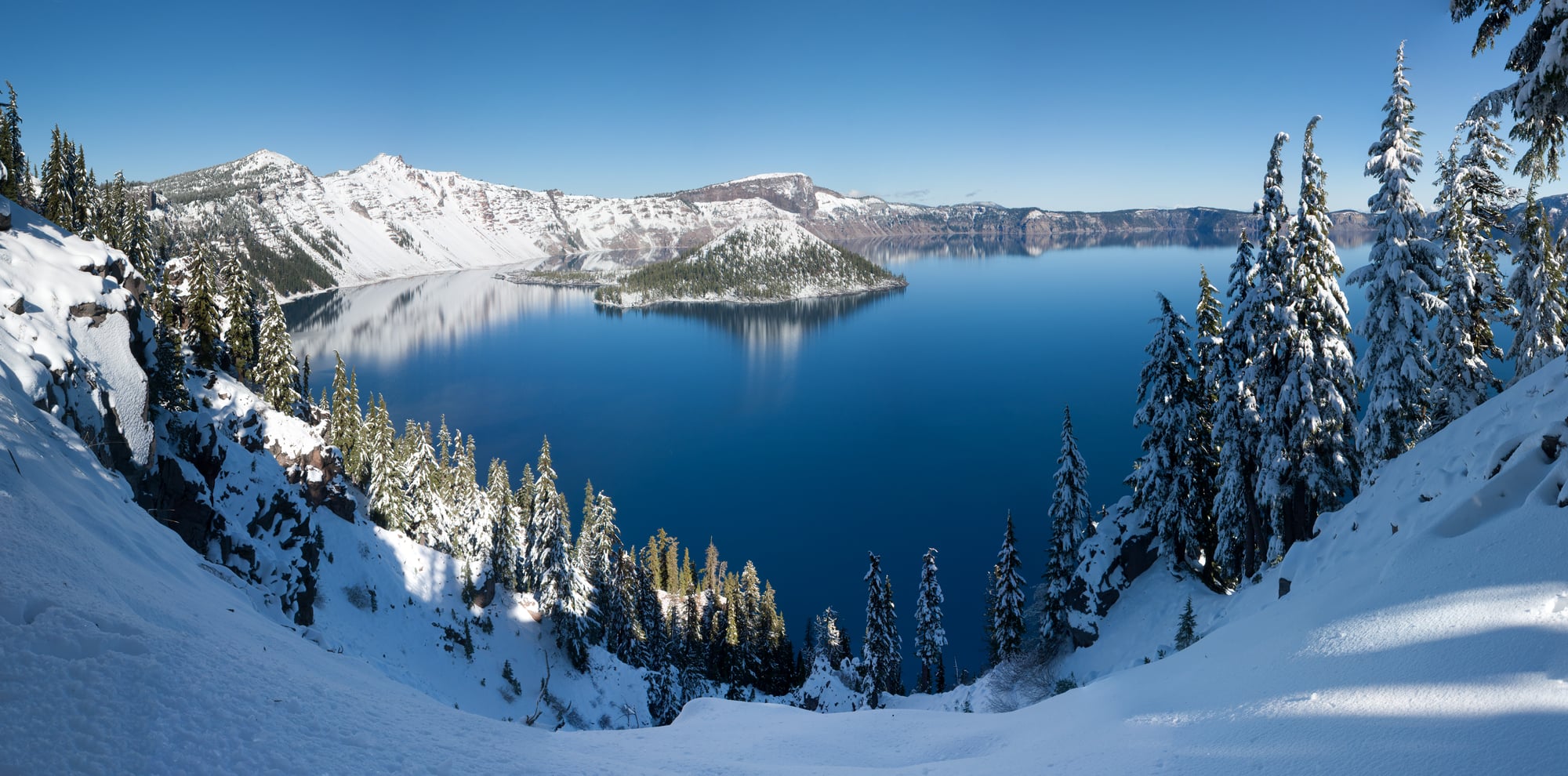
Lakes form in many different ways. Some sit in basins carved out by glaciers during the last ice age. The Great Lakes of North America were made this way. Other lakes form when a river bends and gets cut off, leaving a curved pool called an oxbow lake. Some lakes fill the craters of old volcanoes. Crater Lake in Oregon is one of these. It sits in a volcano that collapsed about 7,700 years ago.
A lake is not the same as a pond. There is no perfect rule that separates them, but lakes are usually deeper and bigger. Sunlight reaches the bottom of most ponds. In a lake, the deeper water stays cold and dark all year.
Most lakes have water flowing in and water flowing out. Rivers and streams carry fresh water in. Other rivers carry water out at the far end. Some lakes have no outlet at all. Water leaves only by evaporating into the air. When that happens, salt and other minerals get left behind. Over thousands of years, the lake turns salty. The Great Salt Lake in Utah formed this way. So did the Dead Sea, which is so salty that swimmers float on top of it without trying.
Lakes are full of life. Fish, frogs, turtles, insects, and water birds all depend on them. Plants grow along the edges and on the bottom in shallow areas. People depend on lakes too. Lakes give cities drinking water, water for crops, fish to eat, and places to swim and boat.
The deepest lake in the world is Lake Baikal in Russia. It is more than a mile deep at its lowest point. It is also the oldest lake on Earth. Scientists think it formed about 25 million years ago, long before humans existed. Most lakes do not last that long. They slowly fill in with mud, sand, and dead plants. Over thousands of years, a lake can shrink, become a swamp, and finally turn into dry land. Earth has no shortage of new lakes, though, because rivers, glaciers, and volcanoes keep making them.
Related
Last updated 2026-04-25