
Robin
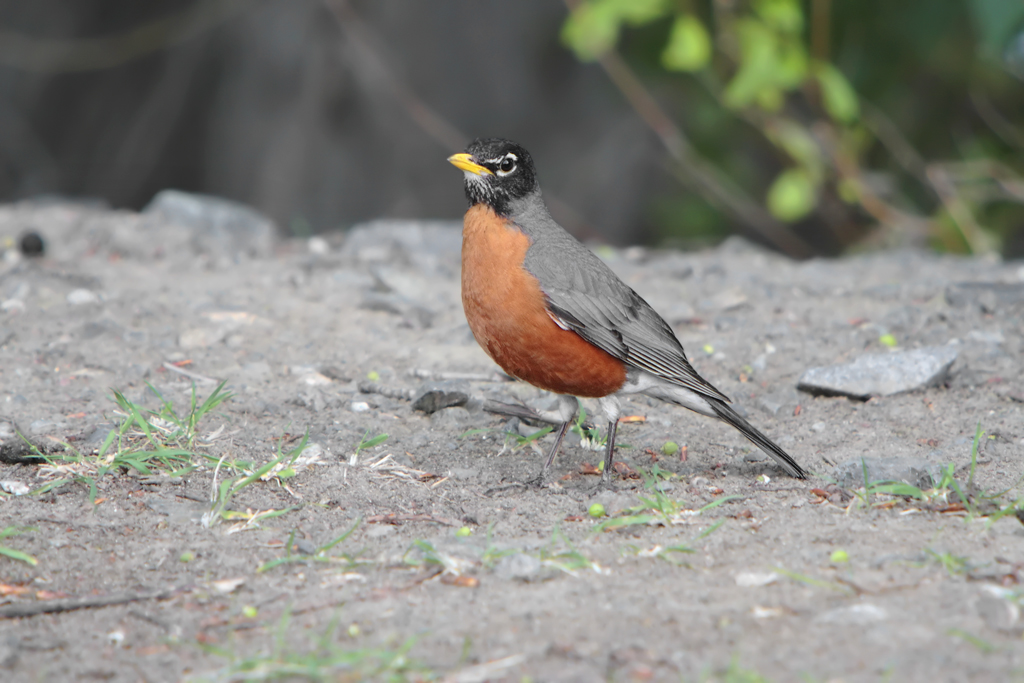
Credit: Alan Vernon · CC BY 2.0
The robin is a small songbird known for its bright orange-red chest. There are actually two different birds called "robin." The American robin lives across North America and is about 10 inches long. The European robin lives in Europe and is much smaller, only about 5 inches long. Early English settlers in North America named the bigger bird after the little red-chested bird they missed from home.
American robins have a gray-brown back, a dark head, and that famous rusty-orange belly. Males and females look almost the same, but the male's colors are a bit brighter. Their sharp yellow beaks are good for grabbing worms and bugs. In spring and summer, robins eat mostly insects, worms, and snails. In fall and winter, they switch to berries and fruit.
You have probably seen a robin hopping across a lawn, stopping, and tilting its head to one side. People used to think the bird was listening for worms. Scientists now know that robins mostly use their sharp eyesight. Tilting the head lets them see tiny movements in the grass where a worm is wriggling just below the surface.
Robins build cup-shaped nests out of twigs, grass, and mud. A mother robin lays three to five eggs, and they are a famous shade of blue. "Robin's-egg blue" is even a color name in crayon boxes and paint catalogs. The eggs hatch in about two weeks. Babies leave the nest after another two weeks, though the parents keep feeding them for a while longer.
Many American robins fly south for the winter, but not all of them. Some stay north and simply move into the woods, where berries hang on through the cold months. That is why seeing a robin in spring does not always mean winter is ending. The old saying that "robins bring spring" is partly a myth. Still, hearing a robin sing before sunrise is one of the clearest signs that the days are getting warmer.
Robins are important in many stories and traditions. The European robin is the bird that appears on British Christmas cards, standing in the snow. In the United States, the American robin is the state bird of Connecticut, Michigan, and Wisconsin. Robins are also one of the most common wild birds in North America. Scientists think there are more than 370 million of them, which means there may be more robins in North America than people.
Last updated 2026-04-22