
Blue Jay
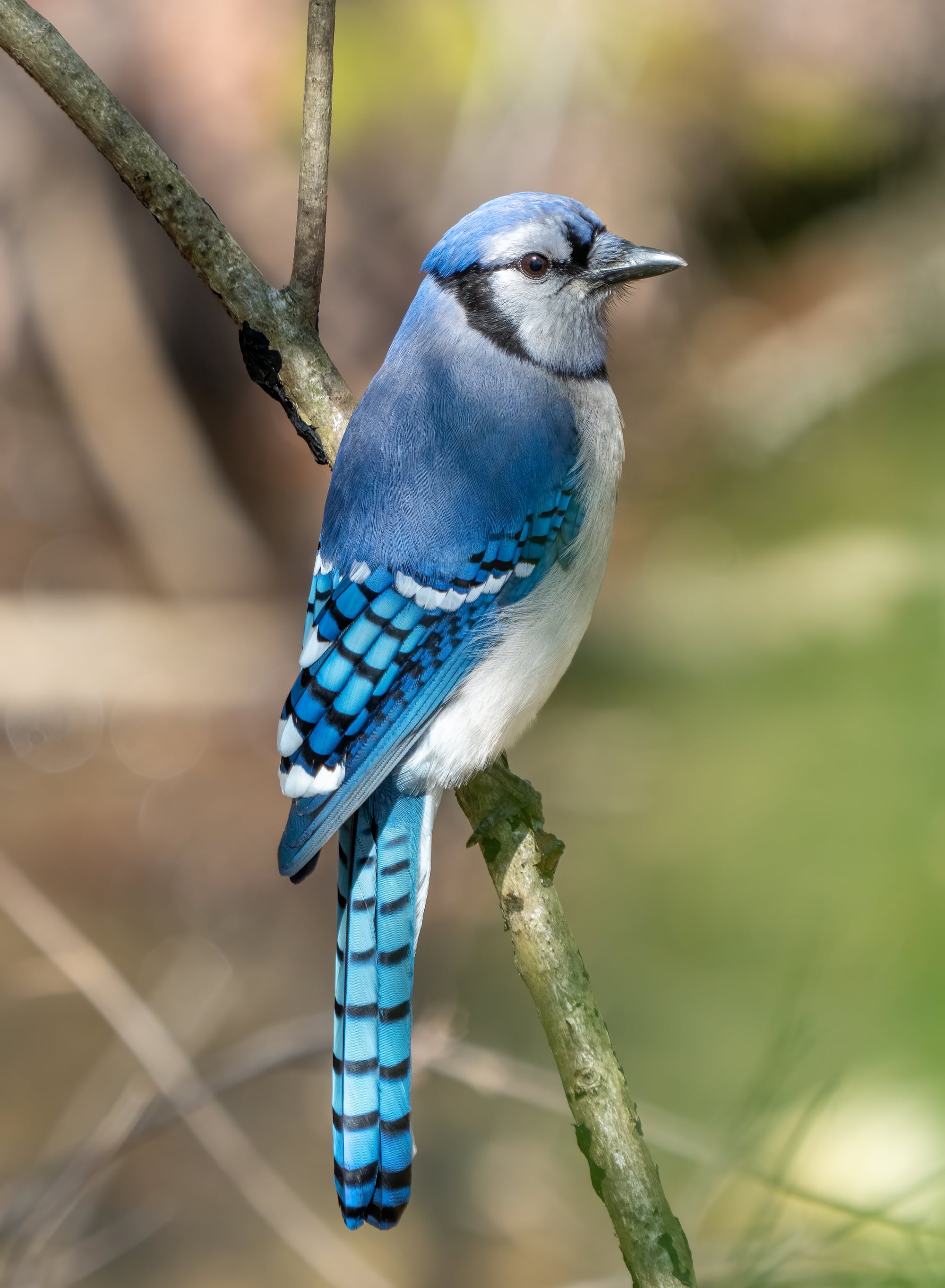
Credit: Rhododendrites · CC BY-SA 4.0
The blue jay is a medium-sized songbird that lives in eastern and central North America. It has bright blue feathers on its back, wings, and tail, a white belly, and a black collar around its neck. A crest of feathers sits on top of its head. The crest can rise when the bird is excited or flatten when it is calm. An adult blue jay is about 10 inches long from beak to tail.
Blue jays belong to the same family as crows, ravens, and magpies. This family is known for being clever. Blue jays can solve simple puzzles, remember where they hid food for months, and recognize individual humans. In zoos and research labs, they have even used small sticks as tools to pull food closer to their cages.
These birds are famous for being loud. A blue jay's most common call sounds like a sharp "jay jay jay." But blue jays are also excellent copycats. They can imitate the screams of hawks so well that other birds fly away in fear. Scientists are not sure why blue jays do this. Some think the birds are trying to scare smaller birds away from food. Others think the calls warn other jays that a real hawk is nearby.
Acorns are a favorite food. A single blue jay can carry up to five acorns at a time by tucking them into a stretchy pouch in its throat. The bird buries the acorns in the ground to eat later. It forgets some of them, and those forgotten acorns grow into oak trees. Scientists believe blue jays helped oak forests spread quickly across North America after the last ice age, more than 10,000 years ago.
Blue jays build cup-shaped nests in trees, usually about 10 to 25 feet off the ground. The female lays three to six eggs. Both parents feed the chicks. Some blue jays stay in the same area all year. Others fly south for the winter in loose flocks of dozens or even hundreds of birds. Why some blue jays migrate and others do not is still a mystery to scientists. A bird that migrates one year may stay home the next.
Blue jays will defend their nests fiercely. They dive at cats, hawks, and even people who come too close. Other small birds sometimes follow blue jays around because the jays call out warnings when a predator is near. A noisy blue jay can be the best alarm system a backyard has.
Last updated 2026-04-22