
Orca
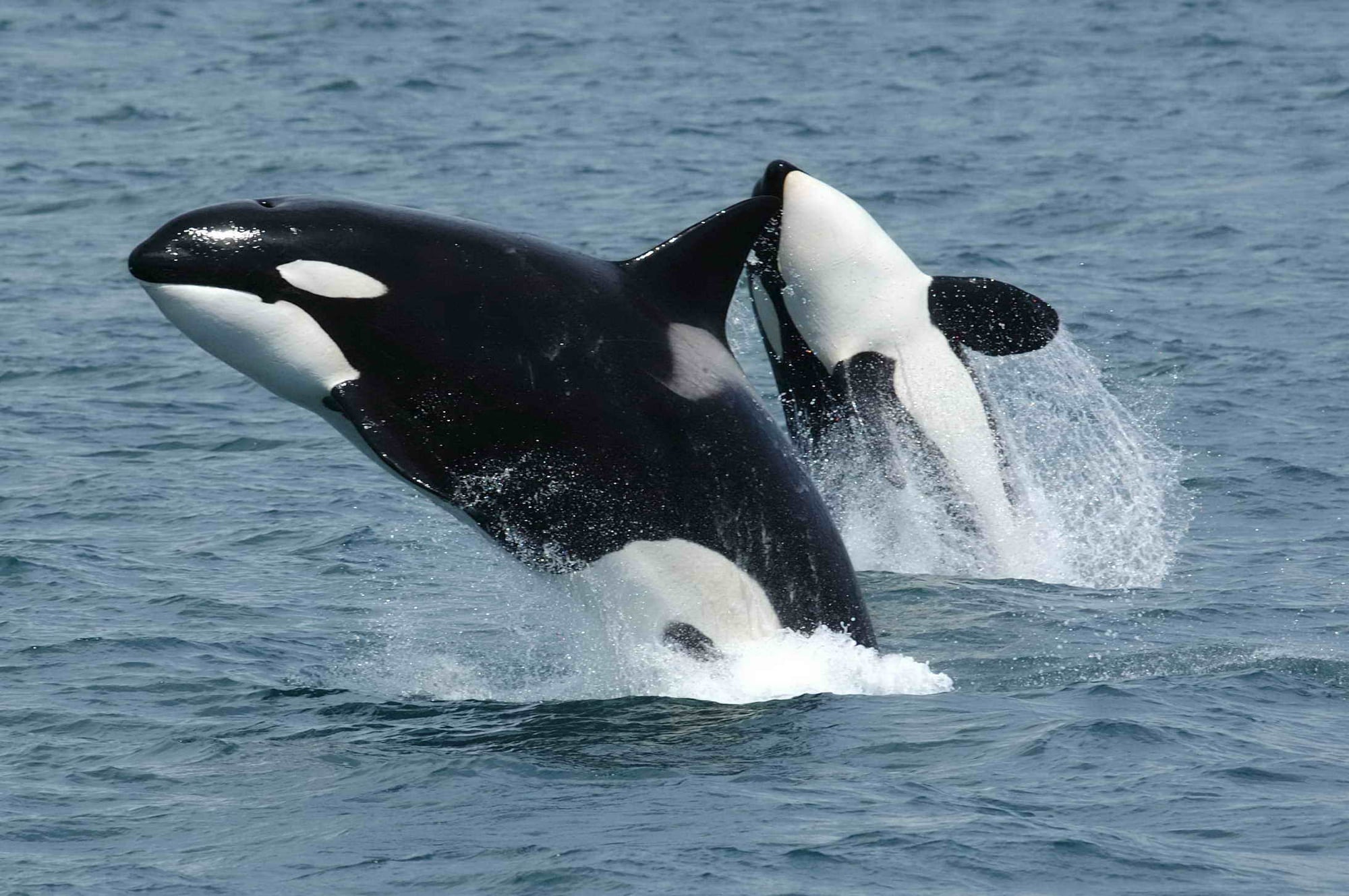
Credit: Robert Pittman · Public domain
The orca is a large black and white marine mammal that lives in oceans all over the world. Orcas are also called killer whales, but they are not actually whales. They are the biggest members of the dolphin family. An adult male orca can grow up to 32 feet long and weigh up to 11 tons, about as much as two full-grown elephants. Females are a bit smaller.
Orcas live in every ocean, from the icy waters near the North Pole and South Pole to warm seas near the equator. They can swim up to 34 miles per hour, faster than any other marine mammal. They breathe air through a blowhole on top of the head, just like other dolphins and whales. A single breath can keep an orca underwater for up to 15 minutes.
Orcas are top predators, which means nothing hunts them. They eat almost anything: fish, squid, seals, sea lions, penguins, sea turtles, and even other whales. Orcas have been seen hunting great white sharks. Different groups of orcas eat different things. Some groups eat only fish. Other groups eat only mammals. A group will teach its young what to hunt and how to hunt it.
Orcas live in family groups called pods. A pod is usually led by the oldest female, called the matriarch. Most orcas stay with their mother their whole life, even after they grow up. Orcas are one of the few animals known to live long after they can have babies. A female orca can live 80 years or more, and grandmothers help raise the younger orcas in the pod. This is something humans and orcas share, and almost no other animals do.
Each pod has its own set of calls. Scientists who study orcas can tell which pod a call belongs to just by listening. Some researchers think of these different calls as something like different languages or accents. Orcas also use clicks to find food by bouncing sound off things, a skill called echolocation.
Orcas are very smart. They solve problems, copy each other, and pass new hunting tricks down through the generations. This is a kind of culture, and few animals outside humans show it so clearly.
For many years, orcas were captured for aquariums and theme parks. Keeping such large, social, far-swimming animals in small tanks is now widely seen as cruel. Most countries no longer allow new orcas to be caught from the wild. In the ocean, orcas face other problems, including pollution, fewer fish to eat, and noise from ships.
Related
Last updated 2026-04-22