
Blue Whale
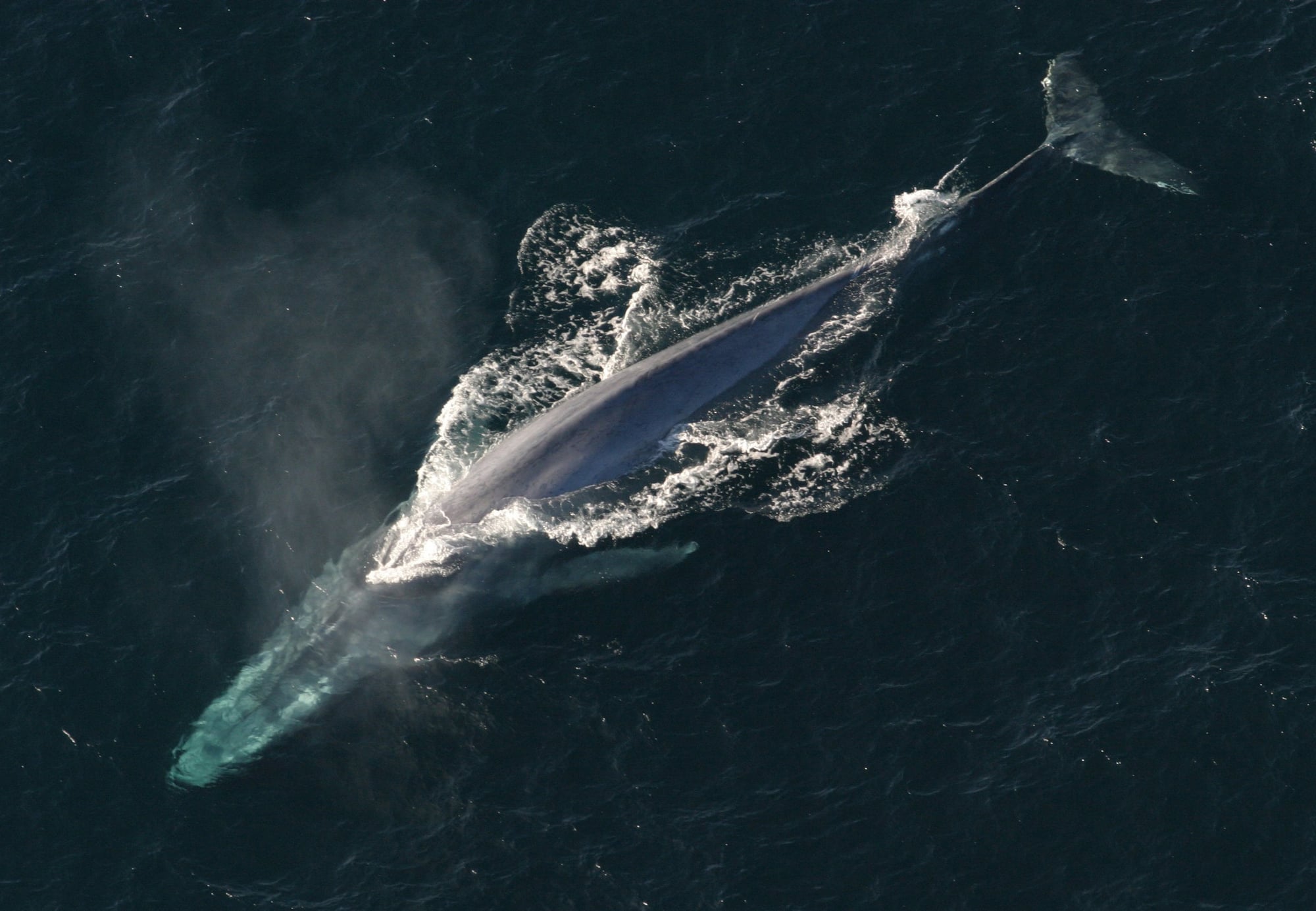
Credit: NOAA Photo Library · Public domain
The blue whale is the largest animal that has ever lived on Earth. It is a marine mammal, which means it breathes air and gives birth to live young, but it spends its whole life in the ocean. Blue whales live in every ocean on the planet except the Arctic. They are bigger than any dinosaur scientists have ever found.
A full-grown blue whale can be almost 100 feet long. That is longer than three school buses parked end to end. It can weigh up to 200 tons, about the same as 33 elephants. Its tongue alone weighs as much as a full-grown elephant. A newborn blue whale is already 25 feet long and gains about 200 pounds every day for its first year.
Despite their huge size, blue whales eat some of the smallest creatures in the ocean. Their main food is krill, which are tiny pink animals that look like little shrimp. A blue whale swims into a swarm of krill with its mouth wide open. It gulps in tons of water at once. Then it pushes the water back out through hundreds of bristly plates in its mouth called baleen. The krill get trapped inside. A blue whale can eat up to 8,000 pounds of krill in a single day.
Blue whales are also among the loudest animals on Earth. Their deep calls can travel for hundreds of miles underwater. Scientists think the whales use these sounds to find each other across huge stretches of ocean. One call, recorded at a strange high pitch, has puzzled researchers for decades. They still do not know for sure which whale is making it.
In the early 1900s, hunters killed hundreds of thousands of blue whales for their oil and meat. By the 1960s, fewer than 1,000 were left in some parts of the world. Most countries then agreed to stop hunting them. The ban worked, but slowly. Today there are about 10,000 to 25,000 blue whales in the oceans. The species is still listed as endangered.
Blue whales face new dangers today. They can be struck by large ships, get tangled in fishing gear, or lose food when ocean temperatures change. Scientists track them using special tags and underwater microphones to learn how to protect them. When a blue whale passes near a research boat, the crew often feels the vibration of its call through the hull before they ever see the animal itself.
Related
Last updated 2026-04-22