
Stone Age
Credit: EU · Public domain
The Stone Age was the long period of human history when people made their tools out of stone, bone, and wood. It began about 3.3 million years ago, when early human ancestors first chipped sharp edges onto rocks. It ended at different times in different parts of the world, as people learned to work with metal. In the Middle East, the Stone Age ended around 3300 BCE. In some places, it lasted much longer.
Scientists divide the Stone Age into three parts. The Old Stone Age, called the Paleolithic, was by far the longest. People lived as hunters and gatherers. They moved from place to place to follow animals and find ripe plants. They lived in small groups, often in caves or simple shelters made of branches and animal hides.
The Middle Stone Age, called the Mesolithic, came after the last ice age ended about 11,700 years ago. The world warmed up. Forests grew where ice had been. People made smaller, sharper tools and started to fish more often.
The New Stone Age, called the Neolithic, was a turning point. People learned to plant crops and raise animals. This change is called the agricultural revolution. Once families could grow their own food, they no longer had to keep moving. They built villages, made pottery, and stored grain. Some of these villages grew into the world's first towns.
Stone Age people were not simple. Their brains were the same size as ours. They figured out how to control fire, sew clothes from animal skins, and build boats. They invented the bow and arrow. They buried their dead with care, sometimes with flowers or tools, which suggests they had ideas about life and death.
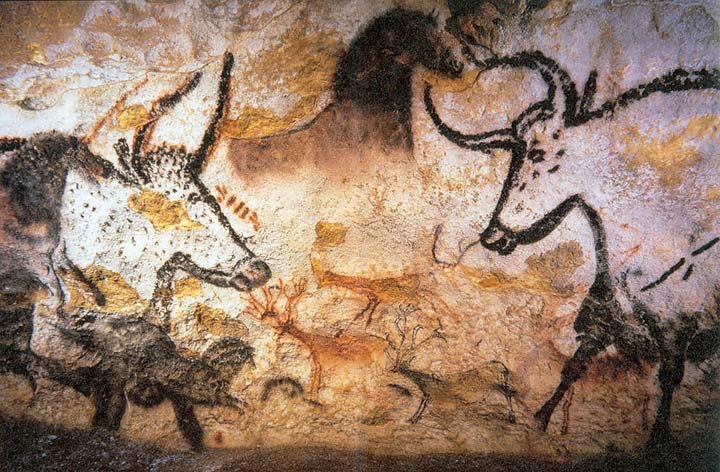
They were also artists. In caves at Lascaux in France and Altamira in Spain, painters covered the walls with horses, bison, and deer more than 17,000 years ago. The paintings are so detailed that scientists can tell which animals lived in the area at the time. People also carved small statues out of bone and ivory, and strung beads into necklaces.
Some of the biggest mysteries in human history come from the Stone Age. Who built Stonehenge in England, and why? How did people move stones weighing several tons without metal tools or wheels? Archaeologists have ideas, but no one knows for sure.
The Stone Age ended when people learned to melt copper and tin to make bronze. That shift opened the door to the Bronze Age, cities, kings, and writing. But almost everything that makes humans human, from language to art to family, was already in place.
Related
Last updated 2026-04-26