
Woolly Mammoth
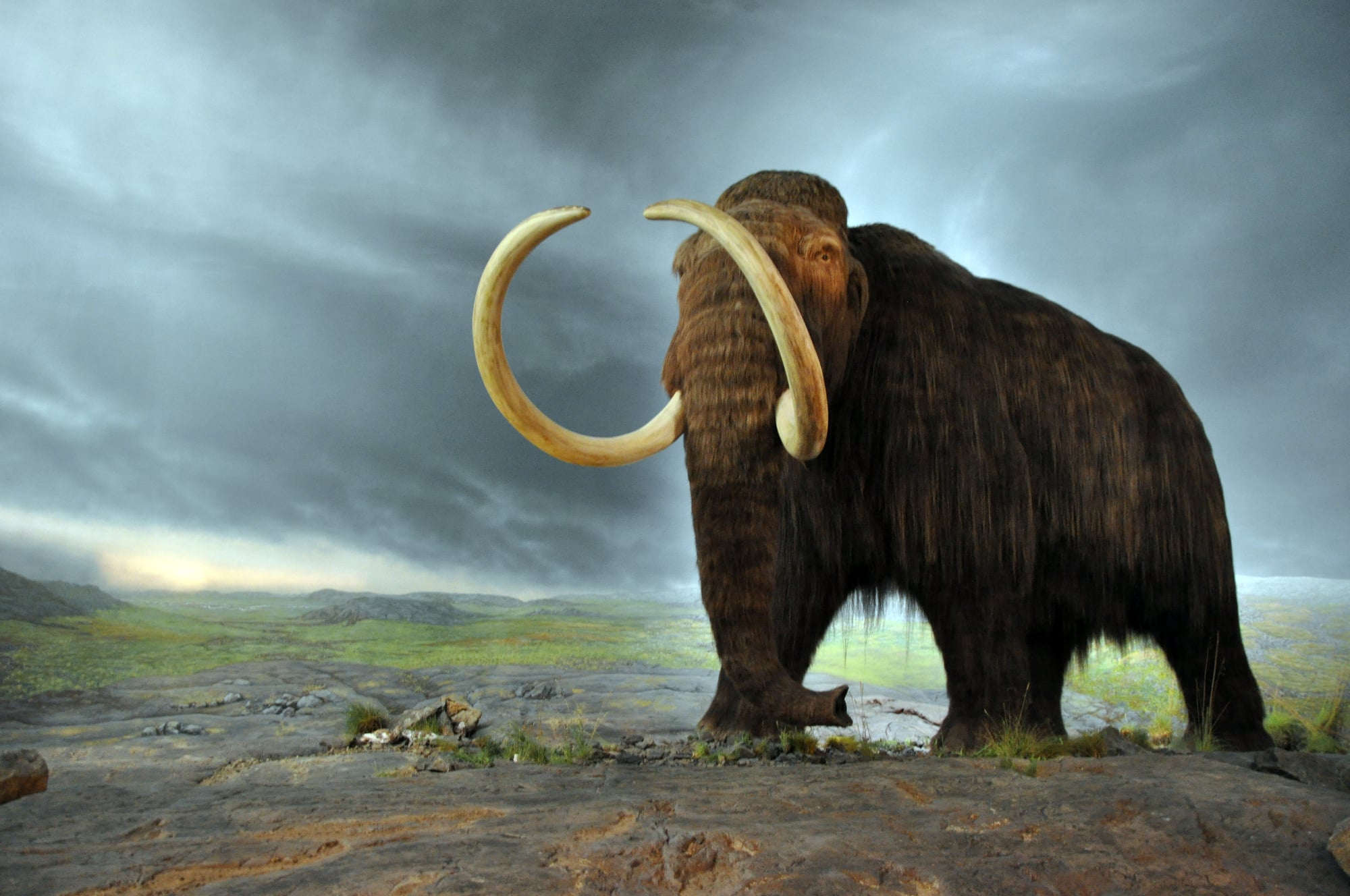
Credit: Flying Puffin · CC BY-SA 2.0
The woolly mammoth was a large, shaggy relative of today's elephants that lived across the cold northern parts of the world. It roamed the grasslands of Europe, Asia, and North America during the Ice Age. The woolly mammoth first appeared about 400,000 years ago. Most of them died out around 10,000 years ago, at the end of the last Ice Age.
A full-grown woolly mammoth stood about 10 feet tall at the shoulder. That is about the height of a basketball hoop. It weighed up to 6 tons, roughly as much as a large pickup truck loaded with bricks. Mammoths had long, curved tusks that could grow 15 feet long. Some males used their tusks to fight each other and to scrape snow off the ground to find grass.
What made the woolly mammoth different from today's elephants was its coat. A mammoth had two layers of fur. The outer layer was made of long, coarse hairs, sometimes three feet long. The inner layer was a thick, soft wool that trapped heat close to the skin. Under the skin, a layer of fat about four inches thick kept the body warm. A mammoth's ears were small and its tail was short, which also helped it lose less heat in the freezing wind.
Mammoths ate plants. A single adult chewed through hundreds of pounds of grass, moss, and small shrubs every day. Scientists know this because some mammoths have been found frozen in the ground in Siberia, with their last meal still inside their stomachs.
These frozen mammoths are one reason we know so much about the species. When a mammoth died and was quickly covered by cold mud or snow, the ice kept its body from rotting. Some mammoth mummies still have skin, hair, and even blood. No other Ice Age animal has been preserved this well.
Why did the woolly mammoth go extinct? Scientists still argue about it. Some think the end of the Ice Age was the main cause, because the climate grew warmer and the grasslands shrank. Others think early humans hunted mammoths faster than they could have babies. Many researchers believe it was both, working together.
Because mammoth DNA has survived in frozen remains, some scientists are now trying to bring the woolly mammoth back. They want to mix mammoth genes with Asian elephant genes to create an animal that could live in the cold again. Whether this will work, and whether it should be tried at all, is a question people are still debating today.
Related
Last updated 2026-04-22