
Russian Revolution
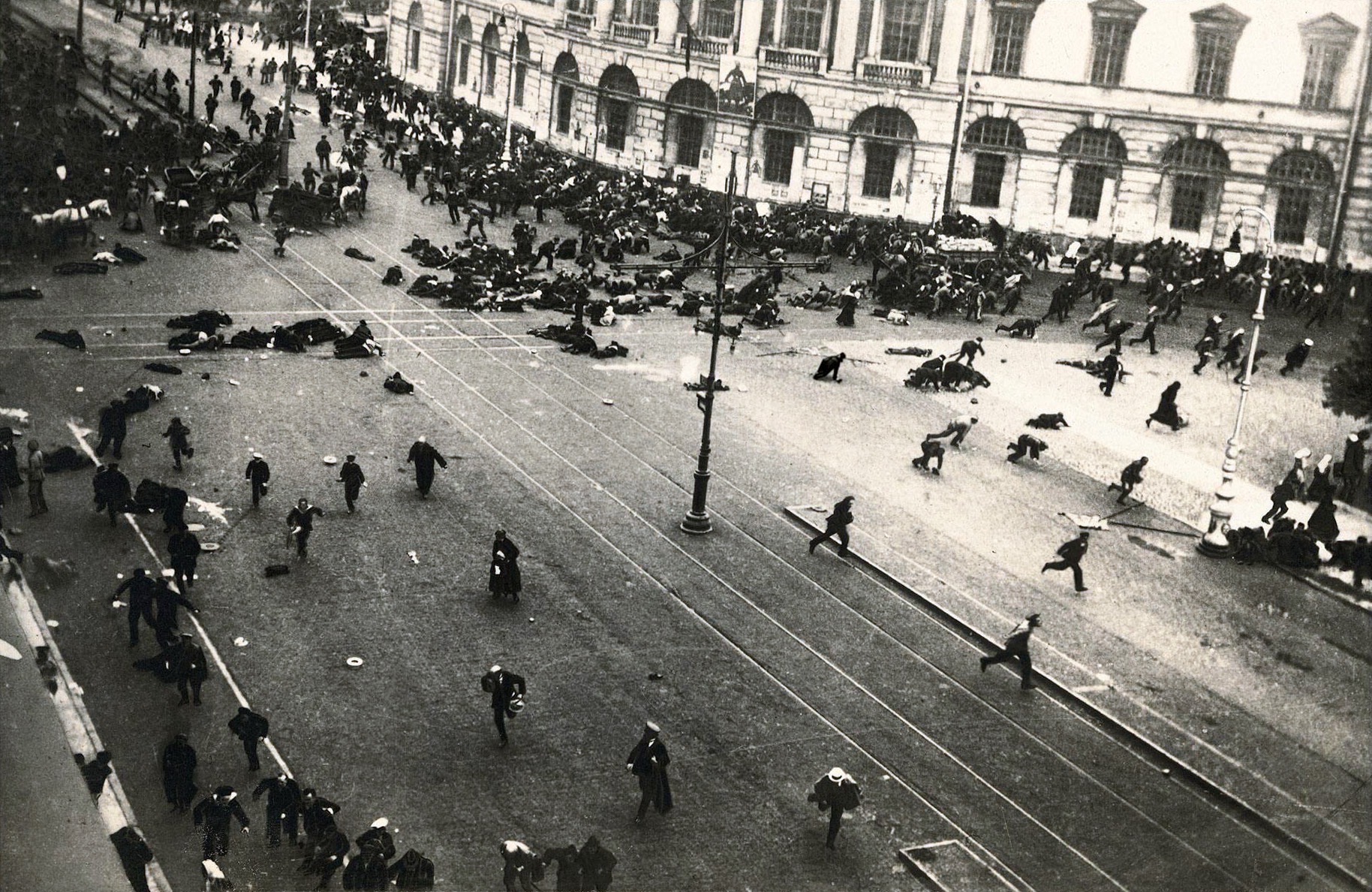
Credit: Viktor Bulla · Public domain
The Russian Revolution was a pair of uprisings in 1917 that ended the rule of Russia's emperors and led to the world's first communist government. Russia at the time was the largest country on Earth, stretching across two continents. The revolution changed not just Russia but the whole twentieth century.
For hundreds of years, Russia had been ruled by emperors called tsars. The tsar held nearly all the power. Most Russians were poor farmers called peasants. A small number of nobles owned huge amounts of land. By the early 1900s, many Russians were angry. Workers in the cities labored long hours for tiny wages. Peasants in the countryside often went hungry.
Then came World War I. Russia joined the fighting in 1914 against Germany and Austria-Hungary. The war went badly. Millions of Russian soldiers were killed or wounded. Food and fuel ran short at home. People stood in long lines for bread. Tsar Nicholas II was blamed for the disaster.
The first uprising came in March 1917. (Russians called it the February Revolution because they used a different calendar.) Workers in the capital, Petrograd, went on strike. Soldiers refused to fire on the crowds and joined them instead. Within a week, Nicholas gave up his throne. The 300-year-old Romanov dynasty was over. A temporary government took charge.
But the temporary government kept Russia in the war, and the suffering continued. A radical group called the Bolsheviks saw their chance. Their leader was Vladimir Lenin, a revolutionary who had spent years in exile. Lenin promised "peace, land, and bread." In November 1917, the Bolsheviks seized government buildings in Petrograd in a quick, mostly bloodless takeover. This second uprising is called the October Revolution.
A brutal civil war followed. The Bolshevik "Reds" fought the "Whites," a loose alliance of groups who opposed them. The fighting lasted until 1922 and killed millions of people through battle, hunger, and disease. In 1918, the Bolsheviks executed Tsar Nicholas, his wife, and their five children in a basement room. The Reds finally won. They created a new country called the Soviet Union.
The Soviet Union became the world's first communist state. The government took over factories, farms, and businesses. After Lenin died in 1924, Joseph Stalin took power and ruled as a dictator for thirty years. Historians still debate the revolution's meaning. Some see it as a fight for justice that went terribly wrong. Others see it as a disaster from the start. Either way, the Soviet Union it created shaped world events until it collapsed in 1991.
Related
Last updated 2026-04-26