
Cold War
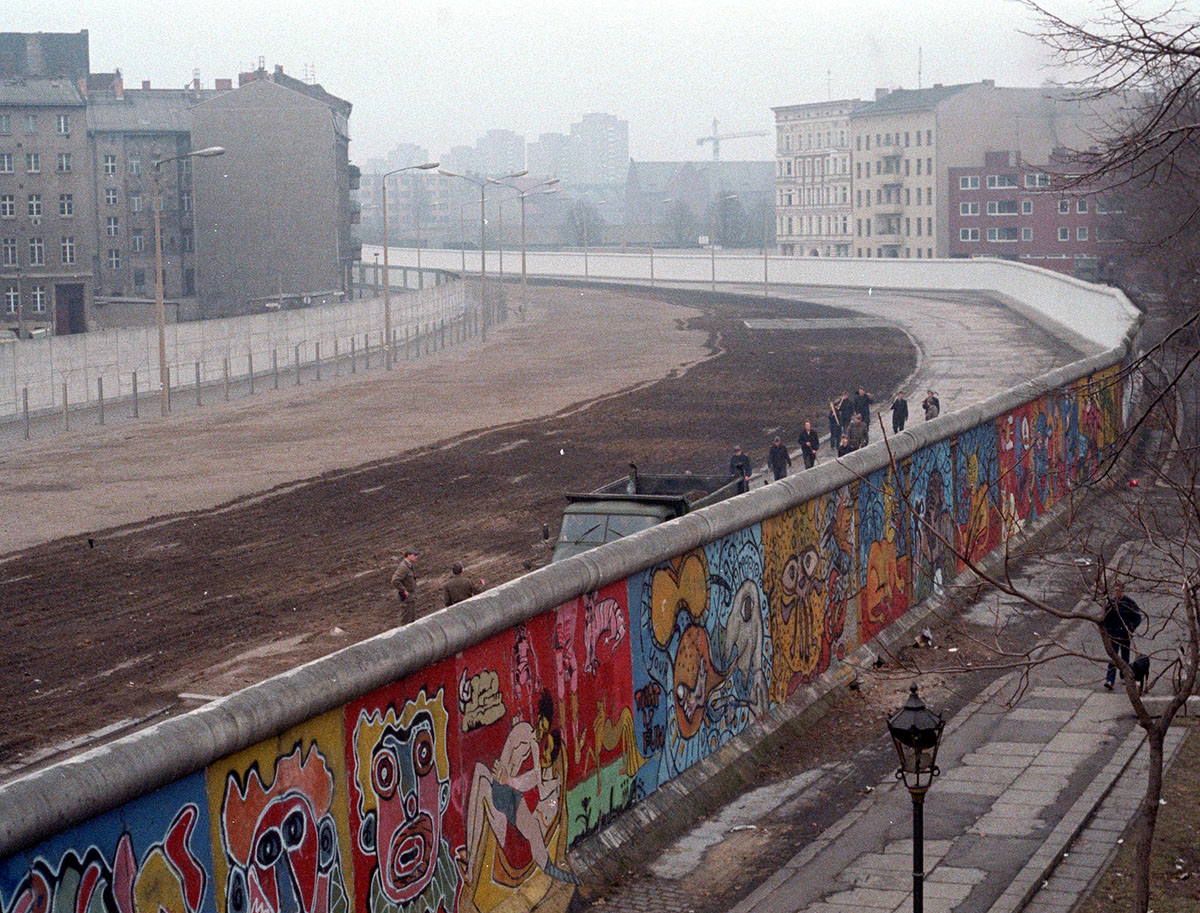
Credit: Noir · CC BY-SA 3.0
The Cold War was a long struggle between the United States and the Soviet Union that lasted from about 1947 to 1991. It was called "cold" because the two countries never fought each other directly in a hot war with soldiers and battles. Instead, they competed in almost every other way. They built up huge armies, raced to make better weapons, spied on each other, and tried to win allies all over the world.
How it started
The Cold War grew out of World War II. The United States and the Soviet Union had been allies during the war. Together they helped defeat Nazi Germany. But they did not agree on what should happen next. The United States believed in democracy and capitalism, where people vote for leaders and businesses are owned by private people. The Soviet Union believed in communism, where the government controls businesses and a single political party runs the country.
After the war, the Soviet Union took control of much of Eastern Europe. Countries like Poland, Hungary, and East Germany became communist. The British leader Winston Churchill said an "iron curtain" had dropped across Europe, dividing it in two. The United States and its allies in Western Europe formed a group called NATO in 1949. The Soviet Union and its allies later formed the Warsaw Pact. Europe was now split into two armed camps.
The nuclear arms race
The scariest part of the Cold War was the threat of nuclear weapons. The United States had used two atomic bombs on Japan in 1945. The Soviet Union built its own atomic bomb by 1949. Then both sides built bigger bombs called hydrogen bombs. They built rockets that could carry the bombs across the world in less than an hour.
By the 1980s, the two countries together had more than 60,000 nuclear weapons. People knew that a real war between the superpowers could end human life on most of the planet. This idea had a name: Mutually Assured Destruction. The short version was MAD. The basic thinking was that neither side would attack first, because the other side would strike back and both would be destroyed.
Schoolkids in the United States practiced "duck and cover" drills, hiding under their desks in case of a nuclear attack. Some families built bomb shelters in their backyards.
Hot wars and close calls
Even though the United States and Soviet Union never fought each other, they fought through other countries. This was called a proxy war. American and Soviet weapons, money, and advisors showed up on opposite sides of conflicts in Korea, Vietnam, Afghanistan, Angola, and many other places. Millions of people died in these wars.
The closest the world ever came to nuclear war was the Cuban Missile Crisis in October 1962. The Soviet Union secretly placed nuclear missiles on the island of Cuba, less than 100 miles from Florida. American spy planes spotted them. For 13 days, President John F. Kennedy and Soviet leader Nikita Khrushchev faced off. People around the world were terrified. In the end, the Soviets agreed to remove the missiles, and the United States quietly agreed to remove some missiles from Turkey.
The space race
The two superpowers also competed in space. The Soviet Union got there first, launching the satellite Sputnik in 1957 and putting the first human, Yuri Gagarin, into orbit in 1961. The United States caught up and pulled ahead. In July 1969, American astronauts Neil Armstrong and Buzz Aldrin became the first humans to walk on the Moon. Each side wanted to show that its political system could do amazing things.
Berlin and the Wall
The divided city of Berlin became the symbol of the whole Cold War. After World War II, Germany was split into a communist East and a democratic West. Berlin sat inside the East but was itself split too. So many East Germans escaped to the West that in 1961, the East German government built a concrete wall right through the middle of the city. Families were separated overnight. Anyone who tried to cross could be shot.
How it ended
The Soviet Union began to weaken in the 1980s. Its economy was struggling. A new leader, Mikhail Gorbachev, tried to fix things by allowing more freedom and openness. The changes spread faster than he could control. In 1989, the Berlin Wall came down. People with hammers and bare hands tore it apart. Within two years, the communist governments of Eastern Europe collapsed. In December 1991, the Soviet Union itself broke up into 15 separate countries.
The Cold War was over. It had lasted for more than 40 years and shaped almost every part of the modern world.
Related
Last updated 2026-04-26