
Fall of Rome
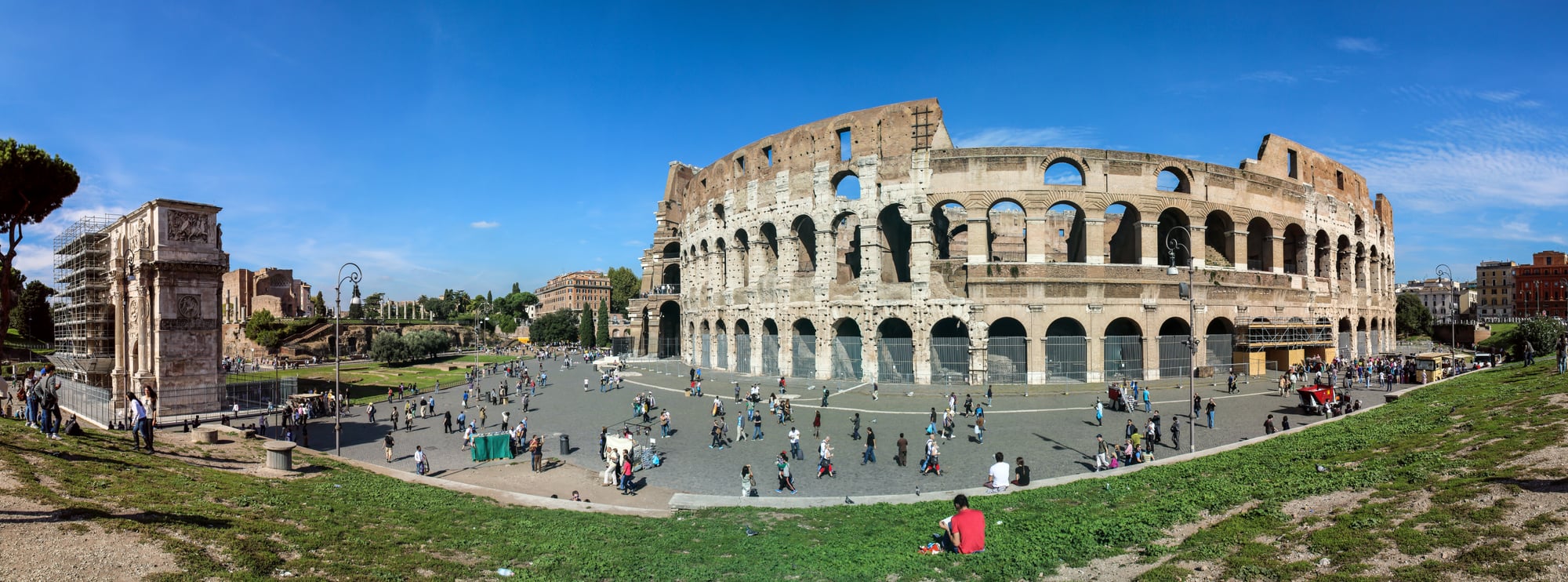
Credit: Dietmar Rabich · CC BY-SA 4.0
The Fall of Rome was the slow collapse of the western Roman Empire in the late 400s CE. For about 500 years, Rome had ruled most of Europe, North Africa, and the Middle East. By the year 476, the western half of the empire had broken apart. A Germanic leader named Odoacer removed the last Roman emperor, a teenage boy named Romulus Augustulus. Many historians use that year as the official end of ancient Rome.
The fall did not happen overnight. Rome had been in trouble for hundreds of years. The empire grew so big that it became hard to defend. Roads stretched thousands of miles, and the army could not be everywhere at once. Emperors came and went quickly, and some were murdered by their own soldiers. Heavy taxes made farmers poor, and many people lost faith in the government.
Money problems made things worse. Rome had paid for its army by taking gold and silver from places it conquered. Once the empire stopped growing, that money dried up. The government started making coins with less silver in them. Prices climbed, and trade slowed down.
At the same time, large groups of people from outside the empire were moving into Roman lands. The Romans called them "barbarians," which just meant people who did not speak Latin or Greek. Tribes like the Visigoths, Vandals, and Huns pushed across Rome's borders. In 410, the Visigoth leader Alaric captured the city of Rome itself. In 455, the Vandals sacked it again. The empire was bleeding out.
Why did Rome really fall? Historians have argued about this for centuries, and they still do. One famous writer counted more than 200 different reasons that scholars have offered. Some blame weak emperors. Some blame the barbarian invasions. Some blame disease, since plagues killed huge numbers of Romans. Others say lead in Roman water pipes slowly poisoned the people, though many scientists now doubt this. Most likely, no single cause brought Rome down. Many problems piled up at once.
Rome did not fully disappear, though. The eastern half of the empire, run from the city of Constantinople, kept going for almost 1,000 more years as the Byzantine Empire. Roman laws, the Latin language, and Roman roads shaped Europe long after the western empire was gone. Many languages spoken today, including Spanish, French, Italian, and Romanian, grew out of Latin.
The Fall of Rome marks the start of what historians call the Middle Ages in Europe. A new world was being built on the ruins of the old one.
Related
Last updated 2026-04-26